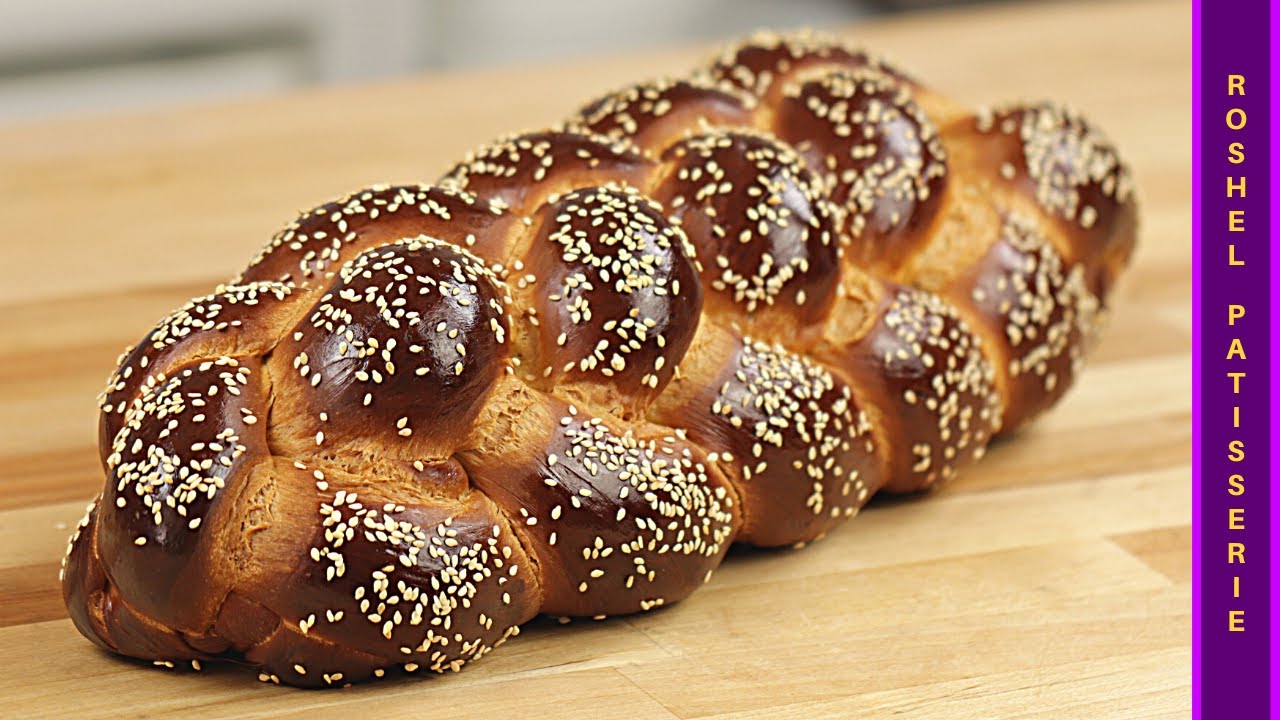
Challah Recipe: Challah is more than just bread. It’s tradition. It’s symbolism. It’s comfort wrapped in a beautifully braided, golden loaf. Whether served during Shabbat dinners, Jewish holidays, or enjoyed as a rich everyday bread, challah stands out for its slightly sweet flavor, tender crumb, and glossy crust.
In this comprehensive guide, you’ll learn everything about making the perfect homemade challah—from understanding ingredients to mastering braiding techniques and achieving bakery-level results in your own kitchen.
What Is Challah?
Challah is a traditional Jewish enriched bread made with eggs, flour, yeast, sugar, and oil. Unlike many other breads, challah contains no dairy, making it suitable for meals that include meat under kosher dietary laws.
Its signature braid represents unity and togetherness. The golden sheen comes from an egg wash brushed before baking.
Ingredients You’ll Need
Below is the classic ingredient list for traditional challah bread.
Dry Ingredients
- 4½ to 5 cups all-purpose flour (or bread flour)
- 2¼ teaspoons active dry yeast (1 packet)
- ¼ cup granulated sugar
- 1½ teaspoons salt
Wet Ingredients
- 3 large eggs (room temperature)
- 1 egg yolk (for egg wash)
- ⅓ cup vegetable oil (or neutral oil)
- 1 cup warm water (about 110°F / 43°C)
- 1 tablespoon honey (optional, enhances flavor)
Optional Toppings
- Sesame seeds
- Poppy seeds
- Coarse sugar
- Everything bagel seasoning
Equipment Needed
- Large mixing bowl
- Measuring cups and spoons
- Dough hook or wooden spoon
- Clean kitchen towel
- Baking sheet
- Parchment paper
- Pastry brush
- Wire rack
Step-by-Step Guide to Making Challah
Step 1 – Activate the Yeast
In a bowl, combine warm water (not hot), sugar, and active dry yeast. Let it sit for 5–10 minutes until foamy. This confirms the yeast is active.
Step 2 – Mix the Wet Ingredients
Add eggs and oil to the yeast mixture. Whisk until well combined. Eggs give challah its rich flavor and golden color.
Step 3 – Add Dry Ingredients
Gradually mix in flour and salt. Add flour one cup at a time, stirring until a shaggy dough forms.
Step 4 – Knead the Dough
Transfer the dough to a lightly floured surface. Knead for 8–10 minutes until smooth, elastic, and slightly tacky. Proper kneading develops gluten for a soft, airy texture.
Step 5 – First Rise
Place the dough in a lightly oiled bowl, cover with a clean towel, and let it rise in a warm place for 1–2 hours, or until doubled in size.
Step 6 – Shape and Braid
Punch down the dough and divide it into equal strands (3, 4, or 6 depending on your braid style). Roll into ropes and braid tightly, tucking the ends underneath.
Step 7 – Second Rise
Place the braided loaf on a lined baking sheet. Cover loosely and let rise again for 30–60 minutes until puffy.
Step 8 – Egg Wash and Bake
Brush with beaten egg for shine. Bake at 350°F (175°C) for 25–35 minutes until golden brown. Cool before slicing.
Expert Tips for Perfect Challah
1. Use Bread Flour for Structure
Bread flour creates better chew and rise.
2. Don’t Over-Flour
Too much flour makes dense bread.
3. Room Temperature Eggs Matter
Cold eggs slow fermentation.
4. Double Egg Wash
Brush once before rising and once before baking for extra shine.
5. Let It Cool Fully
This sets the crumb properly.
Common Mistakes to Avoid
- Killing yeast with hot water
- Skipping second rise
- Overbaking (leads to dryness)
- Uneven braiding
- Adding too much flour
Variations of Challah
Honey Challah
Increase honey to ¼ cup.
Raisin Challah
Add ¾ cup soaked raisins during kneading.
Whole Wheat Challah
Substitute 50% whole wheat flour.
Vegan Challah
Replace eggs with flax eggs and use plant-based glaze.
How to Store Challah
- Room temperature: 3 days (wrapped tightly)
- Refrigerate: Not recommended
- Freeze: Up to 2 months
To freeze:
- Wrap in plastic.
- Place in freezer bag.
- Thaw at room temperature.
How to Use Leftover Challah
- French toast
- Bread pudding
- Grilled cheese
- Sandwich bread
- Croutons
Nutritional Information (Approximate Per Slice)
- Calories: 180–220
- Carbohydrates: 28g
- Protein: 5g
- Fat: 6g
- Sugar: 4g
Why This Challah Recipe Works
This recipe balances:
- Hydration for softness
- Eggs for richness
- Sugar for light sweetness
- Oil for tender crumb
- Proper fermentation for structure
The result? A fluffy, slightly sweet, beautifully braided loaf with a shiny crust and tender interior.
Advanced Technique: 6-Strand Braiding
For a traditional bakery look:
- Lay 6 strands.
- Number them 1–6.
- Move strand 6 over 1.
- Move 2 over 6.
- Move 1 over 3.
- Repeat pattern.
It takes practice but creates stunning results.
Make-Ahead & Holiday Planning Tips
For Shabbat:
- Bake Friday morning.
- Store covered until evening.
For Rosh Hashanah:
- Shape into a round spiral to symbolize continuity.
Troubleshooting Guide
| Problem | Cause | Fix |
|---|---|---|
| Pale crust | Not enough egg wash | Double coat |
| Dough won’t rise | Dead yeast | Test yeast |
| Dry loaf | Overbaked | Check internal temp |
| Flat braid | Overproofed | Reduce second rise |
FAQs about Challah Recipe
1. Can I make challah without eggs?
Yes, you can make challah without eggs, but the texture and richness will change. Eggs give traditional challah its soft crumb, golden color, and slightly sweet flavor. If omitted, the bread will be lighter in color and less tender. You can substitute with plant-based egg alternatives, but expect a slightly different structure.
2. Why is my challah dense?
A dense challah is usually caused by under-kneading or under-rising. Proper kneading develops gluten, which creates structure and softness. If the dough hasn’t risen enough, it won’t have the air pockets needed for a light texture. Make sure the dough doubles in size during both proofing stages.
3. Can I make challah ahead of time?
Yes. You can refrigerate the dough overnight after the first rise. This slow fermentation enhances flavor and improves texture. Allow the dough to come to room temperature before shaping and baking the next day.
4. Why did my braid split while baking?
Braid splitting often happens due to overproofing or weak shaping. If the dough rises too much before baking, it expands rapidly in the oven and tears. Ensure firm but gentle shaping and avoid letting the dough over-rise.
5. Can I make mini challahs?
Absolutely. Divide the dough into smaller portions and braid as desired. Bake mini challahs at the same temperature for about 18–22 minutes, or until golden brown and fully cooked.
Final Thoughts
Making homemade challah is deeply rewarding. The aroma alone fills your kitchen with warmth and anticipation. While the braiding may seem intimidating at first, practice makes perfect.
Once you master this recipe, you’ll never buy store-bought challah again.
There’s something special about tearing into a warm, golden loaf that you made with your own hands.
Bake it. Share it. Celebrate with it.