Baked Feta Recipe: Let’s be honest. Some recipes trend online and disappear overnight. But baked feta? That one stayed. And for good reason.
Imagine creamy, salty feta melting into sweet roasted tomatoes, garlic softening into buttery goodness, and olive oil tying everything together like a silk ribbon. That’s baked feta. It’s simple. It’s elegant. And it tastes like something you’d order at a fancy Mediterranean restaurant — yet you can make it in your kitchen with minimal effort.
Why Baked Feta Became So Popular
This dish exploded in popularity because it hits three major points: easy, affordable, and insanely flavorful. One block of feta. Some cherry tomatoes. Olive oil. Oven. Done.
No complicated techniques. No long prep time. It’s like the slow cooker of oven dishes — low effort, high reward.
What Makes This Dish So Special?
The magic lies in contrast. Salty feta meets sweet roasted tomatoes. Creamy meets juicy. Rich meets fresh herbs. When you mix everything together after baking, it transforms into a silky, tangy sauce. Add pasta, and suddenly you’ve created comfort food royalty.
What Is Feta Cheese?
Before we bake it, let’s understand it.
Feta is a brined white cheese traditionally made from sheep’s milk or a mix of sheep and goat’s milk. It’s crumbly, tangy, and salty — and it softens beautifully when heated.
Origin of Feta
Feta has deep roots in Greece. In fact, authentic feta has protected designation of origin (PDO) status in the European Union. That means real Greek feta must be made in specific regions of Greece.
Types of Feta Cheese
Not all feta is the same. You’ll typically find:
- Greek feta (sheep or sheep-goat blend)
- Cow’s milk feta (milder and less tangy)
Sheep’s Milk vs Cow’s Milk Feta
Sheep’s milk feta is creamier and richer. Cow’s milk feta is firmer and milder. For baked feta, sheep’s milk gives you that ultra-creamy finish.
Ingredients You’ll Need
Let’s keep it clean and classic.
Core Ingredients
- 1 block (200–250g) feta cheese
- 2 cups cherry tomatoes
- 3–4 cloves garlic, minced
- ¼ cup extra virgin olive oil
- 1 teaspoon dried oregano
- ½ teaspoon chili flakes (optional)
- Salt (light — feta is already salty)
- Fresh black pepper
- Fresh basil leaves
Optional Add-Ins for Flavor Boost
- Sliced red onions
- Sun-dried tomatoes
- Kalamata olives
- Lemon zest
- Honey drizzle
These additions let you customize the dish like a painter adding layers to a canvas.
Kitchen Tools Required
- Oven-safe baking dish
- Mixing bowl
- Knife
- Cutting board
- Spoon
Nothing fancy. This isn’t a Michelin test. It’s comfort food.
How to Choose the Best Feta
Always buy feta in block form, not pre-crumbled. Crumbled feta dries out faster and won’t give you that creamy melt.
Look for feta stored in brine. It keeps moisture locked in — and moisture equals creaminess.
Step-by-Step Guide to Making Baked Feta
Here’s where the magic happens.
Step 1 – Preheat and Prep
Preheat your oven to 400°F (200°C). Choose a block of good-quality feta cheese rather than crumbled feta, as it holds its shape better during baking. Pat it dry gently with paper towels to remove excess brine.
Step 2 – Prepare the Baking Dish
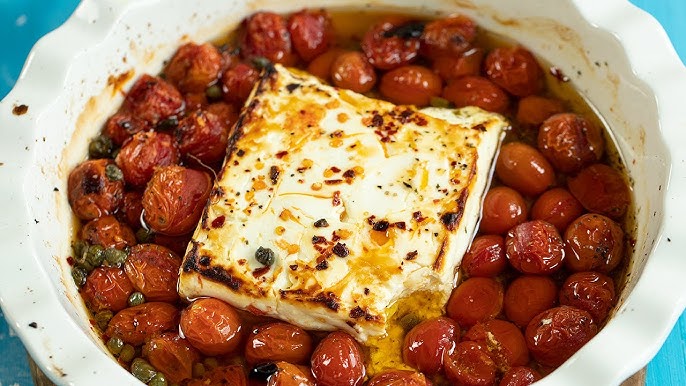
Place the block of feta in the center of a small baking dish. Surround it with cherry tomatoes, sliced red onions, or other vegetables if desired. Drizzle everything generously with olive oil to help with roasting and flavor development.
Step 3 – Season and Arrange
Sprinkle the feta and vegetables with salt (lightly, since feta is salty), black pepper, dried oregano, red pepper flakes, and minced garlic. Arrange the tomatoes around the cheese so they roast evenly and release their juices.
Step 4 – Bake to Perfection
Bake for 20–25 minutes, or until the tomatoes soften and burst and the feta becomes soft and slightly golden on top. For extra browning, switch to broil for the last 2–3 minutes.
Step 5 – Stir and Serve
Remove from the oven and gently stir the softened feta with the roasted tomatoes to create a creamy, flavorful mixture. Serve warm with pasta, crusty bread, or as a dip for a simple and delicious dish.
Pro Tips for Perfect Texture
- Don’t overbake — feta can become rubbery.
- Use high-quality olive oil. It makes a difference.
- If too thick, add pasta water.
- Always mix while hot for smooth texture.
Flavor Variations
Mediterranean Style
Add olives, red onions, and lemon juice.
Spicy Baked Feta
Add extra chili flakes and a drizzle of hot honey.
Creamy Pasta Version
Boil pasta. Toss directly into baked feta mixture.
Honey & Herb Version
Drizzle honey and add thyme. Sweet meets salty. Pure magic.
What to Serve with Baked Feta
Pasta
Short pasta like penne or rigatoni works best.
Bread
Crusty sourdough for dipping.
Roasted Vegetables
Zucchini, eggplant, or bell peppers.
Salad Bowls
Serve over quinoa or greens for lighter meal.
Nutritional Benefits of Baked Feta
Feta contains calcium and protein. Olive oil provides healthy fats. Tomatoes bring antioxidants like lycopene.
Balanced indulgence.
Storage and Reheating Tips
Store in airtight container up to 3 days.
Reheat gently in oven or microwave.
Add splash of water or olive oil when reheating.
Common Mistakes to Avoid
- Using crumbled feta
- Skipping olive oil
- Overcooking
- Under-seasoning
- Not mixing immediately after baking
FAQs about Baked Feta Recipe
1. Can I use low-fat feta?
Yes, you can use low-fat feta. However, keep in mind that it won’t melt as smoothly or become as creamy as full-fat feta. The flavor may also be slightly less rich.
2. Can I make baked feta without tomatoes?
Absolutely. While tomatoes are popular for their sweetness and juiciness, you can substitute with vegetables like bell peppers, zucchini, mushrooms, or even olives. Just make sure to drizzle enough olive oil to keep everything moist while baking.
3. Is baked feta good for meal prep?
Yes, baked feta works well for meal prep. Store leftovers in an airtight container in the refrigerator for up to 3–4 days. Reheat gently in the oven or microwave to maintain its creamy texture.
4. Can I freeze baked feta?
Freezing is not recommended. The texture may change significantly once thawed, becoming grainy or watery due to the dairy content.
5. What pasta works best?
Short pasta shapes like penne, rotini, or fusilli are ideal because they hold onto the creamy sauce well. Their ridges and curves help capture every bit of the flavorful baked feta mixture.
Conclusion
Baked feta is proof that simple ingredients can create extraordinary flavor. It’s creamy, tangy, comforting, and endlessly customizable. Whether you serve it over pasta, scoop it with bread, or add it to grain bowls, this dish delivers every time.
Cooking doesn’t have to be complicated. Sometimes, all it takes is one block of feta and a hot oven.