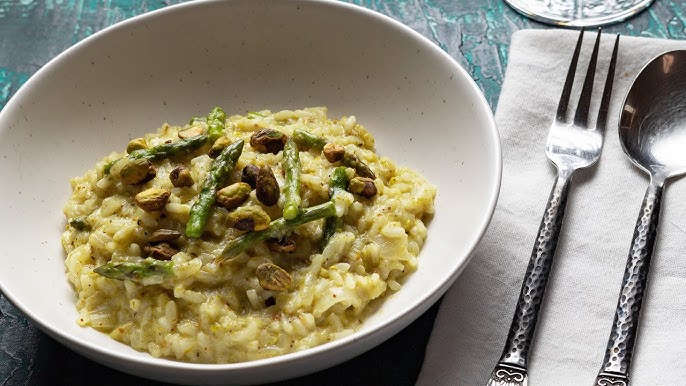
Asparagus Risotto Recipe: There’s something magical about a perfectly made asparagus risotto. It’s creamy without cream. Rich without being heavy. Elegant but built from humble ingredients. And once you understand the technique, it becomes less intimidating and more like a rhythm — almost therapeutic.
If you’ve ever ordered asparagus risotto at a fine-dining restaurant and thought, “There’s no way I can make this at home,” I’m here to tell you: you absolutely can.
This is your complete, professional, step-by-step guide to making a creamy asparagus risotto that tastes like it came straight from a restaurant kitchen.
Let’s dive in.
Why Asparagus Risotto Is So Special
Risotto is not just rice. It’s technique. It’s patience. It’s transformation.
When cooked properly, risotto becomes luxuriously creamy — not because of cream, but because of the natural starch in Arborio rice slowly released during cooking. Add fresh asparagus into that equation, and you get contrast: creamy + bright + slightly crisp + earthy.
It’s like spring in a bowl.
Asparagus brings:
- Freshness
- Subtle bitterness
- Beautiful green color
- Elegant texture
And when combined with butter, Parmesan, and aromatics? Absolute perfection.
Ingredients You’ll Need
Before we start cooking, let’s talk ingredients. Risotto is simple, so quality matters.
Main Ingredients
- 1 ½ cups Arborio rice
- 1 bunch fresh asparagus (about 1 lb)
- 4 cups vegetable broth (or chicken broth)
- 1 small onion (finely diced)
- 2 cloves garlic (minced)
- ½ cup dry white wine
- ½ cup freshly grated Parmesan cheese
- 2 tablespoons unsalted butter
- 2 tablespoons olive oil
- Salt (to taste)
- Black pepper (freshly cracked)
- Optional: lemon zest for brightness
Optional Additions for Extra Flavor
- 1 tablespoon mascarpone (for extra creaminess)
- Fresh thyme
- Shallots instead of onion
- A splash of cream (not traditional, but acceptable)
- Toasted pine nuts for texture
Keep it simple the first time. Master the basics before experimenting.
Understanding Risotto Rice (Why Arborio Matters)
Not all rice works for risotto.
Arborio rice contains high levels of amylopectin starch. That starch is what gives risotto its signature creamy texture.
Other options:
- Carnaroli (even creamier, holds shape well)
- Vialone Nano (silkier texture)
Avoid:
- Basmati
- Jasmine
- Long grain rice
They won’t release the starch needed.
Preparing the Asparagus Properly
Asparagus is the star. Treat it well.
Step 1: Trim the Ends
The bottom part of asparagus is woody and tough.
- Snap off the ends naturally (they break where they should).
- Or cut about 1 inch off the bottom.
Step 2: Cut Strategically
- Slice the stalks into 1-inch pieces.
- Keep the tips separate — they cook faster and look beautiful on top.
Step 3: Blanch (Optional but Recommended)
For vibrant green color:
- Boil water.
- Add asparagus for 1–2 minutes.
- Transfer immediately to ice water.
This locks in color and stops cooking.
Set aside.
Step-by-Step Guide to Making Asparagus Risotto
Asparagus risotto is creamy, fresh, and beautifully balanced, perfect for spring or any time you want a comforting yet elegant meal.
Step 1: Prepare the Asparagus
Trim the woody ends and cut the asparagus into small pieces, keeping the tips separate. Blanch the tips briefly in boiling water for 1–2 minutes, then set aside.
Step 2: Warm the Broth
Heat vegetable or chicken broth in a separate pot and keep it warm over low heat. Warm broth helps maintain steady cooking.
Step 3: Sauté the Aromatics
In a large pan, heat olive oil or butter. Add finely chopped onion or shallot and cook until soft. Stir in minced garlic and cook briefly.
Step 4: Toast the Rice
Add Arborio rice and stir for 1–2 minutes until lightly toasted. This enhances flavor and helps maintain texture.
Step 5: Add Broth Gradually
Pour in a ladle of warm broth and stir gently. Once mostly absorbed, add another ladle. Continue this process, stirring regularly, for about 18–20 minutes.
Step 6: Add the Asparagus
When the rice is nearly tender, stir in the chopped asparagus pieces (not the tips). Cook until tender and bright green.
Step 7: Finish with Butter and Cheese
Remove from heat. Stir in a knob of butter and grated Parmesan cheese for creaminess. Fold in the reserved asparagus tips.
Step 8: Serve Immediately
Season with salt, pepper, and a squeeze of lemon juice. Serve hot for the best creamy texture.
This asparagus risotto is silky, vibrant, and full of fresh flavor. 🍚🌿
How to Know When Risotto Is Done
Ask yourself:
- Is the center slightly firm?
- Is the texture creamy but not soupy?
- Does it gently spread when spooned?
If yes — you nailed it.
Common Mistakes to Avoid
Let’s save you frustration and help you make perfectly creamy risotto every time.
1. Adding All the Broth at Once
If you pour in all the broth at once, you’re making rice pilaf—not risotto. Risotto requires gradual addition of warm broth, allowing the rice to slowly release starch and create that signature creamy texture.
2. Not Stirring Enough
Stirring isn’t optional. It helps the rice grains rub together, releasing starch and building creaminess. You don’t need to stir nonstop, but regular, gentle stirring is essential.
3. Overcooking
Mushy risotto cannot be fixed. The rice should be tender but slightly firm in the center (al dente). Remove it from the heat as soon as it reaches the right texture.
4. Using Cold Broth
Cold broth lowers the temperature of the pan and interrupts the cooking process. Always use warm or hot broth to maintain steady cooking and proper absorption.
5. Skipping the Final Butter
That final knob of butter (and often Parmesan) creates the glossy finish known as mantecatura. Skipping it means missing out on richness, silkiness, and balance.
Avoid these mistakes, and your risotto will be creamy, luxurious, and restaurant-quality every time. 🍚✨
Professional Tips for Restaurant-Quality Results
- Use freshly grated Parmesan.
- Keep heat medium, not high.
- Taste constantly.
- Use a wide pan for even cooking.
- Finish with a drizzle of olive oil.
Flavor Variations to Try
Once you master asparagus risotto, experiment.
Lemon Asparagus Risotto
Add zest and a squeeze of fresh lemon juice.
Mushroom & Asparagus Risotto
Sauté mushrooms separately and fold in.
Shrimp Asparagus Risotto
Cook shrimp separately and add at the end.
Vegan Version
Use:
- Olive oil instead of butter
- Nutritional yeast instead of Parmesan
How to Store and Reheat
Risotto is best fresh.
But if you have leftovers:
- Store in airtight container up to 3 days.
- Reheat with a splash of broth.
- Stir gently over low heat.
Do not microwave dry — it ruins texture.
Can You Freeze Risotto?
Technically yes.
But texture changes.
If freezing:
- Slightly undercook first.
- Freeze in airtight container.
- Reheat slowly with broth.
Still, fresh is best.
What to Serve with Asparagus Risotto
It can be:
- A main course
- A side dish
Pair with:
- Grilled chicken
- Roasted salmon
- Garlic bread
- Simple green salad
- Sparkling water with lemon
Keep sides light — risotto is rich.
Nutritional Overview
Approximate per serving:
- Calories: 400–500
- Protein: 10–15g
- Carbs: 55–60g
- Fat: 15–20g
Asparagus adds:
- Fiber
- Folate
- Vitamins A, C, K
It’s comfort food — but not junk food.
Why This Recipe Works
This recipe works because:
- It respects traditional technique.
- It uses proper rice.
- It layers flavor gradually.
- It finishes with balance.
Risotto isn’t complicated. It’s intentional.
Think of it like building a house — brick by brick.
Rush it, and it collapses.
Respect it, and it shines.
FAQs about Asparagus Risotto Recipe
1. Can I make risotto without wine?
Yes. Simply replace the wine with extra warm broth and add a small squeeze of lemon juice at the end for brightness and balance.
2. Why is my risotto gluey?
Gluey risotto usually means it was overcooked or stirred too aggressively at high heat. Risotto should be stirred gently and removed from heat once the rice is tender but slightly firm in the center.
3. Can I use brown rice?
It’s not recommended. Brown rice does not release enough starch to create that signature creamy texture. For authentic results, use Arborio, Carnaroli, or Vialone Nano rice.
4. How do restaurants make it so creamy?
The secret is technique: the right rice, gradual addition of warm broth, steady stirring, and finishing with butter and Parmesan. No heavy cream is needed.
5. How long does risotto take to cook?
From the first addition of broth, risotto typically takes 18–22 minutes. Timing can vary slightly depending on heat and rice type.
These tips will help you achieve perfectly creamy, restaurant-quality risotto at home. 🍚✨
Final Thoughts
Making asparagus risotto is like learning to dance. At first, you count every step. Then suddenly, your body remembers the rhythm.
The first time might feel technical. The second time feels smoother. By the third time? You’re cooking with confidence.
Creamy. Elegant. Fresh. Balanced.
That’s asparagus risotto done right.
Now grab your pan — and let the stirring begin.