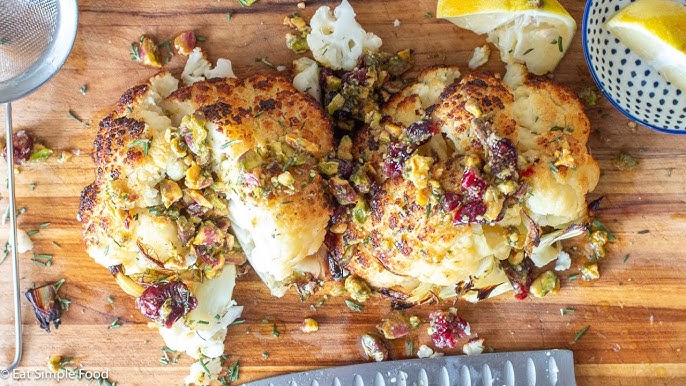
Whole Roasted Cauliflower Recipe: Whole roasted cauliflower is one of those dishes that looks dramatic, tastes incredible, and quietly proves that vegetables can absolutely steal the spotlight. Imagine a golden-brown cauliflower, tender on the inside, crisp on the outside, deeply seasoned, and carved like a roast at the table. Sounds fancy? It is. Hard to make? Not at all.
This guide is deep, detailed, and practical. Whether you’re cooking for family, meal-prepping, hosting guests, or creating content for a food blog, this article walks you through everything—from choosing the perfect cauliflower to roasting, seasoning, slicing, storing, and serving it like a pro.
We’re not rushing. We’re not skipping steps. And we’re definitely not settling for bland vegetables.
Let’s get into it.
Why Whole Roasted Cauliflower Is So Popular
Whole roasted cauliflower has gone from a niche vegetarian option to a mainstream favorite—and for good reason.
A plant-based showstopper
When served whole, cauliflower transforms from a humble vegetable into a centerpiece. It commands attention on the table, making it perfect for holidays, dinner parties, or content creation.
Budget-friendly but gourmet
One cauliflower costs far less than a roast, yet delivers that same “wow” factor. With the right seasoning, it tastes luxurious without the luxury price tag.
Perfect for vegan, vegetarian, and flexitarian diets
This dish works across dietary preferences. No substitutions. No compromises.
Choosing the Best Cauliflower
Size matters
Medium to large cauliflower heads work best. Too small and they dry out; too large and they may cook unevenly.
Color, firmness, and freshness
Look for:
- Tight florets
- No brown spots
- Heavy for its size
- Firm stem
White vs purple vs orange cauliflower
Flavor differences
All taste similar, but colored varieties are slightly nuttier.
Visual presentation tips
Purple and orange cauliflower look stunning when roasted whole and photographed.
Ingredients You’ll Need
Core ingredients
- 1 whole cauliflower (medium to large)
- Olive oil (or avocado oil)
- Salt
- Black pepper
Optional flavor boosters
Spices
- Paprika
- Smoked paprika
- Cumin
- Garlic powder
- Onion powder
Herbs
- Thyme
- Rosemary
- Parsley
Sauces and marinades
- Tahini
- Lemon juice
- Mustard
- Soy sauce or tamari
Kitchen Tools Required
Essential tools
- Sharp knife
- Baking dish or sheet
- Aluminum foil
- Pastry brush
Optional tools for best results
- Meat thermometer
- Cast-iron skillet
Preparing the Cauliflower
Cleaning and trimming
Rinse under cold water. Remove dirt and debris.
Removing leaves without damaging the head
Trim leaves but keep the core intact—it holds the cauliflower together.
Drying for better roasting
Pat completely dry. Moisture = steaming, not roasting.
Should You Boil Cauliflower Before Roasting?
Pros and cons
Parboiling softens the inside but risks waterlogged flavor.
Steaming vs parboiling
Steaming is better than boiling, but optional.
When skipping this step is better
If roasting covered first, you don’t need to pre-cook.
Seasoning the Cauliflower
Oil selection
Olive oil for flavor, avocado oil for higher heat.
Salt and spice balance
Season aggressively—whole cauliflower needs more seasoning than florets.
How to season evenly
Brushing vs rubbing
Brushing gets into crevices better.
Injecting flavor into crevices
Tilt and rotate the cauliflower while seasoning.
Step-by-Step Guide to Whole Roasted Cauliflower
Step 1 – Preheat the Oven
Preheat your oven to 400°F (200°C). This temperature allows the cauliflower to cook through evenly while developing good color later.
Step 2 – Prepare the Baking Dish
Lightly grease a baking dish or oven-safe skillet with olive oil. Trim the cauliflower stem so it sits flat, but keep the core intact to help the head stay whole during roasting.
Step 3 – Season Generously
Rub the entire cauliflower with olive oil, making sure to coat all sides. Season well with salt and black pepper. You can also add garlic, paprika, cumin, or herbs for extra flavor. Don’t be shy—whole cauliflower needs bold seasoning.
Step 4 – Cover and Roast
Cover the dish tightly with foil or a lid. Roast for 35–45 minutes, allowing the cauliflower to steam gently and become tender all the way through.
Step 5 – Uncover and Brown
Remove the cover and return the cauliflower to the oven. Roast uncovered for another 20–25 minutes, basting once if desired, until the outside is deeply golden and lightly crisp.
Step 6 – Test for Doneness
Insert a knife into the center—it should slide in easily with no resistance. Rest for a few minutes before slicing.
Serve whole for a dramatic presentation or cut into wedges and enjoy immediately.
Oven Temperature and Timing Explained
Low and slow vs hot and fast
Covered roasting softens. Uncovered roasting browns.
How size affects roasting time
Larger heads may need 10–15 extra minutes.
Flavor Variations You Must Try
Garlic-herb whole roasted cauliflower
Add minced garlic and fresh herbs.
Spicy paprika and chili version
Use smoked paprika and chili flakes.
Lemon-tahini roasted cauliflower
Finish with lemon-tahini drizzle.
Middle-Eastern spiced cauliflower
Za’atar blend
Earthy and aromatic.
Cumin-coriander base
Warm and nutty.
How to Serve Whole Roasted Cauliflower
As a main dish
Slice like a roast and serve with sauce.
As a side dish
Cut into wedges after roasting.
Presentation tips for serving whole
Serve on a platter, drizzle sauce tableside.
Sauces That Pair Perfectly
Vegan gravy
Rich and comforting.
Garlic yogurt sauce
Cool and creamy.
Chimichurri
Bright and herbaceous.
Tahini drizzle
Nutty and smooth.
Common Mistakes and How to Avoid Them
Undercooked center
Roast covered long enough.
Burnt exterior
Lower oven rack and reduce uncovered time.
Bland flavor
Season more than you think you need.
Storage and Reheating
Refrigeration
Store in airtight container for up to 4 days.
Freezing
Freeze sliced portions only.
Best reheating methods
Reheat in oven at 350°F to keep crisp.
Nutritional Benefits of Whole Roasted Cauliflower
Vitamins and minerals
Rich in vitamin C, K, folate, and potassium.
Low-calorie, high-fiber benefits
Filling, satisfying, and diet-friendly.
FAQs about Whole Roasted Cauliflower Recipe
1. Can I make whole roasted cauliflower vegan?
Yes. This recipe is naturally vegan when made with plant-based oils like olive or avocado oil and simple seasonings such as herbs and spices.
2. How do I know when the center is cooked?
Insert a knife or skewer into the thickest part of the cauliflower. If it slides in easily with no resistance, the center is fully cooked.
3. Can I roast cauliflower ahead of time?
Yes. You can roast it in advance and reheat in the oven at moderate heat before serving. This helps restore warmth and surface texture better than microwaving.
4. What’s the best oil for roasting cauliflower?
Olive oil is ideal for flavor, while avocado oil works well if you prefer a higher smoke point. Both promote even browning and good texture.
5. Can I use frozen cauliflower?
No. Frozen cauliflower doesn’t hold its structure when roasted whole and tends to release excess moisture, resulting in a soft, uneven texture.
Conclusion
Whole roasted cauliflower proves that simple ingredients, when treated with care, can become extraordinary. Crispy on the outside, tender inside, endlessly customizable, and visually stunning, it’s a dish that belongs in every home cook’s repertoire. Whether you’re cooking for yourself or serving guests, this recipe delivers flavor, elegance, and comfort in every slice.