Traeger Brisket Recipe: Brisket has earned its reputation as the king of barbecue for a reason. It’s rich, flavorful, tender when done right, and deeply satisfying. But let’s be honest—brisket can also be intimidating. It’s a large, tough cut of beef that requires time and technique to transform into that melt-in-your-mouth masterpiece we all crave. The good news? A Traeger grill simplifies the process without sacrificing authentic wood-fired flavor.
Traeger grills use hardwood pellets to create consistent heat and smoke. That means you don’t have to babysit a fire all day like traditional offset smokers require. Instead, you get steady temperature control, beautiful smoke infusion, and predictable results. Whether you’re a backyard BBQ enthusiast or aiming for competition-level brisket, this step-by-step guide will walk you through every detail.
By the end of this article, you’ll know exactly how to choose, prepare, smoke, rest, and slice your brisket like a professional pitmaster. So grab your apron, fire up that Traeger, and let’s turn a simple cut of beef into something unforgettable.
Why Brisket Is the King of BBQ
If ribs are the flashy show-offs of barbecue, brisket is the wise old king sitting on the throne. It commands respect. Why? Because brisket doesn’t forgive shortcuts.
Brisket comes from the lower chest of the cow, a hardworking muscle loaded with connective tissue. That’s why it’s tough when raw. But when you cook it low and slow—typically between 225°F and 250°F—something incredible happens. The collagen slowly breaks down into gelatin, creating that tender, juicy texture that barbecue lovers obsess over.
What makes brisket so special isn’t just tenderness—it’s depth of flavor. Properly smoked brisket develops:
- A rich, smoky bark (that dark crust on the outside)
- A beautiful smoke ring
- Juicy, flavorful slices
- A buttery mouthfeel from rendered fat
It’s a transformation process. And that transformation takes skill.
Another reason brisket reigns supreme is versatility. You can serve it sliced, chopped, or shredded. It’s perfect for sandwiches, tacos, sliders, nachos, or served traditionally with pickles and onions. Few cuts of meat offer that level of flexibility.
But here’s the truth: brisket also exposes mistakes. Cook it too fast? It’s dry. Undercook it? It’s tough. Slice it wrong? It falls apart or chews like rubber. That’s why mastering brisket feels like earning a badge of honor in the BBQ world.
With a Traeger grill, however, you remove much of the guesswork. The steady heat and consistent smoke give you a serious advantage. You still need patience—but you no longer need to wrestle with unpredictable flames.
Brisket isn’t just food. It’s an experience. And once you nail it, there’s no going back.
Why Choose a Traeger Pellet Grill?
You might be wondering: can’t I just use a regular smoker or charcoal grill? Sure, you can. But a Traeger pellet grill changes the game entirely.
Traditional smokers require constant monitoring—adjusting vents, adding fuel, managing airflow. It’s rewarding, but it’s also demanding. A Traeger simplifies everything with digital temperature control. You set your desired temperature, and the grill automatically feeds hardwood pellets into the firepot to maintain it.
That means:
- Consistent temperature control
- Even heat distribution
- Real hardwood smoke flavor
- Less babysitting, more confidence
Think of it as cruise control for barbecue.
Pellet grills are especially perfect for brisket because brisket requires long cook times—often 12 to 16 hours. During that time, temperature consistency is critical. Even small fluctuations can affect the final texture. With a Traeger, you eliminate those wild swings.
Another huge advantage is pellet variety. Want a bold, traditional Texas flavor? Use oak or hickory pellets. Prefer something slightly sweet? Try cherry or apple. You can customize your smoke profile without complicated wood management.
And let’s talk convenience. Traeger grills ignite quickly, produce less ash than charcoal, and require minimal cleanup. For both beginners and seasoned pitmasters, that convenience makes brisket less stressful and far more enjoyable.
In short, Traeger grills give you professional-level results with backyard simplicity. When it comes to smoking brisket, that’s a powerful combination.
Understanding Brisket Cuts
Before you even think about seasoning or smoking, you need to understand what you’re working with. Not all briskets are created equal.
A whole brisket is known as a “packer brisket.” It includes two primary muscles:
- The flat
- The point
These two muscles cook differently because they contain different amounts of fat and connective tissue.
The flat is leaner and more uniform in shape. It slices beautifully and is often used for presentation. However, because it’s lean, it can dry out if overcooked.
The point, on the other hand, is thicker and heavily marbled with fat. It’s incredibly flavorful and juicy. This is the part often used to make burnt ends.
When buying brisket for your Traeger, you typically have two options:
- Buy just the flat (smaller, leaner, cooks faster)
- Buy a whole packer brisket (larger, more forgiving, best overall flavor)
For beginners, a whole packer brisket is actually more forgiving because the extra fat helps protect the meat during the long cook.
Look for:
- Good marbling throughout
- Flexible meat (it should bend easily in the package)
- Prime or Choice grade beef
Higher grades contain more intramuscular fat, which translates to better flavor and tenderness.
Choosing the right brisket is step one. Everything else builds on that foundation.
Ingredients You’ll Need
Now let’s get into the essentials. A great Traeger brisket doesn’t require dozens of complicated ingredients. In fact, simplicity often delivers the best results.
Brisket
- 12–15 lb whole packer brisket (Prime or Choice grade)
Dry Rub Ingredients
- 2 tablespoons coarse kosher salt
- 2 tablespoons coarse black pepper
- 1 tablespoon garlic powder
- 1 tablespoon onion powder
- 1 teaspoon smoked paprika
Optional Injection Ingredients
- 1 cup beef broth
- 1 tablespoon Worcestershire sauce
Spritz Ingredients
- Apple cider vinegar
- Water or apple juice
Optional BBQ Sauce
- Your favorite smoky BBQ sauce
Texas-style brisket traditionally uses only salt and pepper. But adding garlic, onion powder, and paprika can enhance complexity without overpowering the beef.
Remember: brisket is the star. The seasoning should complement—not dominate—it.
Essential Tools for Smoking Brisket
If brisket is the king of BBQ, then your tools are the royal court. You can have the best cut of meat and the perfect rub, but without the right equipment, you’re making the job harder than it needs to be. The good news? You don’t need a truckload of gadgets. Just a few essentials can elevate your Traeger brisket from good to unforgettable.
Traeger Pellet Grill
Your Traeger is the heart of the operation. Its digital temperature control ensures consistent heat for hours—sometimes 12 to 16 straight. That stability is critical because brisket thrives in a low-and-slow environment. Fluctuating temperatures can cause uneven cooking and dry patches. With a Traeger, you set it and let it do its thing while you focus on timing and technique.
Wood Pellets Selection
Pellets aren’t just fuel—they’re flavor. Think of them as seasoning through smoke. Here are popular options:
- Oak – Classic Texas flavor, strong but balanced
- Hickory – Bold and smoky
- Cherry – Mild with a hint of sweetness
- Apple – Subtle, slightly fruity
For brisket, oak or hickory are professional favorites because they complement beef’s richness without overpowering it.
Meat Thermometer
Never rely on guesswork. A high-quality digital probe thermometer is non-negotiable. Brisket is done by temperature and feel—not time. You’ll need to monitor the internal temperature carefully, especially during the stall phase.
Butcher Paper vs. Foil
Wrapping your brisket helps it push through the stall. Pink butcher paper preserves bark texture, while foil locks in moisture but can soften the crust. Many pros prefer butcher paper for that perfect balance.
Sharp Trimming Knife
A sharp boning or trimming knife makes fat removal precise and easy. Dull knives tear meat; sharp ones create clean lines. Clean trimming equals even cooking.
When you combine the right tools with patience, brisket becomes less intimidating and far more rewarding.
Preparing the Brisket
Preparation is where the real craftsmanship begins. Think of it as setting the stage before the main performance. A properly prepped brisket cooks more evenly, absorbs smoke better, and develops superior bark.
How to Trim Brisket Properly
Start by removing the brisket from its packaging and patting it dry. You’ll notice a thick fat cap on one side and hard chunks of fat throughout. The goal isn’t to remove all fat—it’s to shape it strategically.
- Trim the fat cap down to about ¼ inch thickness
- Remove hard, waxy fat that won’t render
- Square the edges for even cooking
- Remove thin flaps that could burn
Why leave some fat? Because it slowly renders and bastes the meat during the cook. Too much fat, though, blocks seasoning and smoke penetration.
Take your time. Trimming may take 15–20 minutes, but precision here pays off later.
Applying the Dry Rub
After trimming, lightly coat the brisket with a binder like yellow mustard or olive oil (optional). This helps the rub stick, but don’t worry—you won’t taste it.
Generously apply your dry rub, pressing it into the meat. Cover every surface evenly. Don’t be shy—brisket is thick and can handle bold seasoning.
Letting the Brisket Rest Before Smoking
Once seasoned, let the brisket sit at room temperature for about 45–60 minutes. This allows the rub to adhere and begin drawing out moisture, forming the foundation of your bark.
Some pitmasters prefer seasoning overnight in the refrigerator. If you do, bring it back to room temperature before smoking.
Preparation isn’t glamorous—but it’s where champions are made.
Step-by-Step Guide to Smoking Brisket on a Traeger
Now comes the moment you’ve been waiting for. This is where patience, preparation, and precision come together.
Step 1: Preheat Your Traeger
Set your Traeger to 225°F and allow it to fully preheat with the lid closed. Give it at least 15 minutes to stabilize. Consistency is everything.
Use oak or hickory pellets for a classic brisket flavor profile.
Step 2: Place Brisket on the Grill
Position the brisket fat side down (recommended for pellet grills to protect the meat from direct heat). Place it in the center of the grate and insert your thermometer probe into the thickest part of the flat.
Close the lid and resist the urge to constantly peek. Every time you open the lid, you lose heat and extend cook time.
Step 3: Maintain Consistent Temperature
Keep your grill steady at 225°F. This is a marathon, not a sprint. Brisket typically cooks about 1 to 1.5 hours per pound, but internal temperature matters more than time.
Around 150–165°F internal temperature, you’ll hit “the stall.” The brisket’s temperature may stop rising for hours. Don’t panic—this is normal. Moisture evaporation cools the meat temporarily.
Step 4: Spritzing the Brisket
After about 3–4 hours, you can begin spritzing every 60–90 minutes using a mixture of apple cider vinegar and water. This helps maintain moisture and enhances bark development.
Light spritz only—don’t soak it.
Step 5: The Texas Crutch – Wrapping the Brisket
When the internal temperature reaches around 165°F and the bark looks dark and set, wrap the brisket tightly in butcher paper.
Return it to the grill. Wrapping helps push through the stall and speeds up cooking while preserving moisture.
Step 6: Cooking to Internal Temperature
Continue cooking until the internal temperature reaches 200–205°F. But here’s the secret: temperature is a guide. The real test is tenderness.
Insert your probe. It should slide in like warm butter with little resistance.
Step 7: Resting the Brisket
This step is non-negotiable.
Remove the brisket from the grill and let it rest, still wrapped, for at least 1–2 hours in a cooler or warm oven. Resting allows juices to redistribute throughout the meat.
Skip this step, and all your hard work leaks onto the cutting board.
How to Slice Brisket Correctly
You’ve made it this far. Don’t ruin it with bad slicing.
Slicing Against the Grain
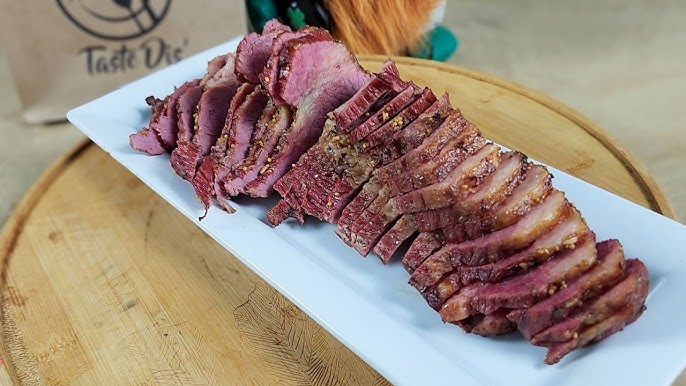
Brisket muscles have visible grain lines. Slice against the grain, not with it. Cutting against the grain shortens muscle fibers, making each bite tender.
Separate the flat and point before slicing since the grains run in different directions.
Aim for pencil-thick slices—about ¼ inch thick.
Serving Suggestions
Serve brisket:
- With classic Texas sides (coleslaw, baked beans, potato salad)
- On brioche buns with pickles
- As tacos with fresh salsa
- Chopped into loaded baked potatoes
The possibilities are endless.
Pro Tips for the Perfect Traeger Brisket
- Start early—brisket can’t be rushed
- Use quality meat
- Trust temperature, not time
- Always rest properly
- Slice only what you plan to serve
Brisket rewards patience.
Common Mistakes to Avoid
- Cooking at too high a temperature
- Skipping the rest period
- Over-trimming fat
- Constantly opening the lid
- Slicing with the grain
Avoid these, and you’re already ahead of most beginners.
Brisket Cooking Time Chart
| Brisket Weight | Estimated Cook Time (225°F) |
|---|---|
| 8 lbs | 8–10 hours |
| 10 lbs | 10–12 hours |
| 12 lbs | 12–15 hours |
| 15 lbs | 15–18 hours |
Always cook to temperature, not strictly by time.
Flavor Variations and Custom Rub Ideas
Want to switch things up?
Try adding:
- Brown sugar for sweetness
- Cayenne for heat
- Espresso powder for depth
- Mustard seed for tang
Experimenting is part of the fun. Once you master the basics, you can personalize your signature brisket.
Storing and Reheating Brisket
Leftovers? Lucky you.
Store brisket in an airtight container for up to 4 days. For longer storage, vacuum seal and freeze.
To reheat:
- Wrap in foil with a splash of beef broth
- Warm in oven at 300°F until heated through
Avoid microwaving—it dries out the meat.
FAQs about Traeger Brisket Recipe
1. How long does it take to smoke a brisket on a Traeger?
On average, brisket takes 1 to 1.5 hours per pound when smoked at 225°F. However, time is only a guideline. Always cook based on internal temperature, aiming for 200–205°F for tender results.
2. Should I cook brisket fat side up or down on a Traeger?
Fat side down is recommended for pellet grills like Traeger. This helps shield the meat from direct heat coming from below and reduces the risk of drying out.
3. What pellets are best for brisket?
Oak and hickory are classic choices for brisket. Oak provides a steady, balanced smoke, while hickory adds a stronger, traditional barbecue flavor. Many cooks also blend them for depth.
4. Why did my brisket turn out dry?
Dry brisket is often caused by overcooking, slicing against the wrong grain, or skipping a proper rest period. Resting allows juices to redistribute, keeping the meat moist.
5. Can I cook brisket overnight on a Traeger?
Yes. Overnight cooks are common with Traegers. Just ensure your pellet hopper is full and use a reliable probe thermometer to monitor internal temperature throughout the cook.
Conclusion
Smoking a brisket on a Traeger isn’t just cooking—it’s craftsmanship. It’s about patience, attention to detail, and trusting the process. From selecting the perfect cut to slicing against the grain, every step matters.
But here’s the beauty of it: once you understand the fundamentals, brisket becomes less intimidating and more rewarding. The Traeger grill removes much of the stress, giving you steady heat and reliable smoke so you can focus on flavor and tenderness.
Take your time. Respect the process. Let the smoke do its magic. And when you finally slice into that perfectly rested brisket—juices glistening, bark crackling—you’ll understand why it’s called the king of BBQ.