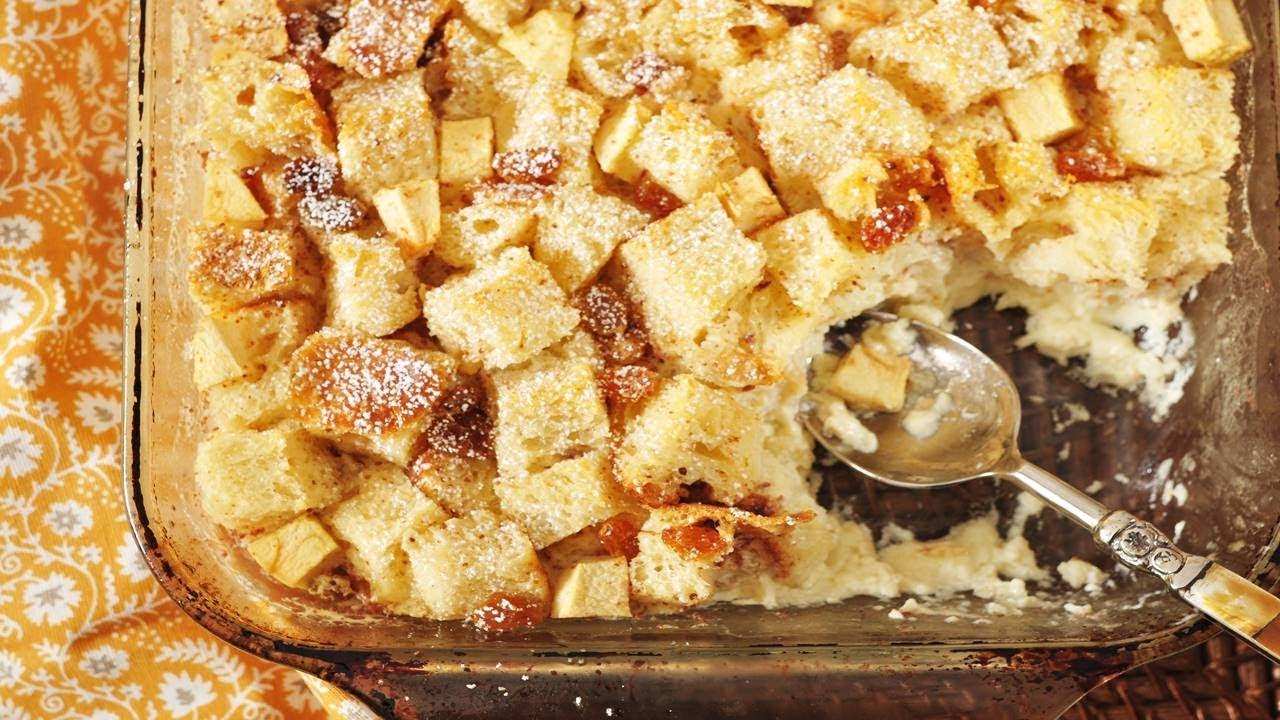
Bread Pudding Recipe: If you’re craving a warm, comforting dessert that makes the most out of leftover bread, you’re in the right place.
This step-by-step guide will walk you through making the most delicious, moist, and flavor-packed bread pudding you’ve ever tasted. It’s a tried-and-true dessert that never goes out of style—and with this guide, you’ll master it in no time.
What is Bread Pudding?
Bread pudding is a timeless dessert that originated as a clever way to use up stale bread. But don’t be fooled by its humble beginnings—when done right, it transforms into a rich, creamy, and decadent treat. At its core, bread pudding is made by soaking chunks of bread in a sweet, eggy custard and then baking until golden brown. The result? A dessert that’s custardy in the middle with crispy edges on top. Some versions include raisins, nuts, or chocolate chips, and many are served with a drizzle of sauce, like bourbon, vanilla, or caramel.
Why You’ll Love This Classic Dessert
- Simple Ingredients: Most ingredients are already in your pantry.
- Customizable: Add your favorite spices, fruits, or sauces.
- Comforting Flavor: Warm, soft, and spiced—perfect for any season.
- Budget-Friendly: Uses up leftovers and avoids waste.
- Easy to Make: Follow the steps, and it’s nearly foolproof.
List of Ingredients You’ll Need
For the Bread Base
- 6–8 cups of day-old bread (preferably brioche, challah, or French bread)
- Butter for greasing the baking dish
For the Custard Mixture
- 4 large eggs
- 2 cups whole milk
- 1 cup heavy cream
- ¾ cup granulated sugar
- ¼ cup brown sugar (for depth of flavor)
- 1 tbsp vanilla extract
- 1 tsp ground cinnamon
- ¼ tsp ground nutmeg
- Pinch of salt
Optional Add-ins
- ½ cup raisins or dried cranberries (soaked in warm water or rum)
- ½ cup chopped nuts (pecans, walnuts)
- ½ cup chocolate chips
For the Topping or Sauce (Optional)
- Powdered sugar (for dusting)
- Caramel sauce
- Vanilla or bourbon sauce
Best Bread to Use for Bread Pudding
The type of bread you use can make or break your pudding. Ideally, use a slightly dry, hearty bread that can soak up the custard without turning to mush. Brioche and challah are top picks because they’re rich and buttery, but French bread or Italian loaf work just as well. Avoid thin sandwich bread or anything too soft, as it won’t hold the custard well. If your bread is fresh, toast it lightly or leave it out overnight to dry out.
How to Prepare Bread for the Pudding
Before you start mixing, your bread needs to be properly prepped. Tear or cube it into 1- to 2-inch pieces. Some people like neatly cut cubes, while others prefer rustic, hand-torn chunks—it’s up to you. If your bread is fresh, spread the pieces on a baking sheet and toast in the oven at 300°F (150°C) for 10–15 minutes until dry but not browned. This helps it absorb the custard better, resulting in a more uniform texture.
Step-by-Step Guide to Making Bread Pudding
Let’s break it down so you can get this dessert on the table fast—and delicious.
Step 1: Preheat Your Oven
Preheat your oven to 180°C (350°F). Lightly grease a baking dish with butter or non-stick spray to prevent sticking and ensure easy serving later.
Step 2: Prepare the Bread
Cut day-old bread into bite-sized cubes. Slightly stale bread works best because it absorbs the custard without becoming mushy. Spread the bread evenly in the prepared baking dish.
Step 3: Make the Custard
In a large bowl, whisk together milk or cream, eggs, sugar, melted butter, vanilla extract, cinnamon, nutmeg, and a pinch of salt. Whisk until smooth and well combined.
Step 4: Combine Bread and Custard
Pour the custard mixture evenly over the bread cubes. Gently press the bread down with a spoon so every piece is soaked in the liquid.
Step 5: Let It Soak
Allow the mixture to rest for 15–30 minutes. This soaking time helps the bread fully absorb the custard, resulting in a soft and creamy texture after baking.
Step 6: Bake to Perfection
Place the dish in the preheated oven and bake for 35–45 minutes, or until the top is golden brown and the center is set. A knife inserted in the middle should come out mostly clean.
Step 7: Prepare the Sauce (Optional)
While the pudding bakes, make an optional sauce by simmering butter, brown sugar, cream, and vanilla in a small saucepan until smooth and slightly thickened. Stir continuously to prevent burning.
Step 8: Serve and Enjoy
Remove the bread pudding from the oven and let it cool slightly. Serve warm, drizzled with sauce if desired. Enjoy it as a comforting dessert or indulgent breakfast treat. 🍞🍮
Tips for Making the Perfect Bread Pudding
- Use day-old bread: Fresh bread gets too mushy. Day-old or toasted bread absorbs the custard beautifully.
- Don’t skip the soaking time: Letting the bread soak ensures that every piece is infused with rich flavor.
- Mix-ins wisely: Too many add-ins can affect texture. Use no more than 1 to 1.5 cups total.
- Test for doneness: Gently shake the dish—if the center jiggles like Jello but doesn’t slosh, it’s done.
- Let it rest before serving: This helps the custard set up and intensifies the flavor.
Variations of Bread Pudding to Try
Bread pudding is incredibly versatile. You can switch up flavors, mix-ins, and even the bread to create your own signature dish. Here are a few delicious twists:
Chocolate Bread Pudding
- Use chocolate chips and cocoa powder in the custard.
- Drizzle with chocolate sauce instead of vanilla.
Apple Cinnamon Bread Pudding
- Add diced apples and extra cinnamon.
- Top with caramel sauce and toasted pecans.
Pumpkin Spice Bread Pudding
- Mix pumpkin purée and pumpkin spice into the custard.
- Ideal for fall and Thanksgiving.
Savory Bread Pudding
- Omit sugar and vanilla, use cheese, herbs, sautéed vegetables, and broth instead of milk.
- Great as a brunch casserole or side dish.
Gluten-Free or Vegan Alternatives
No one should miss out on bread pudding. Here’s how you can make it gluten-free or vegan:
Gluten-Free Option
- Use certified gluten-free bread.
- Ensure all other ingredients (like vanilla extract) are gluten-free.
Vegan Option
- Replace eggs with flax eggs (1 tbsp flaxseed + 2.5 tbsp water = 1 egg).
- Use plant-based milk and cream (almond, coconut, oat).
- Swap butter with vegan butter or coconut oil.
You’ll still get that warm, custardy texture with a bit of creativity.
How to Store and Reheat Leftovers
Bread pudding stores surprisingly well and tastes just as good the next day.
Storage:
- Cool completely.
- Store in an airtight container in the fridge for up to 5 days.
Freezing:
- Wrap tightly in plastic wrap and foil.
- Freeze for up to 2 months.
- Thaw overnight in the fridge before reheating.
Reheating:
- Microwave individual portions for 30–60 seconds.
- Or reheat in a 300°F (150°C) oven for 15–20 minutes.
Add a splash of milk before reheating to keep it moist.
Common Mistakes to Avoid
- Using fresh bread: This leads to soggy pudding.
- Skipping the soak: Your pudding won’t be evenly moist.
- Overbaking: It’ll turn dry and lose that custardy center.
- Adding mix-ins too late: They won’t distribute evenly.
- Too much sugar: Remember, sauces and toppings add sweetness too.
What to Serve with Bread Pudding
Want to elevate your dessert game? Here are some ideas:
- Vanilla ice cream: Classic combo.
- Fresh berries: Adds freshness and acidity.
- Whipped cream: Light and airy contrast.
- Espresso or coffee: Balances the sweetness perfectly.
- A drizzle of sauce: Bourbon, caramel, vanilla, or chocolate.
This dish is rich and filling, so simple sides work best.
Nutritional Information (Estimated)
| Serving Size | 1 Cup |
|---|---|
| Calories | ~350-450 |
| Fat | 15–20g |
| Carbs | 45–55g |
| Sugar | 25–35g |
| Protein | 6–8g |
Note: Values vary depending on ingredients and portion size.
FAQs about Bread Pudding Recipe
1. Can I make bread pudding ahead of time?
Yes! Bread pudding is perfect for making ahead. You can assemble the dish, pour the custard over the bread, cover it tightly, and refrigerate overnight. Bake it fresh the next day for the best texture and flavor.
2. Why is my bread pudding too runny?
Bread pudding can turn out runny if it’s underbaked or if the bread didn’t absorb enough custard. Make sure to bake until the center is just set and allow enough soaking time so the bread fully absorbs the liquid.
3. Can I use skim milk instead of whole milk or cream?
You can use skim milk, but the result will be lighter and less rich. Whole milk or cream creates a creamier texture and deeper flavor, which is why they’re commonly recommended.
4. What’s the best bread for savory bread pudding?
For savory versions, crusty breads like ciabatta, sourdough, or French bread work best. These breads hold their structure well and absorb flavors without becoming mushy. Avoid sweet or enriched breads like brioche for savory dishes.
5. How long does bread pudding last?
Bread pudding can be stored in an airtight container in the refrigerator for up to 5 days. For longer storage, you can freeze it for up to 2 months. Thaw overnight in the fridge and reheat before serving.
Conclusion
Bread pudding is one of those heartwarming desserts that never fails to impress. It’s easy to make, uses affordable ingredients, and fills your kitchen with cozy aromas that feel like home. Whether you stick to the traditional recipe or experiment with different flavors, this dessert is all about comfort and creativity.
Perfect for holidays, potlucks, or just a weeknight treat, bread pudding proves that even the simplest ingredients can create something spectacular. So grab that leftover bread, and get baking!