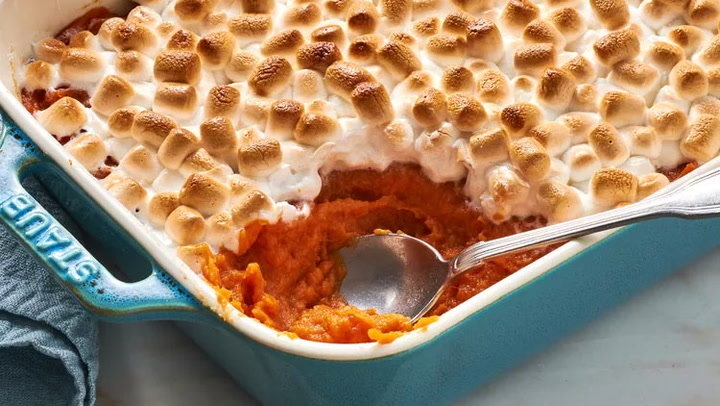
Sweet Potato Casserole Recipe: Sweet potato casserole isn’t just a holiday favorite—it’s a comfort dish that’s perfect year-round. With its rich, velvety texture and crunchy pecan topping, this recipe hits that sweet-savory balance in the best way possible.
Whether you’re making it for Thanksgiving, a weekend potluck, or just because you need something indulgent, you’re about to master a classic Southern staple.
Why You’ll Love This Sweet Potato Casserole
This isn’t your basic casserole. It’s a cozy, flavor-packed dish that combines creamy sweet potatoes with warm spices, and finishes off with a buttery, golden brown topping. Here’s why this will become your go-to recipe:
- Super easy to make with simple ingredients.
- Kid-friendly and perfect for picky eaters.
- Customizable to suit your taste (vegan, less sugar, gluten-free? No problem).
- A proven crowd-pleaser at any event.
Whether you’re feeding a crowd or just meal-prepping comfort food for yourself, this casserole delivers big flavor without requiring hours in the kitchen.
List of Ingredients You’ll Need
Let’s break it down so you’re fully stocked before you start.
For the Sweet Potato Mixture:
- 4 cups mashed sweet potatoes (about 4–5 medium sweet potatoes)
- ½ cup granulated sugar (or brown sugar)
- 2 large eggs
- ½ cup whole milk (or evaporated milk)
- ½ cup melted butter
- 1 teaspoon vanilla extract
- ½ teaspoon ground cinnamon
- Pinch of salt
For the Topping:
- ½ cup packed brown sugar
- ⅓ cup all-purpose flour
- ⅓ cup melted butter
- 1 cup chopped pecans (or walnuts)
Optional: Mini marshmallows for an extra gooey topping layer.
Tools & Equipment Required
To make things easier and mess-free, gather these items ahead of time:
- Large mixing bowls
- Potato masher or hand mixer
- Saucepan or pot (for boiling sweet potatoes)
- 9×13-inch baking dish
- Rubber spatula
- Measuring cups & spoons
- Oven mitts
- Whisk
Having the right tools makes the whole process faster and more enjoyable—plus, you’ll avoid unnecessary mess in the kitchen.
How to Choose the Right Sweet Potatoes
Not all sweet potatoes are created equal. For the best flavor and texture, go for:
- Garnet or Jewel sweet potatoes – They have deep orange flesh and a sweet, creamy texture when cooked.
- Avoid pale-fleshed varieties as they can be drier and less flavorful.
Pick sweet potatoes that are:
- Firm to the touch (no soft spots or sprouting).
- Smooth-skinned and free of cracks.
- Similar in size (they’ll cook more evenly).
Pro tip: Don’t use canned sweet potatoes—they’re often too watery and overly sweetened.
How to Cook Sweet Potatoes for Casserole
You can cook the sweet potatoes in two popular ways:
Boiling Method
- Peel and chop sweet potatoes into chunks.
- Place in a large pot, cover with water, and bring to a boil.
- Reduce heat and simmer for 15–20 minutes or until fork-tender.
- Drain well and mash.
Baking Method
- Wash sweet potatoes, poke holes with a fork, and place on a baking sheet.
- Bake at 400°F (204°C) for 45–60 minutes until soft.
- Let cool slightly, peel off skins, and mash.
Both methods work, but baking draws out more natural sweetness.
Step-by-Step Guide to Make Sweet Potato Casserole
Let’s break this down into simple, follow-along steps.
Step 1: Preheat and Prep
Preheat your oven to 180°C (350°F). Lightly grease a baking dish and set it aside. Gather all your ingredients so everything is ready once the sweet potatoes are cooked.
Step 2: Cook the Sweet Potatoes
Peel the sweet potatoes and cut them into chunks. Place them in a large pot, cover with water, and bring to a boil. Cook for 15–20 minutes, or until the potatoes are fork-tender. Drain well to remove excess moisture.
Step 3: Mash the Sweet Potatoes
Transfer the cooked sweet potatoes to a large mixing bowl. Mash until smooth using a potato masher or hand mixer. Aim for a creamy texture with minimal lumps.
Step 4: Prepare the Sweet Potato Mixture
Add butter, milk or cream, brown sugar, eggs, vanilla extract, cinnamon, nutmeg, and a pinch of salt to the mashed potatoes. Mix thoroughly until everything is well combined and smooth. Taste and adjust sweetness or spices if needed.
Step 5: Transfer to Baking Dish
Pour the sweet potato mixture into the prepared baking dish. Use a spatula to spread it evenly, smoothing the top so it bakes uniformly.
Step 6: Make the Crunchy Topping
In a separate bowl, combine brown sugar, flour, melted butter, and chopped pecans or walnuts. Mix until the topping is crumbly and slightly moist. This topping adds a delicious crunch and contrast to the creamy base.
Step 7: Sprinkle Topping and Bake
Evenly sprinkle the topping over the sweet potato mixture. Place the dish in the preheated oven and bake for 25–30 minutes, or until the topping is golden brown and the casserole is set.
Step 8: Cool and Serve
Remove from the oven and allow the casserole to cool for 10 minutes before serving. This helps it firm up slightly and enhances the flavor. Serve warm as a side dish or dessert-style treat.
Tips for the Perfect Sweet Potato Casserole
- Use room-temperature eggs and milk – Helps everything blend smoothly.
- Don’t overmix – It can make the texture gluey.
- Toast the pecans beforehand – Brings out extra flavor.
- Add a hint of nutmeg or ginger – For a deeper spice profile.
- Want it lighter? Use less sugar and sub Greek yogurt for some of the butter.
Variations You Can Try
The beauty of sweet potato casserole lies in its flexibility. Want to tweak it for dietary preferences or add a new twist? No problem! Here are some popular and creative variations you can experiment with:
1. Vegan Sweet Potato Casserole
- Swap out the butter with vegan butter or coconut oil.
- Replace eggs with flaxseed eggs (1 tbsp ground flaxseed + 3 tbsp water per egg).
- Use almond milk or oat milk instead of dairy milk.
- The topping can stay the same—just ensure the butter substitute is plant-based.
2. Gluten-Free Version
- Sweet potatoes are naturally gluten-free, so just replace the flour in the topping with almond flour or a certified gluten-free all-purpose flour.
- Double-check that your vanilla extract and any other ingredients are certified gluten-free.
3. Marshmallow Topping Instead of Pecans
- Want a more classic holiday touch? Ditch the pecans and sprinkle mini marshmallows over the casserole in the last 10 minutes of baking.
- Keep an eye on them so they don’t burn—golden is the goal!
4. Crumbly Oat Topping
- Add rolled oats to your topping mix for an extra-crispy, dessert-like feel.
- A great combo is brown sugar + oats + cinnamon + chopped nuts + melted butter.
5. Spiced-Up Version
- Mix in spices like nutmeg, clove, allspice, or ginger to the sweet potato filling.
- For an adult twist, add a splash of bourbon to the sweet potato mixture!
Make-Ahead and Storage Instructions
Sweet potato casserole is ideal for making ahead, saving you precious time on big cooking days.
Make-Ahead Tips:
- Up to 2 Days Ahead: You can prepare the sweet potato base and the topping separately. Store both in airtight containers in the fridge.
- The Night Before: Assemble the entire casserole (minus marshmallows, if using) and refrigerate covered.
- On the Day Of: Let it sit at room temperature for about 30 minutes, then bake as usual.
Storage:
- Store leftovers in the refrigerator in an airtight container for up to 4 days.
- You can also freeze it (baked or unbaked) for up to 2 months. Thaw overnight in the fridge before reheating.
Reheating Tips
Want that “fresh-from-the-oven” taste even when reheating? Here’s how:
- Oven Method (Best): Cover with foil and reheat at 325°F (163°C) for 15–20 minutes or until warm throughout.
- Microwave: For smaller portions, microwave on medium heat in 30-second intervals until hot.
- Air Fryer: Yes, you can! Reheat small slices at 300°F for about 5–7 minutes for a slightly crispy top.
Avoid overheating as it can dry out the casserole.
Common Mistakes to Avoid
Even simple recipes have a few tripwires. Here’s how to steer clear of them:
- Using watery or canned sweet potatoes – They’ll make your casserole soggy.
- Overcooking the topping – The nuts can burn easily; keep an eye on them in the last few minutes.
- Skipping the salt – A pinch of salt enhances the sweetness beautifully.
- Undermashing the potatoes – Lumps can ruin the creamy texture.
- Serving too soon – Give the casserole at least 10–15 minutes to rest so it sets properly.
Serving Suggestions
While sweet potato casserole shines on its own, it also plays beautifully with other dishes. Here are some great pairings:
Main Dishes:
- Roast turkey or chicken
- Baked ham with glaze
- Stuffed acorn squash (vegetarian option)
Sides:
- Green bean casserole
- Cranberry sauce
- Garlic mashed potatoes
- Fresh dinner rolls or cornbread
Pro tip: Add a crisp green salad to balance out the sweetness.
Health Benefits of Sweet Potatoes
Not only is this dish delicious, but it also packs a nutritious punch—especially thanks to the sweet potatoes:
- High in Fiber – Great for digestion and gut health.
- Rich in Vitamins – Especially vitamin A (beta-carotene), vitamin C, and B vitamins.
- Supports Vision and Immunity – Thanks to powerful antioxidants.
- Natural Sweetness – Helps reduce the need for refined sugar.
You can make it healthier by adjusting the amount of sugar and butter, or using more wholesome ingredient swaps (like oat flour, coconut sugar, etc.).
FAQs about Sweet Potato Casserole Recipe
1. Can I make sweet potato casserole without eggs?
Yes! Just replace each egg with a flax egg (1 tbsp ground flax + 3 tbsp water) or use a commercial egg replacer.
2. How can I reduce the sweetness in this casserole?
You can cut the sugar in half or eliminate the topping for a more savory version. Adding a pinch of salt or using unsweetened almond milk also helps balance it.
3. Can I freeze sweet potato casserole?
Absolutely. You can freeze it fully baked or unbaked. Just wrap tightly and thaw overnight in the fridge before baking or reheating.
4. What can I substitute for pecans in the topping?
Walnuts, almonds, or even sunflower seeds work great. Or skip nuts altogether and use oats for a crumble-like texture.
5. Is sweet potato casserole a dessert or a side dish?
It depends! In the South, it’s often served as a side dish, even with the marshmallows. But it’s sweet enough to pass for dessert, especially with a scoop of vanilla ice cream.
Conclusion
Sweet potato casserole is more than just a holiday tradition—it’s a flavorful, feel-good dish that combines warmth, sweetness, and crunch in every bite. Whether you’re making it for a special gathering or treating yourself on a cozy evening, this recipe guarantees a crowd-pleaser that never goes out of style.
By following this step-by-step guide, you’ll master the art of creating a perfectly balanced sweet potato casserole every single time. From choosing the right spuds to getting that golden topping just right, it’s all about putting love (and butter!) into every step.