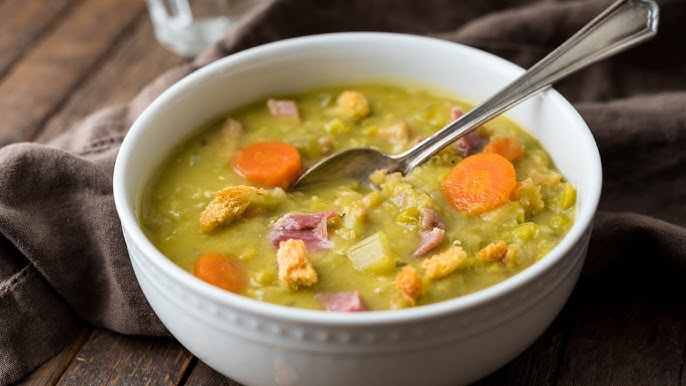
Pea and Ham Soup Recipe: There’s something deeply comforting about a bowl of homemade pea and ham soup. Thick, hearty, and full of flavor, this soup has been a go-to comfort dish for generations.
Whether you’re warming up on a cold winter day or just looking for a healthy, satisfying meal, this soup hits the spot every time.
Made with simple, wholesome ingredients and cooked low and slow, it’s the kind of recipe that fills your home with mouthwatering aromas.
Let’s dive right into this timeless recipe with a modern twist!
Why You’ll Love This Classic Soup
Let’s be honest: soup can sometimes feel like an afterthought. But pea and ham soup is different. It’s cozy, filling, and packed with real flavor. Here’s why this soup is going to be your next favorite:
- Budget-friendly: Uses inexpensive ingredients like dried split peas and leftover ham bones.
- One-pot meal: Fewer dishes to clean up. Win-win!
- Nutritious: High in fiber and protein, low in fat (unless you load up on bacon—which we totally respect).
- Freezes beautifully: Make a big batch and save some for busy nights.
There’s also something nostalgic about it. This soup takes many people back to childhood kitchens, where it simmered on the stove all day long. And if you’re new to cooking? This recipe is practically foolproof.
History and Origins of Pea and Ham Soup
Pea and ham soup isn’t just comfort food—it’s part of culinary history. Variations of this dish have been around since ancient times. In medieval Europe, peas were a staple food, especially among the poor. They stored well and were easy to grow, which made them ideal for stews and soups. Add a ham bone, and suddenly, that basic stew became hearty and flavorful.
In the UK, it’s often known as “pea and ham hock soup”, especially in the North. In Scandinavian countries, it’s eaten with pancakes (yes, really). In America, it’s sometimes called split pea soup, and it’s particularly popular in colder climates.
No matter where you’re from, chances are your ancestors simmered some version of this soup on the stovetop.
Health Benefits of Pea and Ham Soup
Who says comfort food can’t be healthy? This soup delivers both.
- High in Fiber: Thanks to the split peas, it’s excellent for digestion.
- Protein-Rich: Ham and peas both provide a solid protein punch.
- Low-Glycemic: Split peas have a low glycemic index, making this a great option for steady energy levels.
- Rich in Iron and B Vitamins: Great for boosting energy and immune function.
Want to lighten it up even more? Swap the ham for lean turkey or skip meat entirely and add mushrooms for that umami kick.
List of Ingredients You’ll Need
You probably already have most of these on hand!
Fresh Ingredients:
- 1 large onion, finely chopped
- 2 cloves garlic, minced
- 2 carrots, diced
- 2 celery stalks, chopped
- 1 bay leaf
- 1 smoked ham hock or leftover ham bone
- Fresh parsley (optional for garnish)
Pantry Staples:
- 2 cups dried split green peas (rinsed)
- 6 cups chicken or vegetable broth (low sodium)
- Salt and pepper to taste
- Olive oil or butter (for sautéing)
Optional Add-ins:
- 1 potato, peeled and diced
- 1 tsp thyme or marjoram
- Dash of chili flakes (if you like heat)
- Croutons or crusty bread for serving
Always rinse your peas before using them—they sometimes have dirt or pebbles in the bag!
Choosing the Right Type of Ham
Ham isn’t just ham—especially in this soup.
- Smoked ham hock: Adds deep, smoky flavor. This is the classic option.
- Leftover cooked ham: Great for using up holiday leftovers.
- Ham bone with meat: Perfect balance of flavor and texture.
- Diced ham steak: Good for quick versions.
Don’t toss that bone! Even if there’s not much meat on it, it’s packed with flavor that’ll infuse into your broth.
Types of Peas: Dried, Split, or Fresh
The type of peas you use will affect the texture and cook time.
- Split green peas: The most common choice. They cook down into a creamy texture without the need for blending.
- Yellow split peas: Slightly milder and a little sweeter.
- Fresh peas: Not recommended unless you want a totally different (and lighter) soup.
Stick with split peas for that classic, hearty consistency we all crave.
Essential Kitchen Equipment
You don’t need fancy gear—just the basics:
- Large heavy-bottomed soup pot or Dutch oven
- Sharp knife for chopping
- Wooden spoon for stirring
- Ladle for serving
- Blender or immersion blender (optional, for smoother texture)
- Airtight containers for leftovers
If you’re making a big batch, a slow cooker or Instant Pot works wonders too.
Preparation Tips Before You Start Cooking
- Soak the peas? Not necessary for split peas. Just rinse well to remove any debris.
- Prep ahead: Dice all your veggies and chop your ham before turning on the stove.
- Skim the foam: As your soup simmers, you might notice foam on top—just skim it off with a spoon.
- Go low and slow: The longer it simmers, the better the flavor.
A little prep makes the cooking process smooth and relaxing.
Step-by-Step Guide to Making Pea and Ham Soup
Step 1: Prepare Your Ingredients
Chop onions, carrots, and celery. Mince garlic. Rinse your split peas and check for stones. Have your ham hock or bone ready. It’s always smart to set everything up like a cooking show—makes the process feel effortless.
Step 2: Sauté Aromatics
Heat a tablespoon of olive oil in your pot. Add onions, carrots, and celery. Cook for 5–7 minutes until soft and fragrant. Add the garlic and cook for another minute. This builds the flavor base of your soup.
Step 3: Add Peas, Ham, and Broth
Add the rinsed peas, ham hock, and broth to the pot. Stir everything together. Drop in the bay leaf and any herbs you’re using. Bring to a gentle boil.
Step 4: Simmer and Let the Flavors Develop
Lower the heat to a simmer. Cover partially and cook for 60–90 minutes, stirring occasionally. The peas should break down into a thick, stew-like consistency.
Step 5: Remove Ham, Shred It, and Return to Pot
Take out the ham bone or hock. Let it cool slightly, then shred the meat and discard any fat or bone. Return the shredded ham to the pot.
Step 6: Adjust Seasoning and Blend (Optional)
Taste and adjust salt and pepper. If you prefer a smoother texture, use an immersion blender to partially blend the soup. Leave some chunks for texture—it’s more satisfying that way.
Serving Suggestions
Now that your soup is rich, thick, and full of smoky ham flavor, it’s time to serve it up! Pea and ham soup is wonderfully filling on its own, but here are a few ideas to elevate the experience:
- Crusty Bread: Serve with sourdough, rye, or a rustic baguette to soak up the soup.
- Toasted Cheese Sandwich: Classic combo! The crispy, gooey sandwich is the perfect sidekick.
- Herb Garnish: Sprinkle with chopped parsley or thyme for a burst of freshness.
- Drizzle of Cream: A touch of cream or a swirl of Greek yogurt can add richness and visual flair.
- Croutons or Bacon Bits: For crunch lovers, top with garlic croutons or crispy bacon.
Pro tip: Serve it hot from the stove, but let it sit for a few minutes so the flavors can settle. Soup always tastes better when it’s not piping hot.
Storage and Reheating Tips
One of the best things about pea and ham soup? It tastes even better the next day.
- Refrigerator: Let the soup cool completely. Store in airtight containers for up to 4–5 days.
- Reheating: Reheat gently on the stove or in the microwave. You may need to add a bit of water or broth, as it thickens in the fridge.
- Avoid Boiling Again: Just heat until steaming to preserve flavor and texture.
It’s a great meal prep option, and it gets more flavorful as it rests. Perfect for lunch all week!
How to Freeze Pea and Ham Soup
This soup freezes like a dream—here’s how to do it right.
- Cool Completely: Always cool your soup before freezing to avoid ice crystals.
- Portion It Out: Freeze in meal-sized portions for easier reheating.
- Use Freezer-Safe Containers: Resealable bags (laid flat to save space) or hard plastic containers work great.
- Label and Date: You think you’ll remember—but trust me, you won’t.
It will keep well in the freezer for up to 3 months. To reheat, thaw overnight in the fridge and warm gently on the stove.
Common Mistakes to Avoid
Even though this soup is simple, here are a few common missteps you’ll want to steer clear of:
- Not rinsing the peas: Unrinsed peas can carry dust or small pebbles.
- Over-salting: Ham is already salty—taste before you add extra salt.
- Skipping aromatics: Onions, carrots, and celery aren’t optional. They build flavor.
- Using too much liquid: This isn’t a thin broth—it should be thick and hearty.
- Forgetting to stir: Peas can stick to the bottom of the pot and burn. Stir occasionally!
A little attention to detail will turn your soup from average to restaurant-worthy.
Pea and Ham Soup Variations
Want to mix it up? Here are some creative takes on the classic:
Vegetarian Version
Skip the ham and use smoked paprika, liquid smoke, or mushrooms to mimic that deep umami flavor. You can also try veggie sausage or lentils as a protein boost.
Spicy Version
Add chili flakes, jalapeños, or even a bit of hot sauce for a spicy kick. Smoky chipotle also works beautifully with the earthy peas.
With Potatoes or Other Veggies
Toss in diced potatoes, parsnips, or even spinach near the end of cooking. It’s a great way to use up fridge leftovers and bulk up the soup even more.
You can also use yellow split peas or add a bit of barley for a slightly different texture and flavor.
Nutritional Information
Here’s a rough breakdown per serving (based on a traditional recipe with ham hock and veggies):
| Nutrient | Amount (Approx.) |
|---|---|
| Calories | 300–350 kcal |
| Protein | 18–22g |
| Carbohydrates | 35–40g |
| Fiber | 10–12g |
| Fat | 10–12g |
| Sodium | 700–900mg (depending on ham) |
This soup is filling without being heavy, and it’s a great source of fiber and protein. For a lighter version, skip the ham or reduce added oil.
FAQs about Pea and Ham Soup Recipe
1. Can I use canned peas instead of dried split peas?
Not recommended. Canned peas are already soft and won’t give the thick, creamy texture you want in this soup. Stick with dried split peas for the best results.
2. Can I make this in a slow cooker?
Yes! Just throw everything in and cook on low for 8 hours or high for 4–5. It’s a great hands-off way to make the soup.
3. How do I make it smoother?
Use an immersion blender or blend half the soup and stir it back in. Just be careful not to over-blend—you still want some texture.
4. Is this soup gluten-free?
It can be, as long as your broth is gluten-free and you don’t serve it with bread containing gluten.
5. What can I use instead of ham?
Try smoked turkey leg, bacon, or even a plant-based smoked sausage for a meat-free version.
Conclusion
Pea and ham soup is more than just a winter staple—it’s a hug in a bowl. It’s economical, packed with flavor, and incredibly satisfying. Whether you’re using up leftovers or planning a big batch to freeze, this soup delivers every time.
The slow-cooked combination of smoky ham, creamy peas, and savory veggies creates a meal that’s rich, nostalgic, and perfect for any occasion. So grab your pot, gather your ingredients, and start simmering—you’re going to love every spoonful.