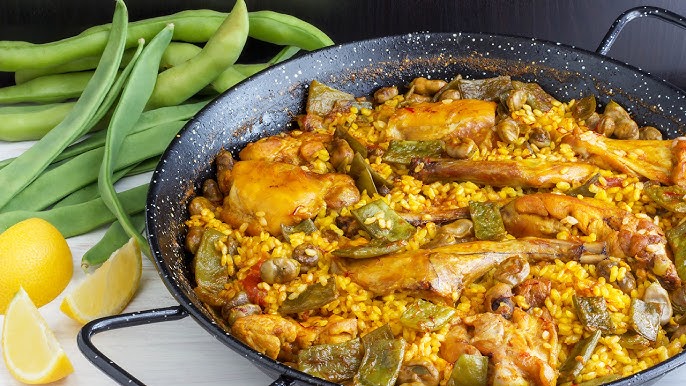
Paella Valenciana Recipe: Imagine the sun-drenched fields of Valencia, Spain, the scent of saffron lingering in the air, and a large sizzling pan of golden rice cooking over an open flame. That’s the world of Paella Valenciana, the OG of all paellas and a national treasure in Spain. If you’ve ever wanted to cook a dish that’s rich in history, packed with flavor, and an absolute showstopper, you’ve just found it.
Unlike other types of paella that lean heavily on seafood, Paella Valenciana is a rustic, land-based version made with meats like rabbit and chicken, plus local veggies and the soul-lifting essence of saffron. It’s not just food—it’s a full-on cultural experience.
In this guide, I’ll walk you through every little detail: the right tools, the freshest ingredients, and a foolproof, step-by-step process that even beginners can follow. Ready to cook like a Valencian? Let’s go!
What Makes Paella Valenciana Unique?
Sure, you’ve heard of seafood paella, maybe even mixed paella with chorizo tossed in. But Paella Valenciana? That’s the real deal. Born in the fertile lands around Albufera, Valencia’s rice-growing region, this dish was the farmers’ answer to lunch—hearty, satisfying, and made with whatever was available locally.
Here’s what sets it apart:
- Land over sea: Instead of prawns or squid, you’re using rabbit, chicken, and sometimes snails. Don’t let that throw you—each element adds depth and authenticity.
- Specific veggies: Think green beans and garrofón (a type of large white bean). No peas or carrots, please.
- Socarrat: That crispy rice layer at the bottom of the pan? Pure gold in Spanish cuisine.
- One pan to rule them all: It’s traditionally made in a wide, shallow pan called a paellera over open flame. This ensures even cooking and that signature texture.
Authentic, no-nonsense, and bursting with regional pride—this dish doesn’t just taste good, it tells a story.
Essential Tools You’ll Need
Before we dive into the cooking part, you’ll need to stock your kitchen with the right gear. Don’t worry, no fancy gadgets—just traditional tools that make a world of difference:
- Paella Pan (Paellera): This is a must. It’s wide and shallow, which helps the rice cook evenly and develop that coveted socarrat.
- Burner or Open Flame: Traditionalists use wood fire, but a propane paella burner or gas stovetop will work fine.
- Large Spatula or Wooden Spoon: For gently mixing without breaking the grains.
- Lid or Foil (optional): Used only after cooking for resting purposes.
Having the right tools sets you up for success. If you can get your hands on a paella pan, it’s a game-changer—trust me.
Ingredients You’ll Need
Time to gather the good stuff. Authenticity matters, but you can make a few substitutions if you’re in a pinch.
Proteins:
- 1 lb (450g) chicken, bone-in, chopped
- 1 lb (450g) rabbit, chopped (optional but traditional)
- ½ cup snails (optional, for the brave and authentic)
Vegetables:
- 1 cup green beans (flat, wide variety like ferraura)
- 1 cup garrofón beans (large white beans)
Rice and Broth:
- 2 cups Bomba or Calasparra rice
- 5 cups chicken broth, hot and seasoned
- A pinch of saffron threads, soaked in warm water
Spices & Seasonings:
- 1 tsp smoked paprika
- Salt to taste
- Fresh rosemary sprigs (optional but adds earthy aroma)
Others:
- 3 tbsp olive oil
- 2 medium tomatoes, grated
- Lemon wedges (for serving)
Got everything? Let’s cook!
Choosing the Right Rice
This step is not negotiable. You need short-grain rice, specifically Bomba or Calasparra, which absorbs flavor like a sponge but doesn’t go mushy.
Why not basmati or jasmine? They break apart or clump up, ruining that perfect texture. Stick to the good stuff—it’s worth every grain.
- Bomba rice expands more and stays firm
- Calasparra is slightly less absorbent but still excellent
- Look for these at Spanish markets or order online
Don’t forget: never rinse the rice, and never stir after adding it to the pan. This is not risotto.
Prepping Your Ingredients
Here’s how to prep like a chef:
- Meats: Chop chicken and rabbit into even pieces. Lightly season with salt.
- Veggies: Trim green beans. If using frozen garrofón, thaw first. Fresh is always better.
- Saffron: Soak threads in 2 tbsp warm water for at least 15 minutes to release their golden hue and fragrance.
- Tomatoes: Grate them to make a fresh, juicy tomato base (discard the skin).
Having everything prepped and ready before cooking is key—this dish moves fast once you start.
Step-by-Step Cooking Instructions
Now, the magic begins. Follow these steps exactly, and you’ll nail that perfect Paella Valenciana like a pro.
Step 1: Heat the Pan and Add Oil
Place your paella pan over medium heat. Add 3 tablespoons of olive oil and swirl it around to coat the entire surface. The oil should shimmer, not smoke.
Pro tip: Tilt the pan a little to check if the oil pools evenly—this tells you if the surface is level. If not, adjust it so the rice cooks uniformly later.
Step 2: Brown the Meat
Add the chicken and rabbit pieces. Brown them on all sides until you see a golden crust forming—this could take around 10–12 minutes. Don’t rush this part; it builds a deep, savory base.
If you’re using snails, wait to add them later with the broth.
Step 3: Sauté the Vegetables
Push the meat to the side of the pan and toss in the green beans and garrofón. Let them sauté for 5–6 minutes until slightly blistered but still vibrant.
This is where things start smelling incredible.
Step 4: Add Spices and Tomato
Sprinkle in 1 tsp of smoked paprika. Stir quickly—paprika burns fast. Then, add your grated tomato and cook it down for about 5 minutes until it darkens and thickens. This forms the sofrito, the flavor powerhouse of the dish.
Now, drizzle in your saffron water and mix gently to spread the color and aroma.
Step 5: Pour in Broth and Rice
Add your hot chicken broth (about 5 cups). Stir to deglaze the pan and bring it all together.
Once it comes to a boil, add the rice in a straight line across the pan (yep, that’s how it’s traditionally done). Then spread it evenly using the back of a spoon—but do NOT stir again after this point.
Sprinkle in a bit more salt and drop in your snails now if you’re using them.
Step 6: Arrange the Ingredients
Gently nudge the meat and beans around the rice for a pretty and even distribution. You eat with your eyes first, right?
Add a sprig of rosemary if you like an herbal note.
Step 7: Simmer and Cook Uncovered
Let it cook uncovered over medium-high heat for about 10 minutes, then lower to a simmer and continue for another 10–15 minutes until the rice is tender and liquid is mostly absorbed.
You’ll see little holes forming in the rice surface—this means it’s nearly done.
Step 8: Create the Socarrat
Here’s the tricky part, but it’s what separates the amateurs from the legends. Crank up the heat for the last 1–2 minutes to get that crispy socarrat layer at the bottom. You’ll hear a faint crackle.
Resist the urge to stir. Just let it do its thing.
Step 9: Let It Rest
Once cooked, remove the pan from heat. Cover loosely with foil or a clean kitchen towel. Let it rest for 5–10 minutes to finish steaming and for flavors to settle.
Then, it’s time to serve and devour.
The Art of Timing
Timing is everything when it comes to Paella Valenciana. Miss a beat and your rice might be undercooked or worse—burnt. But follow this rhythm and you’ll be golden.
- Browning meat: 10–12 minutes
- Vegetables and sofrito: 10 minutes
- Simmering rice: 20–25 minutes
- Final crisp (socarrat): 1–2 minutes
- Rest time: 5–10 minutes
Signs you’re doing it right:
- Rice is tender but not mushy
- Liquid is absorbed evenly
- Socarrat makes a light crackling sound
Avoid over-stirring, under-heating, or walking away during crucial moments. Keep your eyes on the pan—it’s like watching a beautiful painting come to life.
Common Mistakes to Avoid
Even seasoned cooks trip up on paella. Avoid these rookie moves:
- Using long-grain rice: It won’t absorb broth properly and turns out fluffy, not creamy or crusty.
- Stirring after adding rice: Stirring disrupts the formation of socarrat and makes your paella mushy.
- Overcrowding the pan: Too many ingredients make the rice steam instead of cook evenly.
- Skipping saffron: Saffron isn’t just for color—it brings a floral, earthy note you can’t fake.
- Covering during cooking: Real paella cooks uncovered to get that dry top and crispy base.
Stick to the steps and treat the process with patience—you’ll get there.
Vegetarian and Seafood Variations
Can’t do rabbit or chicken? No problem. While Paella Valenciana is all about authenticity, you can twist it a little for dietary needs.
Vegetarian Option:
- Skip the meat and snails
- Use hearty vegetables like artichokes, bell peppers, zucchini
- Add a touch of smoked tofu or mushrooms for protein
- Use vegetable broth instead of chicken broth
Seafood Paella (Paella de Mariscos):
- Swap rabbit/chicken for shrimp, mussels, squid, clams
- Cook seafood separately and add during final 5 minutes
- Garnish with lemon wedges and fresh parsley
The technique stays the same—only the ingredients change.
Perfect Pairings
So, your paella is done—golden, fragrant, and stunning. What should you serve it with? Let’s level up your table with traditional and modern pairings that make your meal unforgettable.
Drinks:
- Spanish Red Wine: Try a Tempranillo or Garnacha—they’re fruity, dry, and match the richness of the dish.
- Cava: Spain’s sparkling wine adds a celebratory touch.
- Sangria: Fruity, boozy, and fun—a classic crowd pleaser.
- Agua de Valencia: A Valencian cocktail made from orange juice, cava, vodka, and gin.
Sides:
- Ensalada Mixta: A fresh Spanish salad with lettuce, tomatoes, onions, olives, and boiled eggs. Toss with olive oil and vinegar.
- Pan con Tomate: Rustic bread rubbed with garlic and ripe tomato, then drizzled with olive oil.
- Olives & Cheese Board: Manchego, Iberico, and a variety of Spanish olives like Arbequina or Manzanilla.
- Grilled Veggies: Zucchini, bell peppers, and eggplants lightly grilled and seasoned with sea salt.
Desserts:
- Crema Catalana: A Spanish version of crème brûlée with citrusy flair.
- Churros with Chocolate: Fried dough dipped in thick, warm chocolate. You deserve it.
Food is more than taste—it’s an experience. Set the mood, play some flamenco, and savor every bite.
Serving and Presentation Tips
When it comes to paella, presentation is everything. After all, you’ve just spent an hour crafting a beautiful dish—why not make it look as good as it tastes?
Here’s how to serve it like a true Spaniard:
- Serve in the pan: That wide, shallow paella pan? It’s not just for cooking—it’s the centerpiece. Bring it to the table and let everyone serve themselves.
- Don’t stir when serving: Let guests dig in with a large spoon or fork and find their own share of socarrat.
- Garnish lightly: Add lemon wedges on the edges, maybe a sprinkle of fresh parsley—but don’t overload it.
- Eat with friends: Paella is a social dish. It’s meant to be shared, family-style, with laughter and stories around the table.
Paella isn’t just a meal—it’s a ritual. Respect it, and it’ll become your favorite tradition too.
How to Store and Reheat Leftovers
Paella is best fresh, but if you have leftovers (rare, but it happens), here’s how to keep them delicious:
Storing:
- Transfer the leftover paella to an airtight container.
- Refrigerate within 2 hours of cooking.
- Eat within 2–3 days for best quality.
Reheating:
- Stovetop method: Heat a non-stick skillet over medium heat. Add a little olive oil and spoon in the paella. Cover with foil and heat for 6–8 minutes until hot.
- Oven method: Spread paella in a baking dish, cover with foil, and bake at 350°F (175°C) for 15 minutes.
- Avoid microwaving: It ruins the texture and kills the socarrat.
Never freeze paella—it turns the rice mushy and ruins the dish’s integrity.
Paella Party Tips
Planning to host a party and show off your skills? Here’s how to make it unforgettable:
1. Scale It Right
- Use the proper pan size for your group. General rule: about 1 cup of rice per 2 people.
- Larger pans cook better when spread thin, so don’t heap ingredients.
2. Cook Outdoors (If You Can)
- Authentic paella is cooked over open flame. A backyard grill or paella burner gives the best results and enhances flavor.
3. Create a Spanish Theme
- Set the mood with Spanish music, red and yellow tablecloths, and some hanging garlic or chili for decoration.
- Serve traditional drinks and tapas before the main course.
4. Do a Live Cook Show
- Cook in front of your guests. People love watching the sizzling process, and it gets everyone hyped before dinner.
5. End with a Toast
- Raise a glass and toast with a hearty “Salud!” to good food, good friends, and your newfound paella skills.
FAQs about Paella Valenciana Recipe
1. Can I use a regular frying pan instead of a paella pan?
Technically, yes—but it won’t cook as evenly or give you the traditional socarrat. A proper paella pan really makes a difference.
2. What can I use instead of saffron?
Saffron is key, but if you’re in a bind, use a mix of turmeric and paprika for color—though the flavor won’t be quite the same.
3. I can’t find garrofón beans. What’s a good substitute?
You can use butter beans or lima beans. They mimic the creamy texture and absorb flavor well.
4. How do I know when the rice is perfectly cooked?
The grains should be tender with a slight bite, and the liquid fully absorbed. Look for small holes on the surface—classic sign it’s ready.
5. Can I make this in advance?
It’s best fresh, but you can prep ingredients beforehand and cook the dish 1–2 hours before serving. Reheat gently and add a splash of broth if needed.
Conclusion
So there you have it—your complete, no-nonsense, flavor-packed guide to Paella Valenciana, Spain’s most iconic rice dish. It’s more than a recipe; it’s a cultural celebration cooked into a pan. With the right ingredients, tools, and a bit of care, you can bring a slice of Valencia into your kitchen anytime.
Remember, it’s not about being perfect—it’s about enjoying the process, learning from each cook, and sharing something incredible with people you care about.
Try it once, and you’ll be hooked for life. ¡Buen provecho!