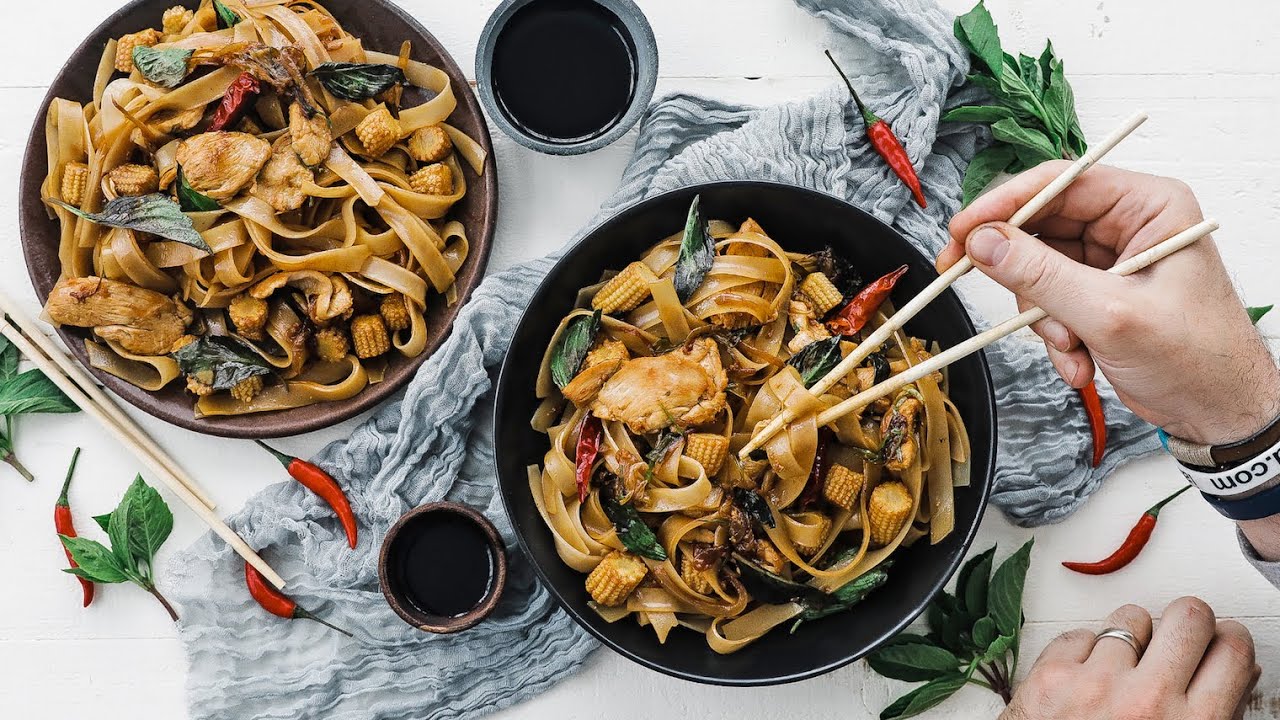
Pad Kee Mao Recipe: Craving a Thai dish that’s full of bold flavors, a kick of heat, and a satisfying chewy texture? Let me introduce you to Pad Kee Mao, better known as Drunken Noodles. This is the ultimate stir-fry dish that hits every note—spicy, savory, slightly sweet, and rich with umami.
The name might raise some eyebrows, but don’t worry—there’s no alcohol in this recipe. Instead, the name “Drunken Noodles” comes from the idea that it’s the perfect cure for a night out or something so spicy it could “wake the drunk out of you.”
Whether you’re trying it for the first time or you’ve ordered it a hundred times from your favorite Thai restaurant, making Pad Kee Mao at home is a whole different experience. You get full control over the ingredients, spice level, and freshness. Ready to make an authentic Thai street food classic in your own kitchen? Let’s dive right in!
Ingredients You’ll Need
Before we jump into cooking, let’s break down the ingredients. One of the best things about Pad Kee Mao is how customizable it is. You can easily switch up the proteins or veggies based on what you have on hand.
Noodles
- Wide rice noodles are the heart of this dish. You’ll want the fresh kind if you can get them—they’re silky and chewy, perfect for soaking up the sauce. If you’re using dried rice noodles, just soak them in warm water until pliable and then cook according to package instructions.
- Avoid thin noodles like vermicelli—they won’t give you the same hearty mouthfeel.
Protein Choices
- Chicken (sliced thin)
- Beef (flank steak or sirloin, thinly sliced)
- Shrimp
- Tofu (firm or extra firm for vegetarians)
- You can also mix and match or use plant-based meat substitutes.
Vegetables
- Red and green bell peppers (sliced)
- Onions (sliced)
- Baby corn
- Carrots (optional)
- Broccoli florets (optional but adds nice texture)
Sauce Components
This sauce is where all the magic happens. Mix these together before cooking:
- 2 tbsp soy sauce
- 1 tbsp dark soy sauce (for that deep color and flavor)
- 1 tbsp oyster sauce (or vegetarian mushroom sauce)
- 1 tbsp fish sauce
- 1 tsp sugar
- Optional: 1 tbsp water if the sauce needs thinning out
Aromatics & Garnish
- 4 cloves garlic, minced
- 2–3 Thai chilies, chopped (adjust to taste)
- 1 cup Thai basil leaves
- Lime wedges
- Chili flakes or crushed red pepper for extra spice
Equipment You’ll Need
Here’s what you’ll need to make this dish with ease:
- A wok (preferred) or a large skillet for stir-frying
- Spatula or wooden spoon
- Mixing bowls for sauce and prep
- Chopping board and sharp knife
Now that everything’s ready, let’s get cooking!
How to Make Pad Kee Mao (Drunken Noodles) Step by Step
Pad Kee Mao, also known as drunken noodles, is bold, spicy, and packed with flavor. The magic happens fast, so have everything ready before you start cooking.
Step 1: Prep Your Ingredients
Chop all vegetables, slice your protein (chicken, beef, shrimp, or tofu), and separate Thai basil leaves from the stems. This dish cooks quickly, so prep is everything.
Step 2: Soak or Cook the Noodles
If using dried rice noodles, soak them in hot water until just tender, then drain. If using fresh noodles, briefly blanch or loosen them according to package instructions. Set aside.
Step 3: Make the Sauce
In a small bowl, mix soy sauce, oyster sauce, fish sauce, a little sugar, and a splash of dark soy sauce for color. Stir well and set aside so it’s ready to pour.
Step 4: Stir-Fry the Aromatics
Heat oil in a wok or large pan over high heat. Add minced garlic and chopped chili. Stir-fry for a few seconds until fragrant—don’t let it burn.
Step 5: Add Protein
Add your protein to the hot pan. Stir-fry until cooked through and lightly browned, breaking it apart so it cooks evenly.
Step 6: Toss in Vegetables
Add vegetables like bell peppers, baby corn, onions, or green beans. Stir-fry for 1–2 minutes until slightly tender but still crisp.
Step 7: Add Noodles and Sauce
Add the prepared noodles to the wok, followed by the sauce. Toss everything together quickly, letting the noodles absorb the sauce and char slightly for flavor.
Step 8: Finish with Thai Basil
Turn off the heat and add fresh Thai basil leaves. Toss gently until the basil wilts and releases its aroma.
Step 9: Taste and Adjust
Taste and adjust seasoning—add more chili for heat, soy sauce for salt, or sugar to balance. Serve immediately while hot and glossy.
Spicy, smoky, and irresistibly good 🍜🔥
Tips for Perfect Pad Kee Mao
Getting restaurant-quality Pad Kee Mao at home is all about the little things. Here are some pro tips to help you nail it:
- Use high heat – Stir-frying at high heat helps caramelize ingredients and gives that “wok hei” (smoky flavor).
- Don’t overcook the noodles – Especially with fresh noodles, less is more. They should stay chewy, not mushy.
- Prep everything ahead – Once you start cooking, things move fast. Have everything sliced, mixed, and ready to go.
- Use Thai basil – This isn’t the place to substitute with sweet or Italian basil. Thai basil’s flavor is unique.
- Use a wok if possible – It distributes heat better and gives that authentic stir-fried texture.
- Keep it simple – You don’t need a million ingredients. Just the right ones, cooked with care.
Variations You Can Try
One of the best parts of Pad Kee Mao? It’s endlessly customizable. Here are some delicious twists to try:
Vegetarian/Vegan
- Use tofu or tempeh as your protein
- Substitute mushroom sauce for oyster sauce
- Skip fish sauce or use vegan fish sauce
Seafood Version
- Shrimp, squid, or even scallops work beautifully
- Cook seafood quickly to avoid overcooking
Gluten-Free
- Use tamari instead of soy sauce
- Ensure your oyster and fish sauces are gluten-free
- Rice noodles are naturally gluten-free—just double-check packaging
These swaps let everyone enjoy Pad Kee Mao, no matter their diet.
Common Mistakes to Avoid
Even though Pad Kee Mao is a pretty forgiving dish, there are a few common pitfalls that can ruin its flavor or texture. Here’s how to avoid them:
1. Using the Wrong Noodles
A lot of people try to substitute with whatever noodles they have on hand—spaghetti, ramen, or even instant noodles. Don’t do it. Wide rice noodles are the soul of this dish. They absorb sauce beautifully and have that signature chewy bite. If you can’t find fresh ones, use dried sen yai or pad Thai noodles, but never go too thin.
2. Overcrowding the Pan
Stir-frying is all about high heat and fast cooking. If you cram too much into your wok at once, you’ll end up steaming your ingredients instead of searing them. This causes soggy noodles, limp vegetables, and no smoky flavor. Stir-fry in batches if needed—it’s worth the extra step.
3. Skipping Thai Basil
This is a dealbreaker. Thai basil gives Pad Kee Mao its distinct flavor—spicy, peppery, and slightly sweet. If you leave it out or try to replace it with sweet basil or mint, your dish will miss the mark. Find Thai basil at Asian groceries or grow it at home—it’s that important.
4. Not Tasting as You Go
Pad Kee Mao should be bold. Don’t be afraid to taste and adjust as you cook. If it’s too salty, a dash of lime can help. Not spicy enough? Add chili flakes. Trust your taste buds—they know what’s up.
5. Overcooking the Noodles
Rice noodles can go from perfect to mushy real quick. Cook just until soft and pliable, then stir-fry them with the sauce. If they’re falling apart or clumping together, you’ve gone too far.
Avoiding these mistakes will make the difference between “meh” and mind-blowing noodles.
Serving Suggestions
Pad Kee Mao is fantastic on its own, but you can elevate the experience with a few thoughtful touches:
Add Lime Wedges
A squeeze of fresh lime over your noodles adds a burst of brightness that balances out the heat and richness. It also makes the dish pop with flavor.
Chili Flakes on the Side
For those who like it fiery, keep a small bowl of chili flakes or crushed red pepper nearby. Sprinkle as needed and enjoy the kick.
Pair with a Cool Drink
Drunken noodles are hot and spicy, so pair them with:
- Thai iced tea
- Coconut water
- Sparkling lemonade
- Even a light lager or cold soda if you’re into that vibe
Side Dishes
Want to make it a full meal? Try pairing with:
- Thai spring rolls
- Papaya salad (Som Tum)
- Cucumber salad
- Fried egg on top (seriously, it’s a game changer!)
Serving for a Crowd
Pad Kee Mao is an excellent choice for dinner parties or gatherings. Cook a big batch and serve buffet-style with different toppings and chili levels so everyone gets what they want.
Storage and Reheating
Cooked too much? Lucky you—Pad Kee Mao makes excellent leftovers if you handle them right.
How to Store
- Let the noodles cool completely before storing.
- Place in an airtight container.
- Refrigerate for up to 3 days.
How to Reheat
- Best method: Reheat in a wok or pan with a splash of water or oil over medium heat. Stir occasionally until warmed through.
- Microwave: Use a microwave-safe dish and add a damp paper towel on top. Heat in 30-second bursts, stirring in between, until hot.
Avoid over-reheating—rice noodles can dry out or get rubbery if nuked too long.
Can You Freeze It?
Technically yes, but not recommended. Rice noodles tend to change texture after freezing, becoming mushy. If you do freeze, eat within a month and reheat gently.
Nutritional Information
Here’s an estimated breakdown per serving (based on chicken version with standard sauce and vegetables):
| Nutrient | Amount (per serving) |
|---|---|
| Calories | 450–550 |
| Protein | 25–30g |
| Carbohydrates | 50–60g |
| Fat | 18–22g |
| Fiber | 3–5g |
| Sodium | 900–1200mg |
Note: Nutritional values can vary depending on ingredients and portion sizes. Use your own nutrition calculator for exact values.
FAQs about Pad Kee Mao Recipe
1. Can I make Pad Kee Mao without fish sauce?
Yes! You can substitute with extra soy sauce or a vegan fish sauce alternative. Just keep in mind you may need to tweak the saltiness and umami with mushroom soy or a dash of miso paste.
2. What’s the difference between Pad Kee Mao and Pad See Ew?
Pad Kee Mao is spicier and more herbaceous, thanks to chilies and Thai basil. Pad See Ew is sweeter and milder, using Chinese broccoli and fewer aromatics.
3. How spicy is Pad Kee Mao?
It can be very spicy, moderately spicy, or mild—it’s totally up to you. Just adjust the number of chilies in the stir-fry and leave chili flakes on the side for those who want extra heat.
4. Can I make it in advance?
Sort of. You can prep all the ingredients and the sauce in advance. Stir-frying should be done fresh for best texture, but leftovers do reheat well for 2–3 days.
5. What can I substitute for Thai basil?
Nothing really matches the flavor exactly, but if you’re in a pinch, use holy basil (spicier) or mint and Italian basil combined for a similar herbaceous feel. But for best results, find Thai basil!
Conclusion
So there you have it—Pad Kee Mao (Drunken Noodles) from start to finish. This dish isn’t just another takeout favorite; it’s a vibrant, spicy, and soul-satisfying meal that you can master in your own kitchen. Whether you’re cooking for yourself, your family, or a crowd of friends, this recipe delivers every single time.
From the chewy rice noodles to the fragrant Thai basil, every bite is a punch of flavor. And the best part? It’s incredibly adaptable. Meat lovers, vegetarians, spice fans, or picky eaters—there’s a version of Pad Kee Mao for everyone.
Next time you crave something bold and authentic, skip the delivery app and head to the stove instead. Your homemade Pad Kee Mao will beat restaurant versions—guaranteed.