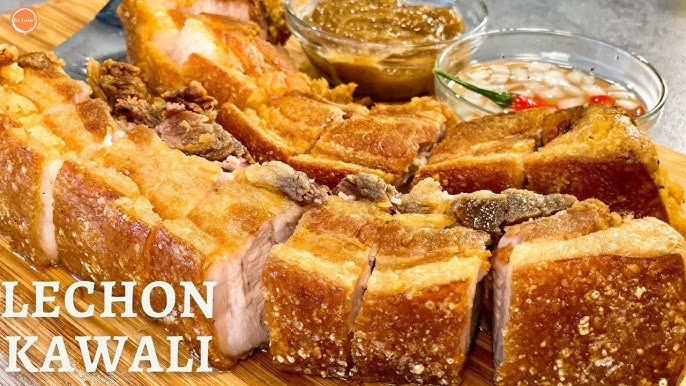
Lechon Kawali Recipe: Lechon Kawali is one of those dishes that instantly captures your attention with its irresistible crunch and mouthwatering aroma. It’s a beloved Filipino dish made from pork belly that’s boiled, seasoned, and deep-fried to golden perfection. You get that perfect balance of tender, juicy meat and ultra-crispy skin. Think of it as comfort food at its finest – crispy on the outside, succulent on the inside, and always a crowd-pleaser.
The term “lechon” usually refers to a whole roasted pig in Filipino culture, but lechon kawali is a simpler, home-cooked version that doesn’t require a whole hog or a roasting pit. Instead, the magic happens right on your stovetop – hence the term “kawali,” which means wok or frying pan in Filipino. It’s the kind of dish that brings families together, often served at fiestas, birthdays, or when you just want to treat yourself.
Ingredients You’ll Need
List of Primary Ingredients:
- 2 lbs (1 kg) pork belly, skin-on
- 1 tbsp salt
- 1 tbsp black peppercorns
- 5 cloves garlic, smashed
- 2 bay leaves
- Water (enough to cover the pork)
- Oil (for deep frying – use a high smoke point oil like canola or vegetable oil)
Optional Add-ons and Alternatives:
- Soy sauce and vinegar (for marinating or added flavor)
- Fish sauce (for umami)
- Chili flakes or whole chilies (for a kick)
- Lemongrass (for a citrusy aroma)
Kitchen Tools Required:
- Large pot for boiling
- Deep frying pan or wok
- Tongs
- Cooling rack or paper towels
- Knife and chopping board
Getting your ingredients and tools in place is essential. It’s the prep work that lays the groundwork for that mouthwatering crunch you’re after.
Step-by-Step Guide for Lechon Kawali
Step 1: Choose the Right Cut of Pork
Select pork belly with an even balance of meat, fat, and skin. The skin should be intact and thick, as it’s key to achieving the signature crispy crackling of lechon kawali.
Step 2: Boil the Pork to Infuse Flavor
Place the pork belly in a large pot and add water to fully cover it. Add garlic, bay leaves, peppercorns, and salt. Bring to a boil, then reduce heat and simmer for 45–60 minutes until the pork is tender but not falling apart. Remove and drain well.
Step 3: Seasoning and Drying Process
Rub the pork with salt all over, focusing on the skin. Pat dry with paper towels. For best results, let the pork air-dry uncovered in the refrigerator for several hours or overnight. Dry skin is essential for maximum crispiness.
Step 4: Deep Frying – First Stage
Heat oil in a deep pot over medium heat. Carefully add the pork belly, skin-side down. Fry for 5–7 minutes to start rendering fat and forming a crust. Use a splatter guard for safety.
Step 5: Let It Rest – Cooling for Crispiness
Remove the pork from the oil and let it cool for 10–15 minutes. Resting allows moisture to escape and helps the skin crisp better during the second fry.
Step 6: Final Frying for Golden Perfection
Increase oil temperature slightly and return the pork to the oil. Fry for another 3–5 minutes until the skin is blistered, golden, and extremely crispy.
Step 7: Drain and Rest Before Slicing
Remove from oil and drain on a wire rack or paper towels. Rest for a few minutes, then slice into pieces. Serve hot with dipping sauce and steamed rice.
Pro Tips for the Perfect Lechon Kawali
Want to elevate your Lechon Kawali from good to unforgettable? These tips can help:
- Use the right oil: Go for oils with a high smoke point like canola, vegetable, or peanut oil. Avoid olive oil—it burns too fast.
- Fry in batches: Overcrowding the pan drops the oil temperature and makes the pork greasy instead of crispy.
- Use a splatter guard: Keeps your stovetop (and hands!) safe from popping oil.
- Double fry like a pro: That second fry is what gives it the iconic crunch. Don’t skip it!
- Dry it well: Excess moisture is your enemy—dry thoroughly before frying and after boiling.
Serving Suggestions
So you’ve cooked the perfect Lechon Kawali… now what? It’s time to plate it up and enjoy!
Here are the best ways to serve this Filipino classic:
- With rice: Always a winner—serve with plain steamed white rice or garlic fried rice.
- With a dipping sauce: Classic liver sauce (like Mang Tomas) is the go-to, but spicy vinegar, soy sauce with calamansi, or spicy-sweet banana ketchup are awesome alternatives.
- As part of a platter: Pair with Lumpia, Pancit, or Kare-Kare for a true Filipino feast.
- Topped on salads or noodle bowls: For a modern twist, use chopped Lechon Kawali to add crunch and flavor to your greens or pancit canton.
Want a next-level combo? Try it with Atchara (pickled papaya) on the side to cut through the richness with something tangy and refreshing.
Storage and Reheating Tips
So you’ve got leftovers (rare, but lucky you!). Here’s how to keep your Lechon Kawali tasting amazing:
Storage:
- Store leftovers in an airtight container in the fridge for up to 3 days.
- To keep it crisp, place a paper towel under the pork pieces to absorb moisture.
Reheating:
- Oven method: Reheat at 375°F (190°C) for 10–15 minutes until hot and crispy.
- Air fryer: This is one of the best tools—5–7 minutes at 375°F should do the trick.
- Avoid microwaving: It will make the pork soggy. If you must, re-crisp it afterward in a hot pan or oven.
Can you freeze it?
Yes! Freeze in a zip-lock bag with parchment paper between layers. Reheat from frozen in the oven or air fryer for a fast meal with no fuss.
Common Mistakes to Avoid
Let’s save you from the heartbreak of soggy or chewy Lechon Kawali. These are the most common errors you want to dodge:
- Skipping the drying step: Moisture kills crispiness. Dry after boiling and before frying.
- Frying too early: If your pork is too hot or too wet after boiling, it’ll steam instead of crisp.
- Wrong oil temperature: Too low? Greasy. Too high? Burnt.
- Overcooking in the boil: If it falls apart in the pot, it won’t survive the fry. Keep it tender but intact.
- Crowding the pan: Temperature drops fast, and the result is soggy skin. Always give the pork space.
Follow the process step by step, and you’ll avoid these problems like a pro.
Healthier Alternatives
Want all the flavor with a little less guilt? Here are two lighter ways to enjoy Lechon Kawali:
1. Air Fryer Lechon Kawali
- Boil and dry the pork as usual.
- Place it in the air fryer basket, skin side up.
- Cook at 375°F (190°C) for 35–40 minutes, flipping halfway.
- The result? Still crispy, but without all the oil.
2. Oven-Baked Lechon Kawali
- After boiling and drying, rub the pork with a little oil and salt.
- Roast on a rack at 400°F (205°C) for 40–50 minutes.
- Finish under the broiler for 3–5 minutes to crisp up the skin.
Both methods are excellent for people watching their fat intake but still craving that classic crunch.
Cultural Significance of Lechon Kawali
Lechon Kawali isn’t just a dish—it’s a piece of Filipino identity. Found at birthdays, fiestas, Noche Buena (Christmas Eve dinner), and reunions, it’s a celebration food that brings people together.
Each region in the Philippines has its twist on it:
- Ilocos has Bagnet, a close cousin of Lechon Kawali.
- Cebu loves using tangy dipping sauces made with vinegar and calamansi.
- In Manila, it’s often paired with liver sauce and eaten with rice during lunch breaks or weekend dinners.
Preparing it from scratch honors this culinary tradition and gives you a connection to Filipino culture and history. Even if you’re outside the Philippines, you can bring a taste of home to your kitchen.
FAQs about Lechon Kawali Recipe
1. Can I make Lechon Kawali in advance?
Yes! Boil and dry the pork a day ahead. Store it in the fridge, uncovered, to let it dry further. Just fry when ready to serve.
2. Why is my Lechon Kawali not crispy?
Too much moisture is usually the problem. Make sure to dry the pork thoroughly after boiling and before frying. Also, use high enough oil heat.
3. How long does Lechon Kawali last in the fridge?
Up to 3 days in an airtight container. For best results, reheat in an oven or air fryer.
4. Can I use other meats?
Technically yes, but pork belly with the skin on is essential for that signature crispy bite. Other cuts won’t give the same results.
5. What’s the difference between Lechon Kawali and Bagnet?
Bagnet is a similar Ilocano dish, but it’s usually fried multiple times and dried longer. It’s extra crispy and slightly different in texture and flavor.
Conclusion
Lechon Kawali is a dish that combines tradition, technique, and bold flavor. While it takes a bit of effort—from boiling and drying to double-frying—it’s absolutely worth it. The crackle when you slice through the skin, the juicy pork belly beneath, and the rich, savory flavors make every bite unforgettable.
Whether you’re celebrating something special or just craving something indulgent, Lechon Kawali never disappoints. With this guide, you’re now fully equipped to master it in your own kitchen.
Give it a try—and don’t forget to serve it with your favorite dipping sauce and a mountain of garlic rice. Your family (and taste buds) will thank you.