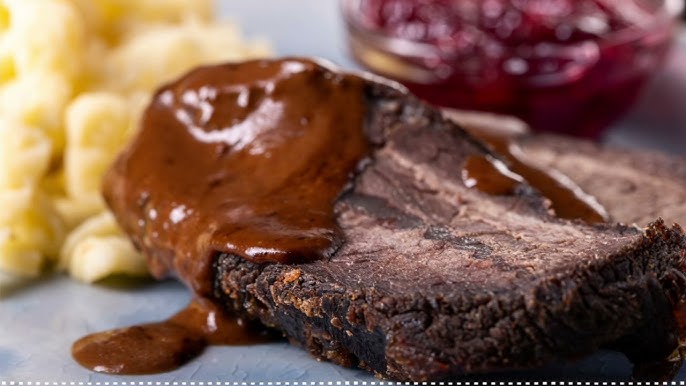
German Sauerbraten Recipe: Craving something hearty, comforting, and packed with rich, tangy flavor? You’re in for a treat. Sauerbraten, one of Germany’s most iconic dishes, is a savory pot roast marinated in a vinegar-based solution that delivers incredible depth of flavor.
It’s the kind of meal that brings families together around the dinner table, especially during holidays or chilly evenings.
In this guide, you’ll learn how to make Sauerbraten from scratch—even if you’re a beginner in the kitchen. We’ll cover everything from the ingredients you need to step-by-step instructions, serving ideas, and expert tips to help you nail this classic recipe.
What is Sauerbraten?
Sauerbraten is Germany’s answer to a melt-in-your-mouth pot roast. The word “Sauerbraten” literally translates to “sour roast,” and it’s named after the long marination process in a tangy mixture of vinegar, wine, and spices. The meat is typically beef, although pork, lamb, or even venison can be used in different regional variations.
What makes Sauerbraten so special? It’s the flavor transformation. A few days of marinating turns a simple roast into something rich, aromatic, and tender. When slow-cooked, the meat absorbs all those tangy, spicy notes, resulting in a roast that’s deeply flavorful with a slightly sweet, sour gravy.
Whether served with red cabbage and potato dumplings or over egg noodles, Sauerbraten is a dish that wins hearts and appetites with every bite.
A Quick History of Sauerbraten
Sauerbraten has deep roots in German culinary history, dating back hundreds of years. Some legends credit Charlemagne with its invention, while others believe the dish was refined and popularized in the Rhineland. Historically, marinating meat was a way to preserve it before refrigeration, and vinegar was the go-to preservative.
The marinade wasn’t just for preservation—it added flavor, broke down the fibers, and turned tough cuts into tender delights. Over the centuries, Sauerbraten evolved into a celebrated dish served during festivals, Sunday dinners, and holidays across various German regions.
Today, you’ll find regional adaptations from Cologne to Bavaria. Each version has its own twist—some add raisins or ginger snaps for sweetness, while others keep it strictly savory.
Why You’ll Love This Traditional German Dish
Still wondering if Sauerbraten is for you? Here’s why it deserves a spot on your dinner table:
- Incredible Flavor: The long marinade and slow cooking create layers of flavor—tangy, sweet, and savory.
- Tender Meat: Even a tough cut becomes fork-tender after days in the marinade and hours of braising.
- Perfect for Meal Prep: You can make it ahead, and it actually tastes better the next day.
- Impressive Yet Easy: It’s surprisingly easy to prepare with a little planning, and it’s a showstopper for guests.
- Authentic Experience: Brings a taste of Germany to your home.
If you’re a fan of comfort food with personality, Sauerbraten is the dish for you.
Ingredients You’ll Need for Sauerbraten
Let’s break it down into three categories: marinade, meat, and gravy.
For the Marinade
- 2 cups red wine vinegar
- 2 cups red wine (dry is best)
- 1 cup water
- 2 onions, sliced
- 2 carrots, chopped
- 2 celery stalks, chopped
- 3 cloves garlic, minced
- 10 black peppercorns
- 5 whole cloves
- 3 bay leaves
- 1 tablespoon juniper berries (optional but traditional)
- 1 teaspoon salt
For the Roast
- 3 to 4 pounds beef roast (bottom round or rump roast)
- Salt and black pepper to taste
- 2 tablespoons oil (for browning)
For the Gravy
- 2 tablespoons flour
- 2 tablespoons butter
- 10 crushed gingersnap cookies (or substitute with a mix of brown sugar and breadcrumbs)
- 1 to 2 teaspoons sugar (optional, to balance acidity)
- Marinade liquid (strained)
Best Cuts of Meat for Sauerbraten
The best thing about Sauerbraten? You don’t need an expensive cut of meat. In fact, tougher cuts work better because the long marinating and braising soften them beautifully.
Top choices include:
- Bottom round
- Rump roast
- Chuck roast (for extra tenderness)
- Brisket (for added richness)
Avoid lean cuts like sirloin, which won’t hold up well to the long marinating process and may dry out.
How to Marinate the Meat (The Right Way)
This is the heart of the recipe—don’t rush it. The marinade is where all the magic happens. The acids from the vinegar and wine start breaking down the meat fibers, infusing flavor deep into the roast.
How to do it:
- In a large pot, combine all marinade ingredients and bring them to a quick boil. This helps release flavors.
- Let the mixture cool completely.
- Place the roast in a non-reactive container (glass, ceramic, or stainless steel—not aluminum).
- Pour the cooled marinade over the roast.
- Cover and refrigerate for 3 to 5 days, turning the meat daily to ensure even marination.
Tips for the Perfect Marinade
- Don’t skip boiling the marinade—it releases flavors from the spices and helps with preservation.
- Use a zip-top bag placed in a bowl to save space in the fridge.
- Keep it cold and turn the meat at least once a day for even soaking.
How Long Should You Marinate?
The sweet spot is 4 days. You can get away with 3, but 4–5 days allows the full tangy depth to develop. Some traditional German recipes even go for a week!
Step-by-Step Guide to Cooking Sauerbraten
Ready to turn that marinated roast into a masterpiece? Here’s how to do it—step by step.
Step 1: Prepare the Marinade
In a bowl or pot, combine red wine vinegar, water or red wine, sliced onions, carrots, celery, bay leaves, cloves, black peppercorns, and a pinch of sugar. Bring briefly to a simmer, then cool completely. This aromatic marinade gives Sauerbraten its signature tangy flavor.
Step 2: Marinate the Meat
Place a beef roast (such as chuck or rump) in a non-reactive container and pour the cooled marinade over it. The meat should be fully submerged. Cover and refrigerate for 3–5 days, turning the meat daily to ensure even marination.
Step 3: Brown the Meat
Remove the meat from the marinade and pat dry. Strain and reserve the marinade and vegetables. Heat oil in a heavy pot and brown the meat on all sides until well colored. Browning builds depth and richness.
Step 4: Simmer to Perfection
Add the reserved marinade and vegetables back to the pot. Bring to a gentle simmer, cover, and cook on low heat for 2–3 hours, until the meat is very tender. Turn the meat occasionally.
Step 5: Make the Gravy
Remove the meat and keep warm. Strain the cooking liquid and return it to the pot. Thicken with crushed gingerbread, gingersnaps, or a flour slurry. Simmer until smooth and slightly thick, adjusting seasoning to taste.
Step 6: Serve and Enjoy
Slice the Sauerbraten and serve with the rich gravy. Traditional sides include red cabbage, potato dumplings, or boiled potatoes.
What to Serve with Sauerbraten
Pairing Sauerbraten with the right sides makes all the difference. Whether you’re going traditional or trying something new, here are your best options.
Classic Side Dishes
- Kartoffelklöße (Potato Dumplings) – These fluffy, starchy dumplings soak up that incredible gravy perfectly.
- Rotkohl (Braised Red Cabbage) – Sweet, tangy, and slightly spiced cabbage adds balance to the richness of the meat.
- Spätzle (German Egg Noodles) – These chewy, buttery noodles are perfect for gravy-catching.
- Boiled or Mashed Potatoes – Simple but satisfying and always a crowd-pleaser.
Modern Twists
- Roasted Root Vegetables – Carrots, parsnips, and sweet potatoes add sweetness and a rustic vibe.
- Buttered Egg Noodles with Herbs – Add parsley or chives for a fresh finish.
- Cauliflower Mash – A lighter, low-carb alternative to potatoes.
You can also serve it with a slice of hearty rye bread to mop up the sauce—just like they do in Germany.
Make-Ahead and Storage Tips
Sauerbraten is one of those dishes that tastes even better the next day, making it ideal for meal prep or holiday cooking.
- Make-Ahead: Cook the Sauerbraten a day in advance, refrigerate it with the gravy, and gently reheat before serving.
- Fridge Storage: Store in an airtight container for up to 4 days.
- Reheat Gently: Warm slowly on the stove or in a low oven, covered with a bit of added broth if needed to loosen the gravy.
Can You Freeze Sauerbraten?
Yes! Sauerbraten freezes beautifully.
- Let the dish cool completely.
- Slice the meat and store with gravy in an airtight, freezer-safe container.
- Freeze for up to 3 months.
- Thaw overnight in the fridge and reheat slowly for best texture and flavor.
Tips for First-Time Cooks
- Give it time: This is not a last-minute dish. Start marinating at least 3 days ahead.
- Be patient: Low and slow is the name of the game. Don’t try to rush the braise.
- Don’t skip the gingersnaps: It might sound odd, but they’re the secret to that classic flavor and velvety gravy.
- Taste as you go: The gravy is all about balance. A little sugar can make it magical.
Common Mistakes to Avoid
- Using the wrong pot – Always use a heavy-bottomed Dutch oven or roasting pan to maintain even heat.
- Skipping the sear – Searing the meat is essential for flavor.
- Under-marinating – Three days is the absolute minimum; more is better.
- Overcooking – Yes, you can go too far. If your roast turns mushy, it’s overdone.
- Ignoring seasoning – The gravy needs to be adjusted at the end. Always taste and tweak.
Regional Variations of Sauerbraten
Sauerbraten isn’t a one-size-fits-all dish. Across Germany, you’ll find a variety of spins:
- Rheinischer Sauerbraten – Includes raisins and gingersnaps for a sweet and tangy sauce.
- Franconian Style – Uses vinegar and no wine; more savory.
- Swabian Sauerbraten – Sometimes uses pork instead of beef.
- Bavarian Version – Often includes beer in the marinade.
Each region adds its own flair, but the heart of the dish—marinated, slow-cooked meat—remains the same.
Nutritional Information (Per Serving)
Approximate values per serving (based on 6 servings):
- Calories: 520
- Protein: 35g
- Fat: 28g
- Carbohydrates: 24g
- Sugar: 10g
- Fiber: 2g
- Sodium: 700mg
Values vary depending on sides, meat type, and amount of gravy used.
FAQs about German Sauerbraten Recipe
1. Can I use pork instead of beef for Sauerbraten?
Yes! Pork shoulder or pork roast works great. The process is the same, though marination time may be slightly shorter.
2. Is it okay to skip the gingersnap cookies?
You can, but they add depth, sweetness, and a subtle spiced flavor that’s hard to replace. If needed, try brown sugar and a pinch of cinnamon as a substitute.
3. How long can I marinate the meat?
Ideally, 4 to 5 days. Any longer and the meat can become too soft or overly acidic.
4. Can I make Sauerbraten in a slow cooker?
Absolutely! After browning the meat, add everything to the slow cooker and cook on low for 8–9 hours. Finish the gravy on the stovetop.
5. What’s the best wine for Sauerbraten marinade?
A dry red wine like Cabernet Sauvignon, Pinot Noir, or Merlot is perfect. Avoid sweet wines, as they can throw off the balance.
Conclusion
Sauerbraten isn’t just a recipe—it’s an experience. From its rich history to its bold flavors and melt-in-your-mouth texture, it brings a taste of Germany’s soul to your table. While it takes time and patience, the results are more than worth it.
With the right marinade, the right cut of meat, and this step-by-step guide, you’re all set to master this traditional dish like a pro.
So next time you’re planning a hearty family dinner or looking for an impressive meal to serve guests, give Sauerbraten a try—you’ll be glad you did.