French Press Coffee Recipe: Have you ever craved a rich, bold cup of coffee that makes your kitchen smell like a cozy coffeehouse? That’s the magic of a well-brewed French press.
This classic brewing method isn’t just for coffee snobs—it’s easy to master and delivers one of the most full-bodied coffee experiences you’ll ever sip.
Whether you’re new to the game or a home barista in training, this guide breaks down the French press process into simple steps, with all the pro tips you need to nail it every time.
What Is a French Press?
A French press, also known as a press pot or plunger pot, is a manual coffee brewing device. It consists of a cylindrical carafe (usually made of glass or stainless steel), a plunger with a metal or nylon mesh filter, and a lid. Unlike drip machines, it allows you to fully immerse your coffee grounds in hot water, extracting more oils and bold flavors from the beans. The result? A rich, aromatic brew with a thicker mouthfeel that brings out the true character of your coffee.
Why Choose a French Press for Coffee Brewing?
You might be wondering, “Why bother with a French press when my coffee maker does the job?” The answer lies in control and quality. With a French press, you control every variable: coffee grind, water temperature, brew time—giving you a truly customized cup. No paper filters to trap the flavorful oils, no electronics that mess with your timing. Just you, hot water, and fresh grounds in perfect harmony.
Benefits of Using a French Press
Full-bodied Flavor
Unlike drip coffee makers that rely on paper filters, the French press uses a metal mesh filter that allows the natural oils from the coffee grounds to remain in your cup. These oils are responsible for the nuanced flavors and aromas that coffee lovers cherish.
Eco-Friendly Brewing
No disposable filters, no pods, no electricity—just a carafe, a plunger, and your favorite beans. French press brewing is not only environmentally friendly but also minimalist, requiring fewer materials and less waste.
Cost-Effective
A good-quality French press is an affordable one-time investment. Compared to automatic brewers or expensive espresso machines, it’s a budget-friendly option that doesn’t compromise on quality. Plus, it doesn’t lock you into buying specific pods or filters.
List of Ingredients You’ll Need
Let’s keep it simple. Here’s what you need to make the perfect French press coffee:
- Freshly roasted whole coffee beans (medium to dark roast preferred)
- Filtered water
- Optional: Sugar, milk, cream, or flavorings (like cinnamon or vanilla)
That’s it. The magic lies in the simplicity.
Essential Equipment for French Press Coffee
To brew French press coffee like a pro, you’ll need a few tools:
- French press (8-cup/34 oz is standard)
- Burr grinder (for consistent coarse grind)
- Gooseneck kettle (for controlled pouring)
- Digital kitchen scale (for accuracy)
- Timer (your phone works fine)
- Thermometer (optional, but useful)
If you’re just starting, you can skip the fancy gear and use what you have—but investing in these tools will level up your brewing game.
How to Choose the Right Coffee Beans
Picking the right beans is the foundation of a great brew. You wouldn’t cook a gourmet meal with expired ingredients, right? Same rule here.
Freshness
Always go for beans roasted within the last 2–3 weeks. Check the roast date on the bag—not the expiration date.
Roast Type
Medium to dark roasts generally work best for French press brewing. They bring out deep, chocolatey, and nutty notes that shine through in immersion methods.
Grind Size
This part is non-negotiable. You need a coarse grind, almost like breadcrumbs. A fine grind will clog your filter and lead to over-extraction, resulting in a bitter mess.
Ideal Coffee-to-Water Ratio
The golden ratio? It’s generally 1:15 — 1 gram of coffee for every 15 grams (or mL) of water.
Here’s a quick cheat sheet:
| Cups | Coffee (g) | Water (mL) |
|---|---|---|
| 1 | 15 g | 225 mL |
| 2 | 30 g | 450 mL |
| 4 | 60 g | 900 mL |
| 8 | 120 g | 1800 mL |
Use a scale for accuracy—your taste buds will thank you.
Step-by-Step Guide to Brewing French Press Coffee
Now the fun part. Let’s break it down into manageable steps.
Preheat Your French Press
Pour hot water into your carafe and swirl it around. This warms the glass and ensures your brew stays at the right temperature. Discard the water before adding your coffee.
Measure and Grind Your Coffee
Use your scale to weigh your beans based on the water you’re using. Grind them coarsely—if it looks like table salt, you’ve gone too fine.
Boil and Cool Your Water
Heat your water to 195°F–205°F (90°C–96°C). No thermometer? Let it sit for 30 seconds after boiling.
Add Coffee Grounds to the French Press
Place your French press on the scale, add the coffee grounds, and zero it out. This keeps your measurements accurate.
Pour Water Over Grounds
Start your timer and pour half your water evenly over the coffee grounds. This is called “blooming”—it lets gases escape and preps the coffee for extraction. Wait 30 seconds.
Stir Gently
Using a wooden or plastic spoon, give the mixture a quick stir to ensure all grounds are saturated.
Steep for 4 Minutes
Add the remaining water, put the lid on (don’t plunge yet), and let it steep. Four minutes is the sweet spot.
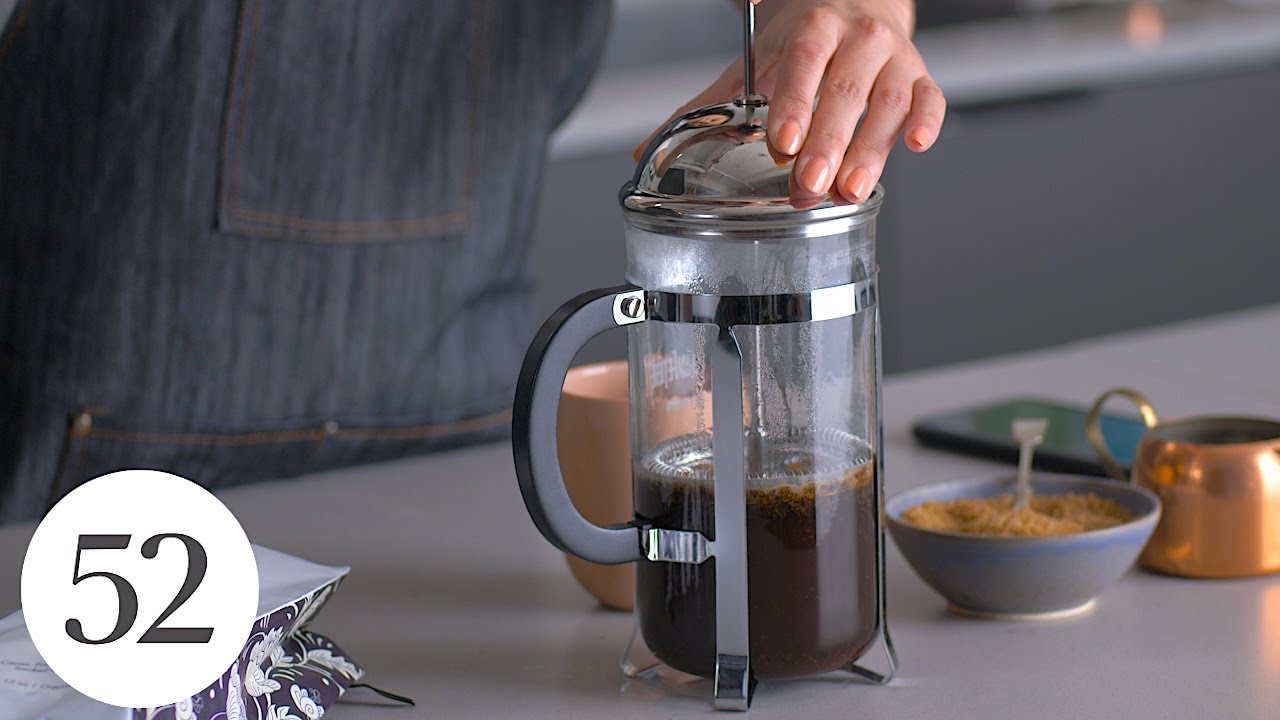
Press the Plunger Slowly
After 4 minutes, press down gently with even pressure. If it’s too hard to press, your grind may be too fine.
Pour and Enjoy
Serve immediately to avoid over-extraction. Sip, smile, and savor the rich, bold flavor.
Tips for Getting the Best Flavor
Making French press coffee is more than just following steps—it’s an art. If your coffee doesn’t taste quite right, don’t give up. Small tweaks can lead to big improvements in flavor.
- Use filtered water: Tap water can carry impurities and minerals that affect the taste of your coffee. Clean, filtered water will make a noticeable difference.
- Use a burr grinder: Blade grinders chop unevenly, leading to over-extraction (bitter) or under-extraction (sour). Burr grinders give you a uniform grind that’s perfect for French press.
- Don’t let it sit: Once your coffee is brewed, pour it all out of the French press—even if you’re not drinking it right away. Letting it sit with the grounds will over-extract the coffee, making it taste bitter.
- Stir during blooming: This helps release gases from freshly ground beans and allows water to make full contact with all the grounds.
- Experiment with steep time: Four minutes is the standard, but you can tweak between 3–5 minutes depending on your grind size and flavor preference.
- Keep it clean: Old coffee oils and residue in your French press can add a rancid taste to your brew. Always wash your press thoroughly after each use.
Common Mistakes to Avoid
Even the best coffee lovers mess up sometimes. Watch out for these common pitfalls:
- Grinding too fine: This is probably the #1 mistake. A fine grind can clog the filter and make pressing nearly impossible. It also leads to over-extraction.
- Using boiling water: Water that’s too hot will scorch the coffee, causing bitterness. Let it cool for 30 seconds after boiling.
- Not measuring: Eyeballing your coffee-to-water ratio is risky. Use a digital scale for precision—you’ll notice the upgrade in flavor immediately.
- Not preheating the press: Skipping this step cools your brew prematurely, affecting extraction.
- Leaving coffee in the press after brewing: As mentioned earlier, this leads to a bitter taste. Pour it into a thermal carafe if you want to keep it warm.
- Ignoring the quality of beans: No matter how good your technique is, stale or low-quality beans will always produce a subpar brew.
Cleaning and Maintenance of Your French Press
Your French press needs love too. A well-maintained press lasts longer and brews better coffee. Here’s how to keep it in tip-top shape:
- After each use: Disassemble the plunger and rinse all parts with warm water. Use mild dish soap if needed.
- Deep clean weekly: Soak all parts (except wooden ones) in a mix of warm water and vinegar or baking soda. Scrub gently with a soft sponge.
- Clean mesh filter thoroughly: Coffee oils tend to build up in the mesh. Use a toothbrush or small brush to clean it.
- Air dry completely: Let all parts dry separately to avoid mold or odors.
- Check for wear: Over time, filters may warp or tear. Replace them as needed to maintain brewing quality.
Taking five minutes to clean your French press properly will reward you with pure, consistent flavor every time.
French Press Coffee Variations
Don’t limit yourself to one way of brewing. The French press is surprisingly versatile, and here are a few ways to mix things up:
Cold Brew in a French Press
Want a smooth, low-acid brew? Try cold brew:
- Use coarsely ground coffee (same as regular French press)
- Mix with cold water (1:8 ratio)
- Let it steep in the fridge for 12–16 hours
- Press and serve over ice
French Press Espresso Style
While you can’t get true espresso without pressure, you can mimic the bold intensity:
- Use a finer grind than usual (but not too fine!)
- Increase the coffee ratio (1:10)
- Steep for only 3 minutes
This gives you a concentrated, rich cup that works great for iced drinks or lattes.
Spiced French Press Coffee
Add flavor directly to your brew by spicing it up:
- Add ground cinnamon, nutmeg, or cardamom with your coffee grounds
- Brew as usual
- Sweeten with honey or maple syrup
The result? A cozy, café-style drink with almost no extra effort.
French Press vs Other Brewing Methods
Let’s put the French press head-to-head with other common brewing methods:
| Method | Flavor Profile | Brew Time | Equipment Needed | Skill Level |
|---|---|---|---|---|
| French Press | Full-bodied, bold | 4–5 mins | Manual press, grinder | Easy |
| Pour Over | Clean, bright | 3–5 mins | Pour-over cone, filter | Moderate |
| Drip Coffee Maker | Light to medium | 5–10 mins | Machine, filter | Easy |
| Espresso Machine | Intense, concentrated | 1–2 mins | Espresso machine | Advanced |
| AeroPress | Rich, smooth | 2–3 mins | AeroPress, filters | Moderate |
Each method has its strengths, but the French press hits that sweet spot between simplicity and richness, making it a favorite for home brewers.
FAQs about French Press Coffee Recipe
1. Can I use pre-ground coffee for French press?
Yes, but it’s not ideal. Most pre-ground coffee is too fine for French press. If you must, look for coffee labeled as coarse ground or grind it yourself for the best results.
2. How do I keep my French press coffee hot longer?
Use a double-walled stainless steel French press or transfer your coffee into a thermal carafe right after brewing.
3. Why does my French press coffee taste bitter?
Likely due to over-extraction—caused by too fine a grind, steeping too long, or using water that’s too hot. Adjust your grind size, brew time, or water temp.
4. Can I make tea in a French press?
Absolutely! A French press works great for loose-leaf tea. Just steep, press, and pour.
5. How many cups does a standard French press make?
A typical 34 oz (1 liter) French press makes about four 8 oz cups of coffee. If you like large mugs, expect 2–3 servings.
Conclusion
There you have it—a full guide to brewing the perfect cup of French press coffee. Whether you’re enjoying a slow morning or need a bold cup to kickstart your day, this method delivers every time. With just a few tools, some freshly ground beans, and a bit of practice, you can turn your kitchen into your favorite coffee spot.
Remember: great coffee isn’t about being fancy—it’s about being intentional. So, grab your French press, take your time, and savor every sip.