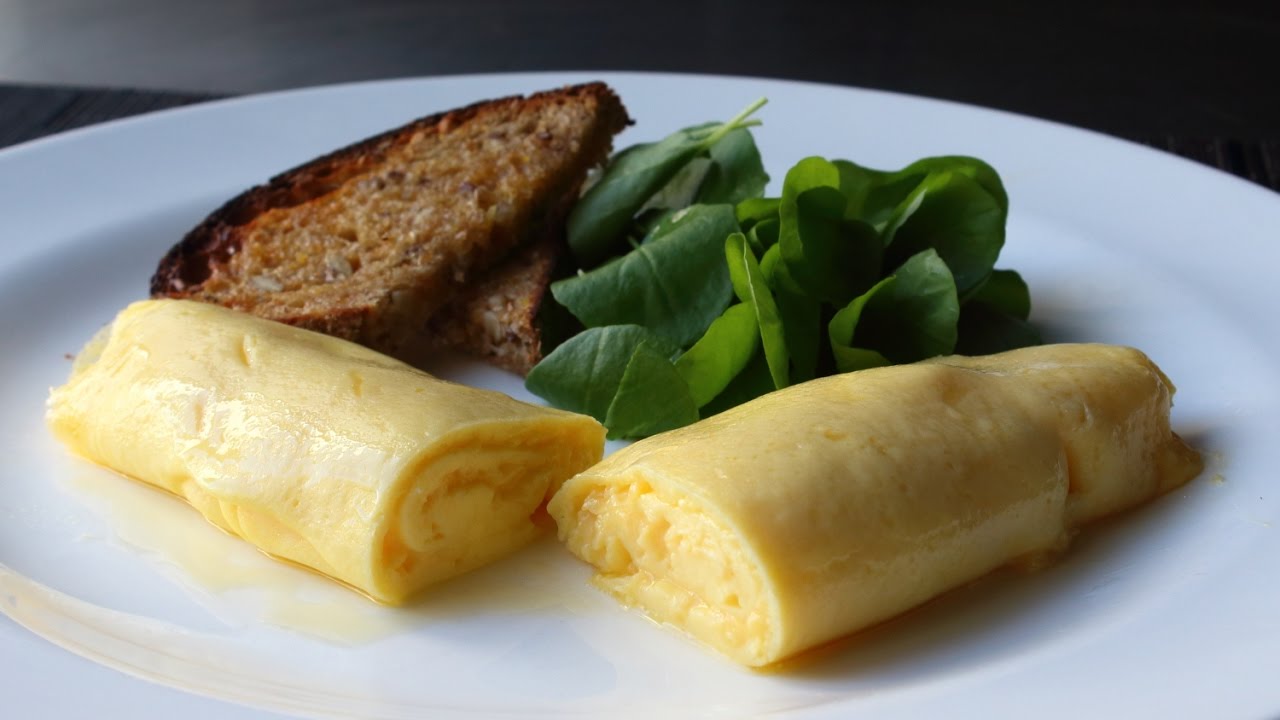
French Omelette Recipe: Let’s be honest—cooking eggs can seem easy until you try to make them the French way. The French omelette isn’t your regular breakfast scramble; it’s a refined, silky-smooth wrap of tender eggs that melts in your mouth.
A properly made French omelette doesn’t just taste better, it feels elegant—like you’ve just stepped into a cozy Parisian bistro without leaving your kitchen. If you’ve ever wondered how to make the perfect French omelette, you’re in the right place.
Grab your eggs and let’s dive in.
What Makes a French Omelette Unique?
Unlike the folded, often browned American-style omelet filled with a mountain of ingredients, the French omelette is all about technique and texture. It’s pale yellow, not browned at all, and is delicately rolled rather than folded in half. The texture is tender, smooth, and custard-like, with no crispy edges in sight.
What makes it so special? The secret lies in the gentle heat, the constant stirring, and the swift folding. A French omelette is a study in precision. It’s cooked slowly, stirred constantly, and served with a soft center. Some versions include a touch of cheese or herbs, but purists often enjoy it plain—with just butter, salt, and eggs. The result is soft, shiny, and oh-so-French.
Benefits of Learning the French Omelette Technique
Mastering the French omelette is like learning a culinary superpower. It trains your hand to be gentle, your timing to be perfect, and your patience to shine. Even if you’re a beginner, this technique teaches you key cooking skills like controlling heat, whisking for texture, and knowing when something is done just right.
Why else should you learn it?
- Quick meal fix: 10 minutes and you’re done.
- Budget-friendly: Just eggs, butter, and salt can go a long way.
- Impress your friends: Everyone loves a good egg trick.
- Refines your cooking: You’ll learn to feel the food.
Think of it as a culinary rite of passage. You’ll thank yourself later.
Essential Tools You’ll Need
To make a perfect French omelette, you don’t need a fancy kitchen—just the right tools. Here’s what to grab:
Nonstick Skillet
A well-maintained nonstick pan (ideally 8-inch for 2-3 eggs) is crucial. It prevents sticking and allows the omelette to slide out effortlessly. Avoid using cast iron or stainless steel unless you’re confident in your technique.
Silicone Spatula
A flexible silicone spatula helps you stir the eggs gently and fold the omelette with precision. Wood or metal spatulas are too stiff for the delicate process.
Mixing Bowl
Any mixing bowl will do, but glass or stainless steel is preferred. You’ll need space to whisk your eggs until perfectly blended and frothy.
List of Ingredients You’ll Need
This is the beauty of a French omelette—it doesn’t take much.
- 2–3 large eggs (fresh and room temperature)
- 1 tablespoon of unsalted butter
- Salt (a pinch, to taste)
- Freshly ground black pepper (optional)
- Optional fillings:
- Finely chopped herbs (chives, parsley, tarragon)
- Grated cheese (Gruyère, Comté, or Emmental)
- Sautéed mushrooms, spinach, or even smoked salmon
Want to keep it classic? Just eggs, butter, and salt will do.
How Many Eggs Should You Use?
Most French omelettes use 2 to 3 eggs. This size fits perfectly in an 8-inch skillet and is easier to manage than a larger batch. More eggs can make folding tricky, while fewer may lead to overcooking or tearing. For your first try, stick with 2 eggs. Once you’ve mastered the roll and texture, go for 3.
A 2-egg omelette is light and perfect as a side or snack, while 3 eggs make a satisfying meal when paired with a salad or toast.
Prepping the Eggs Like a Chef
Want your omelette to have that silky texture? It all starts with how you whisk the eggs. Here’s how to do it right:
- Crack 2-3 eggs into a mixing bowl.
- Use a fork or whisk and beat vigorously for 30–45 seconds.
- Aim for a uniform mixture—no visible whites or streaks.
- You want a slightly frothy texture, but don’t overdo it.
Pro tip: Some chefs strain the eggs through a sieve to make them extra smooth. Totally optional, but worth trying if you want that velvet finish.
Why Room Temperature Eggs Matter
This might sound extra, but trust me—it’s important. Room-temperature eggs cook more evenly and quickly. Cold eggs straight from the fridge can shock the pan, cool the butter too fast, and lead to uneven textures.
So how do you bring eggs to room temp quickly?
- Let them sit out for 15–20 minutes
- Or place them in a bowl of warm water (not hot) for 5 minutes
You’ll notice the difference in the texture. Smooth, tender, custard-like. That’s the magic.
Prepping the Pan: Butter Temperature and Timing
The pan needs to be just the right temperature. Not too hot—not too cold. Here’s how:
- Place your nonstick skillet on medium-low heat.
- Add 1 tablespoon of unsalted butter.
- Let it melt gently until foamy, but not browned.
The butter should coat the pan without sizzling aggressively. You’re not frying—you’re coaxing the eggs into becoming something soft and luxurious.
Once the butter is just melted and starts to foam, you’re ready to pour in the eggs.
Step-by-Step Guide to Making a French Omelette
Let’s break it down step-by-step. Follow along carefully:
1. Whisk the Eggs
We already covered this—but remember, they should be fully combined, smooth, and airy.
2. Heat the Pan
Use medium-low heat. Add the butter and let it foam. Tilt the pan so the butter coats the entire surface evenly.
3. Add the Eggs
Pour the eggs in and immediately start stirring with your spatula. Think gentle, fast circles, like you’re scrambling but not quite.
4. Stir Constantly
Keep the eggs moving in the pan. Stir in a figure-eight motion or small circles. This prevents them from setting too fast.
5. Shake the Pan
As the eggs begin to thicken but are still soft, stop stirring. Shake the pan gently to level out the surface.
6. Add Fillings (Optional)
Now’s the time to sprinkle in your cheese, herbs, or whatever filling you’re using. Add them down the center.
7. Roll the Omelette
Use your spatula to carefully lift one side and roll it toward the center. Tilt the pan and use the spatula to guide the roll to the other side.
8. Final Fold and Flip
With a quick motion, flip the omelette onto the plate seam-side down. It should be smooth, pale yellow, and slightly jiggly in the center.
Common Mistakes to Avoid
Even seasoned cooks mess up a French omelette now and then. Don’t sweat it. Knowing what not to do is half the battle. Here are some common slip-ups:
- Overcooking the eggs: This is the big one. A French omelette should never be browned. If you see golden crust forming, your heat is too high.
- Not stirring enough: Stirring is what gives the omelette its smooth, custardy interior. Don’t treat it like a pancake—this isn’t a “pour and wait” kind of dish.
- Pouring eggs into a cold pan: If the pan isn’t warm enough, the eggs will just sit there and turn rubbery. Always wait until the butter foams before adding the eggs.
- Adding too much filling: Keep it light. The omelette is delicate and too much filling can tear it apart or make rolling difficult.
- Rushing the roll: Be calm, use your spatula, and let gravity help you. Tilt the pan slightly and guide the roll with your tool.
Take it easy, go slow, and remember: it’s just eggs. You’ve got this.
How to Tell When It’s Done
Timing is everything here. A French omelette is finished when:
- The surface is smooth and slightly shiny.
- The edges are set but not browned.
- The center is just cooked but still moist.
Here’s a little trick: gently touch the top with your finger or spatula. It should feel set, but soft—like the back of your hand. If it jiggles slightly, it’s good. If it’s dry or firm, it’s probably overcooked.
Another good cue: If the omelette slides easily out of the pan with a gentle nudge, it’s ready to serve.
Filling Ideas to Elevate Your Omelette
While the classic French omelette often skips heavy fillings, you can absolutely get creative—just keep it minimal and refined. Here are some ideas to add a twist without going overboard.
Classic French Fillings
- Fresh herbs: Chives, tarragon, parsley, or dill
- Cheese: A small sprinkle of Gruyère, Comté, or Boursin
- Sautéed mushrooms: Cooked until all liquid evaporates
Modern Twists
- Goat cheese and spinach
- Truffle oil or shavings (fancy!)
- Caramelized onions
- Crème fraîche and smoked salmon
- Roasted red pepper and feta
Pro tip: Add fillings after the eggs have mostly set but are still slightly runny on top. This prevents them from sinking and makes rolling easier.
Serving Suggestions
A French omelette is elegant enough to stand on its own, but here’s how to make it feel like a full, balanced meal.
With Bread or Toast
- Warm crusty baguette
- Buttered sourdough toast
- Lightly toasted brioche
Light Salad Pairings
Pair with a crisp salad dressed in lemon vinaigrette or olive oil and herbs. It brings balance and freshness to the creamy richness of the eggs.
- Arugula with lemon and shaved parmesan
- Simple mixed greens with Dijon vinaigrette
- Cherry tomatoes with olive oil and basil
And of course—don’t forget a nice cup of tea or coffee. Or for brunch, a glass of sparkling water or juice.
Tips from French Chefs
Want to cook like you’re working in a Paris kitchen? Here are some top tips from real French chefs:
- “Don’t salt the eggs until after whisking.” Salt can break down the egg proteins too early, making the mixture watery.
- “Stir with purpose, not aggression.” You want to keep the mixture moving, but gently.
- “Use high-quality butter.” It adds depth to the flavor. French butter like Président or Plugrá makes a difference.
- “Practice with no filling first.” Master the texture before adding extras.
- “Serve immediately.” A French omelette doesn’t wait. It’s best when fresh off the stove.
Cooking like the French is all about technique and touch—less about recipe, more about rhythm.
Troubleshooting: What to Do If It Breaks
So, your omelette tore, stuck to the pan, or came out looking like scrambled eggs in disguise? Don’t panic. It happens to everyone.
Here’s how to recover:
- Tore while rolling? Just plate it seam-side down and sprinkle some herbs on top. No one will know.
- Too runny? Let it sit in the pan for 10–15 seconds longer next time. A gentle nudge with the spatula should help.
- Too dry? Lower the heat. Try cooking it on just above the lowest setting.
- Stuck to pan? Your pan might need seasoning or replacing. Always use nonstick or well-seasoned carbon steel.
Remember: every broken omelette is one step closer to mastery. Keep practicing.
How to Clean Your Pan Afterwards
Butter can leave a residue, and eggs are notorious for sticking if not cooked right. Cleaning your pan the proper way will keep it in top shape for your next omelette adventure.
- Let the pan cool down slightly.
- Wipe with a paper towel to remove excess butter or food.
- Use warm water and a soft sponge. Avoid harsh scrubbing or steel wool.
- Don’t use soap on seasoned pans like carbon steel.
- Dry immediately to prevent rust or water spots.
Taking care of your tools is just as important as perfecting your technique.
French Omelette vs. American Omelet
Let’s break down the difference:
| Feature | French Omelette | American Omelet |
|---|---|---|
| Texture | Smooth, tender, custardy | Fluffy, sometimes browned |
| Folding Style | Rolled into a cigar shape | Folded in half |
| Ingredients | Usually minimal | Heavily filled with meats, veggies, cheese |
| Heat Level | Low and gentle | Medium-high, quicker cook time |
| Color | Pale yellow, no browning | Often golden brown |
Both are great—but if you’re looking to impress with elegance and finesse, the French omelette is the way to go.
FAQs about French Omelette Recipe
1. Can I use oil instead of butter for a French omelette?
Technically yes, but it won’t have the same richness. Butter is traditional and enhances the flavor.
2. Is browning the omelette really that bad?
In French cuisine, yes—it’s considered overcooked. Browning changes the flavor and texture.
3. What’s the best pan size for a 2-egg omelette?
An 8-inch nonstick skillet is ideal. It’s the right size for even spreading and rolling.
4. Can I add milk or cream to the eggs?
French chefs usually don’t. It can water down the texture and reduce the silky effect.
5. How can I practice without wasting ingredients?
Start with 1 egg at a time and use a smaller pan. It’s easier to manage and good for learning technique.
Conclusion
Mastering the French omelette isn’t just about learning a recipe—it’s about developing a new relationship with cooking. This humble dish teaches balance, patience, and attention to detail. With just eggs, butter, and a pan, you can create something that tastes like it came from a 5-star kitchen.
So the next time you want something quick, comforting, and classy, skip the takeout and whip up a French omelette. Whether you keep it simple or add your own flair, you’ll have a dish that’s as satisfying to make as it is to eat.