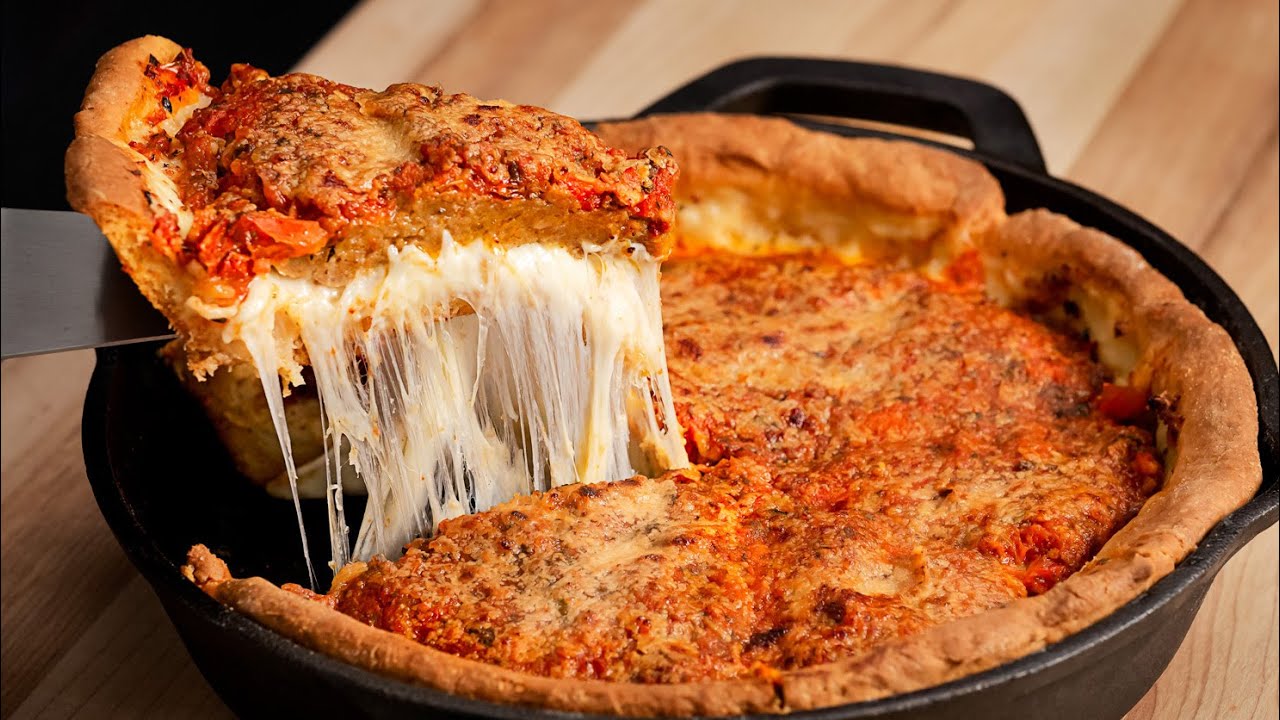
Deep Dish Pizza Dough Recipe: If you’ve ever bitten into a buttery, thick, golden crust filled with layers of cheese and chunky tomato sauce, you know exactly why deep dish pizza is in a league of its own. This Chicago-born classic isn’t your average slice—it’s a hearty, flavor-packed dish that starts with one thing: the perfect dough. Without the right dough, your deep dish masterpiece could easily fall flat (literally).
In this step-by-step guide, we’re breaking down everything you need to know to make restaurant-style deep dish pizza dough at home. It’s easier than you think, and with a bit of patience, you’ll have a thick, fluffy, and crispy crust that’s better than takeout.
Ingredients You’ll Need
Making the perfect deep dish pizza dough starts with quality ingredients. While the list is fairly simple, using fresh, high-quality products makes a world of difference. Let’s take a look at everything you’ll need.
Essential Ingredients:
- All-Purpose Flour – 3½ cups (plus more for dusting)
- Yellow Cornmeal – ½ cup (adds a signature crunch and flavor)
- Active Dry Yeast – 2¼ teaspoons (1 standard packet)
- Sugar – 1 tablespoon (feeds the yeast and helps browning)
- Salt – 1½ teaspoons (balances flavor)
- Warm Water – 1¼ cups (around 110°F or 45°C)
- Olive Oil or Melted Butter – ¼ cup (butter gives that authentic Chicago feel)
Optional Add-ins:
- Garlic Powder or Italian Seasoning – for a subtle herb kick
- Grated Parmesan – mixed into the dough for extra umami
Tips for Choosing Ingredients:
- Use unbleached flour if possible for better texture.
- Don’t skip the cornmeal—it gives that slight crunch that makes deep dish so special.
- Use filtered water if your tap water has a strong taste.
- Fresh yeast equals a better rise—check the expiration date!
Tools & Equipment Required
You don’t need a pro-level kitchen to nail this recipe, but a few basic tools will help you a lot.
Must-Have Tools:
- Mixing bowls – at least two large ones
- Measuring cups and spoons – accuracy matters here
- Wooden spoon or silicone spatula – for mixing
- Deep dish pizza pan or cast iron skillet – 10 or 12 inches
- Plastic wrap or clean kitchen towel – for covering during proofing
- Rolling pin (optional) – for shaping the dough
Nice-to-Have Extras:
- Stand mixer with dough hook – makes kneading easier
- Thermometer – to check water temperature and avoid killing yeast
- Pastry brush – for brushing oil or butter on crust edges
Understanding the Deep Dish Dough
Before diving in, it’s important to understand what sets deep dish pizza dough apart.
This isn’t your standard New York-style crust. Deep dish dough is almost like a cross between bread and pie crust. It’s flaky yet soft, rich yet airy. The secret lies in the fat content—more oil or butter creates a tender bite and those golden layers you crave.
Another key difference? This dough has structure. It’s designed to support hefty toppings, thick layers of cheese, and bold sauces. So you want something sturdy but not dense, flavorful but not overpowering.
Step-by-Step Guide to Making Deep Dish Pizza Dough
Now that you’ve got your ingredients and tools ready, let’s get into the actual process. This dough recipe is broken down into easy-to-follow steps, so even first-time pizza makers can master it.
Step 1: Activating the Yeast
Use active dry yeast or instant yeast. For active dry yeast, dissolve it in warm water (about 40–43°C / 105–110°F) with a pinch of sugar and let it sit for 5–10 minutes until foamy. Instant yeast can be mixed directly with flour. If the yeast doesn’t foam, the water may be too hot, too cold, or the yeast may be expired.
Step 2: Mixing the Dough
Combine flour, salt, sugar, and yeast in a bowl. Add warm water and oil (often olive or corn oil for deep dish). Mix until a shaggy dough forms. Use a spoon or stand mixer with a dough hook to avoid overworking early.
Step 3: Kneading the Dough
Knead on a lightly floured surface for 6–8 minutes until smooth and slightly tacky. The dough should stretch without tearing and spring back when gently pressed—these are key signs it’s ready.
Step 4: First Rise – Letting the Dough Proof
Place the dough in a lightly oiled bowl, cover, and let it rise in a warm area for 1–1½ hours. It should double in size and feel airy when touched.
Step 5: Shaping the Dough for the Deep Dish Pan
Press the dough directly into a greased deep dish pan rather than rolling it out. Gently push it up the sides to create the thick, sturdy crust typical of deep dish pizza.
Step 6: Second Rise in the Pan
Cover and let the dough rest for 20–30 minutes. This second proof improves texture and prevents shrinking. Avoid over-proofing, as it can cause a dense or collapsed crust.
Step 7: Pre-Baking the Crust (Optional but Recommended)
Blind baking helps prevent a soggy bottom. Dock the dough lightly with a fork and bake at 200°C (400°F) for 8–10 minutes until just set, then add toppings and finish baking.
Tips for Perfecting Your Deep Dish Dough
Let’s be honest—deep dish dough can be tricky the first time around. But with these tips, you’ll be on your way to golden, flaky perfection:
Use Butter Over Oil for Authentic Flavor
Olive oil works fine, but melted butter gives that true Chicago-style richness and flakiness.
Don’t Over-Knead
Unlike thin crust pizza dough that benefits from long kneading, deep dish dough should be kneaded just enough to become smooth. Too much kneading can make the crust tough.
Let It Rest
Allowing the dough to rest between steps helps relax the gluten, making it easier to shape and resulting in a better texture.
Layer the Toppings Right
Although it’s not about dough, this tip matters: in a deep dish pizza, the cheese goes under the sauce to prevent the crust from getting soggy. Order matters!
Common Mistakes to Avoid
Even seasoned home cooks can mess up deep dish dough if they’re not careful. Let’s look at the most common pitfalls and how to dodge them:
1. Using Cold Ingredients
Cold water or cold flour can slow down or stop yeast activation. Always use room temperature or warm ingredients when possible.
2. Not Proofing the Dough Long Enough
If you rush the proofing process, the dough won’t rise properly, leading to a dense crust. Patience is key!
3. Forgetting the Cornmeal
Cornmeal isn’t just for texture—it helps with flavor and gives the bottom of the crust a nice crunch. Don’t leave it out!
4. Skipping the Pre-Bake
If you’re layering on lots of toppings, your crust may get soggy. Pre-baking helps set the base before all that cheese and sauce go on.
Storing and Freezing Your Dough
Let’s say you made extra dough (which is smart!) or want to prep ahead of time. Here’s how to store it like a pro.
To Store in the Fridge:
- After the first rise, punch down the dough and wrap it tightly in plastic.
- Store in the fridge for up to 3 days.
- Let it come to room temperature before using—about 30–60 minutes on the counter.
To Freeze the Dough:
- After kneading, shape the dough into a ball and lightly coat it with oil.
- Wrap in plastic wrap and place in a freezer-safe bag.
- Freeze for up to 3 months.
- Thaw in the fridge overnight and allow to rise before shaping.
FAQs about Deep Dish Pizza Dough Recipe
1. Can I use whole wheat flour instead of all-purpose?
Yes, you can substitute up to 50% of the all-purpose flour with whole wheat flour. Just keep in mind, the crust may be denser and more earthy in flavor. You may also need a bit more water.
2. How long can I keep the dough in the fridge?
The dough can be refrigerated for up to 3 days. Store it in an airtight container or tightly wrapped. Bring it to room temp before shaping.
3. What’s the best pan for deep dish pizza?
A deep dish pizza pan (round, metal, 2 inches deep) is best. Cast iron skillets also work great and give a crispy bottom. Avoid glass dishes as they don’t heat evenly.
4. Can I use this dough for other types of pizza?
This dough is specially designed for deep dish, but you can use it for thick pan pizzas or even savory stuffed crusts. It’s not ideal for thin crust or Neapolitan-style pizzas.
5. Why is my crust too hard or chewy?
This could be from over-kneading, over-baking, or not letting the dough rise enough. Make sure your yeast is active and your baking time is accurate.
Conclusion
There’s something incredibly satisfying about making deep dish pizza dough from scratch. It’s more than just mixing flour and water—it’s about creating the foundation for a truly indulgent, comforting meal. Whether it’s your first attempt or your fiftieth, each try brings you closer to deep dish perfection.
You’re not just making pizza. You’re crafting a Chicago-style masterpiece, complete with buttery crust, crispy edges, and a flavor that can’t be beat by delivery.
So go on—dust off that deep dish pan and make it happen.