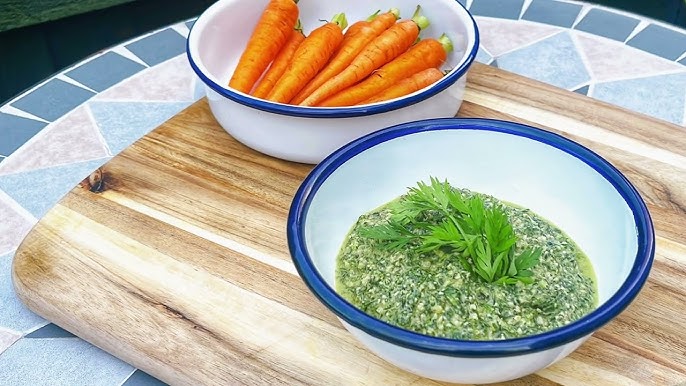
Carrot Greens Recipe: Ever tossed away those lush, leafy tops attached to your carrots? You’re not alone. Most people overlook carrot greens, assuming they’re either inedible or just plain useless. But here’s the thing—they’re not only edible, they’re delicious and packed with nutrients! Carrot greens (also known as carrot tops) are vibrant, slightly bitter greens that bring a lot to the table—literally.
They’ve got a flavor that’s somewhere between parsley and a mild carrot, with a touch of earthiness and a bit of a peppery bite. If you’re someone who loves reducing food waste, exploring new flavors, and boosting your meals with nutritious ingredients, carrot greens are your new best friend.
In this guide, we’ll walk you through everything you need to know—from prepping your greens to turning them into a mouthwatering pesto. We’ll also explore other tasty ways to use them, give you helpful cooking tips, and explain why using carrot tops is a small but impactful step toward sustainable eating.
So, ready to give those greens a second chance? Let’s dive in.
Health Benefits of Carrot Greens
Don’t be fooled by their humble appearance—carrot greens are nutritional powerhouses. These leafy tops are full of essential vitamins and minerals that your body will thank you for. Here’s a quick breakdown of why you should start using them in your kitchen:
- Rich in Vitamin K: Essential for healthy bones and blood clotting.
- Good Source of Vitamin C: Helps with immune system function and collagen production.
- High in Potassium: A crucial mineral for heart health and muscle function.
- Fiber Content: Supports healthy digestion and keeps you feeling full longer.
- Chlorophyll: Known for its detoxifying properties and potential to boost energy.
Carrot greens also contain antioxidants that help fight inflammation and oxidative stress. That means they can play a role in reducing your risk of chronic diseases like heart disease or cancer. And because they’re low in calories and carbs, they fit nicely into almost any diet—whether you’re vegan, keto, paleo, or just eating clean.
You’ll also feel good knowing you’re making the most out of your veggies. More nutrients, less waste? Sounds like a win-win.
What Do Carrot Greens Taste Like?
If you’re trying carrot greens for the first time, you’re probably wondering what they taste like. The short answer: fresh, earthy, and slightly bitter. But let’s dig a little deeper.
The flavor of carrot greens is kind of like a mix between parsley, celery leaves, and spinach, with a hint of carrot earthiness thrown in. They have a slightly herbaceous, sometimes peppery edge that adds complexity to dishes without overpowering them.
Some people find the bitterness off-putting, but that can easily be tamed with the right ingredients. A splash of lemon juice, a touch of honey, or pairing them with rich ingredients like olive oil, cheese, or nuts helps mellow that bite.
In raw form, like in salads or smoothies, they add a crisp, green punch. When cooked—sautéed, blended into sauces, or baked into dishes—they soften and become much more mild.
Once you know how to balance their flavor, carrot tops can elevate everything from pestos and soups to dips and sautés. Think of them as the rebellious cousin of parsley—bold, underrated, and full of surprises.
Before You Start: Prepping the Carrot Tops
Before diving into recipes, you’ve got to start with the basics: prepping the greens. Here’s how to make sure your carrot tops are clean, fresh, and ready to use.
Step 1: Pick the Right Bunch
Always start with fresh carrots with bright green tops. The leaves should be feathery, perky, and free from yellowing or slimy spots. Avoid wilted or overly bitter-smelling greens—they won’t taste good.
Step 2: Trim and Separate
Cut the carrot tops off the carrots as soon as you get home. If you leave them attached, they’ll draw moisture and nutrients from the carrot roots, making them go limp faster. Trim just above the root and set the greens aside.
Step 3: Wash Thoroughly
Carrot greens tend to be gritty and dusty, so give them a good rinse. Submerge the greens in a large bowl of cold water and swish them around. You might need to do this a couple of times to remove all the dirt.
Step 4: Dry Completely
Wet greens don’t blend well in recipes and spoil faster. Pat them dry with a clean towel or use a salad spinner to get rid of excess moisture. Once dry, you can store them in the fridge for up to 5 days. Wrap them in a paper towel and place them in a resealable bag or airtight container.
Now that your greens are ready, it’s time to gather the rest of the ingredients!
List of Ingredients You’ll Need
Here’s everything you’ll need to make the Carrot Greens Pesto, plus a few optional add-ons if you want to customize it.
Main Ingredients:
- 2 cups carrot tops, washed and chopped (stems removed if tough)
- 1–2 garlic cloves, peeled
- ¼ cup nuts (pine nuts, walnuts, or almonds all work)
- ⅓ cup grated Parmesan cheese (use nutritional yeast for vegan version)
- 2–3 tablespoons fresh lemon juice
- ½ cup olive oil
- Salt and pepper, to taste
Optional Add-ons:
- Fresh basil or parsley for added freshness
- Red pepper flakes for a little heat
- 1 tablespoon honey or maple syrup to balance bitterness
- Zest of 1 lemon for extra brightness
Feel free to tweak the ingredients based on what you have on hand. The beauty of pesto is its flexibility—no two batches need to be exactly the same!
Step-by-Step Guide to Making Carrot Greens Pesto
Follow these simple steps to make your own vibrant green pesto from scratch. Don’t rush the process—each step adds a layer of flavor that makes the difference between a good pesto and a great one.
Step 1: Wash and Dry the Greens
Carrot greens often hold dirt and grit, so rinse them thoroughly under cold running water. Swish them around to loosen any hidden soil. Once clean, pat dry with a kitchen towel or use a salad spinner. Drying is important—excess water can make your pesto watery and dull the flavor.
Step 2: Toast the Nuts (Optional but Recommended)
Lightly toasting nuts deepens their flavor and adds warmth to the pesto. Heat a dry pan over medium heat and toast until fragrant, stirring often. Pine nuts are classic, but walnuts, almonds, or cashews work just as well. Let them cool slightly before blending.
Step 3: Blend the Ingredients
Add the carrot greens to a food processor first, followed by garlic, nuts, and grated cheese. Pulse a few times to break everything down. With the motor running, slowly drizzle in olive oil until the mixture comes together. Blend until smooth or slightly chunky, depending on your preference.
Step 4: Adjust to Taste
Taste the pesto and season with salt, pepper, or lemon juice. If it’s too thick, add more olive oil or a splash of water to reach your desired consistency. Blend briefly to combine.
Step 5: Store Your Pesto
Transfer the pesto to an airtight container. Cover the surface with a thin layer of olive oil to prevent browning. Store in the fridge for up to 5 days, or freeze for up to 3 months.
Ways to Use Carrot Greens Pesto
Now that you’ve made your vibrant green pesto, let’s talk about how to use it. This stuff is versatile—you can spread it, stir it, dip it, and drizzle it just about anywhere.
1. Toss with Pasta
The classic move! Stir your carrot top pesto into hot pasta for an easy, flavor-packed meal. Add a splash of pasta water to make the sauce silky and help it cling to the noodles.
2. Use as a Dip
Serve it with crackers, veggie sticks, or pita chips. The bright, fresh flavor pairs beautifully with crunchy snacks.
3. Spread on Sandwiches or Wraps
Move over mayo—pesto is the new king of spreads. Slather it on bread or wraps for a punch of herby flavor.
4. Drizzle Over Roasted Veggies
Carrot top pesto adds a bold finish to roasted carrots, potatoes, or even grilled zucchini. A spoonful goes a long way.
5. Add to Soups and Stews
Swirl a spoonful into tomato soup, lentil stew, or even ramen. It adds depth and a splash of green.
6. Top Your Pizza
Instead of tomato sauce, use pesto as your pizza base. Add cheese, roasted veggies, and bake until bubbly.
Other Recipes Using Carrot Greens
If pesto isn’t your thing—or you just want more ways to use up your carrot tops—you’re in luck. Carrot greens are surprisingly versatile and can be cooked, blended, or eaten raw in all kinds of delicious recipes. Here are a few other easy and healthy ways to get them into your meals.
1. Sautéed Carrot Greens with Garlic
This is one of the simplest ways to enjoy carrot greens, especially if you’re craving something quick and savory. Sautéing mellows out the bitterness and brings out their naturally earthy flavor.
Ingredients:
- 1 bunch of carrot greens (stems removed, roughly chopped)
- 2 tablespoons olive oil
- 2 garlic cloves, sliced
- Salt and pepper to taste
- Optional: a splash of lemon juice or vinegar
Instructions:
- Heat olive oil in a skillet over medium heat.
- Add garlic and sauté until fragrant, about 30 seconds.
- Toss in the carrot greens and stir well to coat them in the oil.
- Cook for 3–5 minutes, or until wilted and tender.
- Season with salt, pepper, and a little lemon juice to brighten it up.
This makes a perfect side dish or a flavorful topping for rice bowls, roasted meats, or eggs.
2. Carrot Greens Smoothie
Yes, you can totally drink your greens—and carrot tops make a great addition to green smoothies. Their slightly bitter flavor is balanced out by sweet fruits and creamy elements.
Ingredients:
- 1 small banana
- ½ apple or pear (cored and chopped)
- A handful of carrot greens (washed and chopped)
- ½ cup spinach or kale (optional)
- 1 tablespoon peanut butter or almond butter
- 1 cup water or plant-based milk
- A few ice cubes
Instructions:
- Add all ingredients to a blender.
- Blend until smooth and creamy.
- Taste and adjust: add more fruit if it’s too bitter, or some lemon juice for brightness.
This smoothie is packed with fiber, vitamins, and antioxidants—a great way to start your day or recover after a workout.
3. Carrot Greens Soup
Turn carrot greens into a nourishing, comforting soup. It’s ideal for chilly days or when you’re looking for a light yet satisfying meal.
Ingredients:
- 1 tablespoon olive oil
- 1 onion, chopped
- 2 garlic cloves, minced
- 2 carrots, sliced
- 1 potato, peeled and cubed
- 4 cups vegetable broth
- 1 bunch carrot greens, roughly chopped
- Salt, pepper, and herbs to taste
Instructions:
- Heat olive oil in a large pot over medium heat.
- Add onion and garlic, and sauté until translucent.
- Add carrots and potatoes; cook for 5 minutes.
- Pour in the broth and bring to a boil.
- Reduce heat, cover, and simmer until veggies are tender (about 20 minutes).
- Stir in carrot greens and cook for 5 more minutes.
- Use an immersion blender to blend until smooth (or blend in batches).
- Season and serve with crusty bread.
This soup is vibrant, healthy, and a clever way to use both the root and the greens from your carrots.
Tips and Tricks for Cooking with Carrot Greens
Using carrot tops in your recipes can feel a little unfamiliar at first. But with a few kitchen tricks, you’ll be cooking with them like a pro in no time.
1. Balance the Bitterness
Carrot greens can be slightly bitter, especially raw. Here’s how to balance that:
- Add a squeeze of lemon juice or vinegar
- Mix with sweeter greens like spinach or lettuce
- Use a touch of honey or fruit in recipes
2. Use the Tender Parts
The stems can be fibrous and tough, especially on older greens. For most recipes, it’s best to:
- Remove the thick stems
- Use just the leaves and soft stems
- Or finely chop the stems if you’re blending them
3. Combine with Other Herbs
If the carrot tops taste too strong on their own, blend them with:
- Parsley
- Cilantro
- Basil
This can mellow out the flavor and make it more familiar.
4. Freeze for Later
Don’t want to use the greens right away? Freeze them!
- Chop them up and freeze in a zip-lock bag
- Or blend into pesto and freeze in ice cube trays
They’ll last up to 3 months and are great for soups, sauces, and smoothies.
5. Avoid Overcooking
Carrot greens cook fast—just like spinach. If you’re sautéing or adding them to hot dishes, only cook for a few minutes to keep their color, flavor, and nutrients intact.
Sustainability Bonus: Why Cooking with Carrot Tops Matters
Let’s talk about the bigger picture. When you cook with carrot greens, you’re not just making a smart move for your health—you’re also doing something good for the planet.
Every year, tons of edible food ends up in landfills because we don’t realize it’s usable. Carrot greens are a perfect example. They’re packed with nutrients, but they’re often tossed without a second thought.
By using the whole vegetable, you:
- Reduce food waste
- Lower your grocery bill
- Maximize nutrition
- Support sustainable eating habits
It’s a small change, but it adds up—especially if more people start doing it. Think of it as a quiet revolution in your kitchen. Waste less, cook more, and feel better doing it.
FAQs about Carrot Greens Recipe
1. Can I eat raw carrot greens?
Yes! Carrot greens can be eaten raw, especially in smoothies or salads. Just keep in mind they have a slightly bitter, earthy flavor. Mixing them with other greens or fruits can help balance the taste.
2. How do I store carrot greens for later use?
Remove the greens from the carrots as soon as possible. Wash, dry, and store them in the fridge wrapped in a paper towel and sealed in a container. They stay fresh for about 5 days. You can also freeze them.
3. Are carrot greens safe for pets?
Yes, in moderation. Dogs and rabbits can usually eat small amounts of carrot greens. However, avoid giving too much at once, and always consult your vet first.
4. Do carrot tops taste like carrots?
Not exactly. While they have a subtle carrot-like earthiness, the flavor is more herbaceous, slightly bitter, and closer to parsley or celery leaves.
5. Can I substitute carrot greens for kale or spinach?
In some recipes, yes! They work well in soups, sautés, and smoothies. Just remember to remove tough stems and consider balancing the bitterness with other ingredients.
Conclusion
Who knew those leafy green tops you used to throw away could turn into something so flavorful, healthy, and eco-friendly? Carrot greens might not be a pantry staple just yet, but they’re definitely a hidden gem. Whether you turn them into a vibrant pesto, sauté them with garlic, blend them into smoothies, or toss them into soup, carrot tops deserve a place on your plate.
They’re nutritious, versatile, and easy to use—and by cooking with them, you’re making the most of what nature gives us. So the next time you buy a bunch of carrots, don’t toss the tops. Turn them into something amazing.