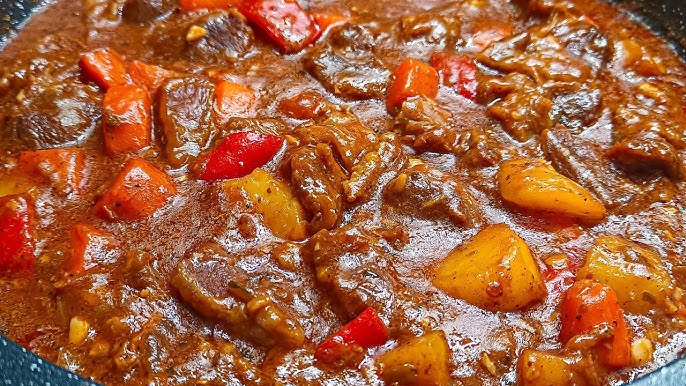
Beef Kaldereta Recipe: Filipino cuisine is a heartwarming fusion of flavors, and Beef Kaldereta stands as one of its most comforting and flavorful stews. Known for its rich tomato-based sauce, tender beef chunks, and a melody of vegetables and spices, Beef Kaldereta is a staple in many Filipino households, especially during celebrations. If you’ve never tried it before, think of it as the Filipino cousin of Spanish beef stew, with its own unique and savory twist. Whether you’re Filipino or just someone who loves to explore world cuisines, this dish is bound to become a favorite.
What is Beef Kaldereta?
Beef Kaldereta (sometimes spelled Caldereta) is a hearty Filipino beef stew simmered in a tomato-based sauce and often enriched with liver spread, cheese, olives, and vegetables like carrots and potatoes. Traditionally, it was cooked with goat meat (kalderetang kambing), but over time, beef became a more accessible and popular choice. The stew has Spanish influences, tracing back to when the Philippines was a Spanish colony for over 300 years. The word “Kaldereta” actually comes from the Spanish word “caldera,” meaning cauldron.
This dish is bold and flavorful. It balances savory, slightly sweet, and mildly spicy notes that play beautifully on your palate. It’s not just food—it’s an experience on a plate, offering that cozy, satisfying feeling like a warm hug after a long day.
Why You’ll Love This Recipe
If you’re looking for a dish that’s rich, meaty, and deeply satisfying, Beef Kaldereta ticks all the boxes. It’s a one-pot meal that’s perfect for feeding a crowd or meal-prepping for the week. What makes this recipe extra special is its versatility—customize it based on what’s available in your kitchen.
- It’s comfort food at its finest.
- Great for celebrations or simple family dinners.
- You can make it spicier, cheesier, or even healthier.
- Perfect with rice or crusty bread.
Whether you’re a home cook or just starting out in the kitchen, this step-by-step guide will help you master Kaldereta like a pro.
List of Ingredients You’ll Need
Here’s a breakdown of everything you’ll need to create this mouthwatering dish. This list includes must-haves and optional ingredients for an authentic experience:
Main Ingredients:
- 2 lbs beef chuck or brisket (cut into 1 ½ inch cubes)
- 2 tablespoons oil (vegetable or canola)
- 1 large onion (chopped)
- 5 cloves garlic (minced)
- 2 medium potatoes (cubed)
- 2 carrots (sliced diagonally)
- 1 red bell pepper (sliced)
- 1 green bell pepper (sliced)
- 1 cup tomato sauce
- 2 tablespoons tomato paste
- 1 cup beef broth (or water)
- 1/3 cup liver spread (or liver pâté)
- 1/4 cup grated cheese (cheddar or Eden cheese)
- 2 tablespoons soy sauce
- 1–2 bay leaves
- Salt and pepper to taste
Optional Add-Ons:
- 1/4 cup green peas
- 1/4 cup olives (green or black, pitted)
- Red chili flakes or siling labuyo (for spice)
- Pickles or pickle relish (for added zing)
Tip: Make sure your vegetables are cut uniformly for even cooking and better presentation.
Choosing the Right Cut of Beef
When it comes to Kaldereta, you want a cut that becomes melt-in-your-mouth tender after slow cooking. The best cuts for stews are:
- Beef Chuck Roast – rich in connective tissue, which turns tender and flavorful.
- Beef Brisket – adds a deeper, beefier flavor.
- Short Ribs – more fat content, perfect if you want extra richness.
Avoid lean cuts like sirloin or tenderloin—they tend to dry out and become tough when stewed for long periods.
To reduce cooking time, you can use a pressure cooker or Instant Pot, but don’t skip the searing step—it builds deep flavor you just can’t fake.
Essential Kitchen Tools
These tools will make preparing Beef Kaldereta much easier and more efficient:
- Large heavy-bottomed pot or Dutch oven – great for slow cooking and even heat.
- Knife and chopping board – for prepping veggies and meat.
- Measuring cups and spoons – to ensure accuracy in flavor.
- Wooden spoon or spatula – for stirring without scratching your pot.
- Pressure cooker (optional) – if you’re short on time.
Having the right tools ensures you’re not just cooking—you’re cooking smart.
Preparation Tips Before Cooking
Before jumping into the stove-side action, here are a few tips to make the process smoother:
- Marinate the beef in soy sauce, pepper, and a dash of calamansi or lemon juice for at least 30 minutes. This enhances flavor and tenderizes the meat.
- Chop all your vegetables ahead of time and place them in separate bowls. This keeps you organized.
- Open cans and prepare sauces in advance so you’re not scrambling mid-cooking.
- If you’re using liver spread, let it sit at room temperature so it mixes easily.
A little prep goes a long way in making the cooking process fun and stress-free.
Step-by-Step Cooking Instructions
Let’s dive into the meat of this recipe. Take your time with each step, and don’t rush—great Kaldereta is worth the wait.
Step 1: Searing the Beef (10 minutes)
Heat oil in a heavy pot over medium-high heat. Add beef chunks in batches and sear until all sides are browned. This step locks in flavor and adds depth to the stew. Remove the beef and set aside.
Step 2: Sautéing Aromatics (5 minutes)
Lower the heat to medium. In the same pot, sauté chopped onions until soft and translucent. Add minced garlic and cook for about 30 seconds until fragrant. Stir in tomato paste and cook for 1–2 minutes to remove the raw taste—this builds a rich flavor base.
Step 3: Simmering Until Tender (60–90 minutes)
Return the beef to the pot. Add crushed tomatoes, bay leaves, soy sauce or fish sauce, and enough water or beef stock to cover the meat. Bring to a gentle boil, then lower to a simmer. Cover and cook until the beef is fork-tender. Patience pays off here—the longer simmer develops a deeper, more comforting flavor.
Step 4: Adding Vegetables and Liver Spread (10–15 minutes)
Add diced potatoes, carrots, and bell peppers. Stir in liver spread and optional peanut butter for creaminess. Simmer until vegetables are tender and the sauce thickens, stirring occasionally.
Step 5: Final Seasoning and Taste Adjustments (5 minutes)
Season with salt, pepper, and chili (optional) to taste. Balance saltiness with a pinch of sugar if needed, adjust spice to preference, and finish with grated cheese if desired. Serve hot with steamed rice.
Serving Suggestions
Beef Kaldereta is best served hot with steamed white rice, which soaks up that rich tomato-based sauce. But here are more ways to enjoy it:
- Garlic fried rice: Adds extra punch.
- Pandesal or crusty bread: Perfect for scooping up the sauce.
- With beer or iced tea: Because why not?
For presentation, sprinkle some chopped parsley or grated cheese on top. Serve in a large bowl or family-style platter, and watch it disappear fast!
Storage and Reheating Tips
Got leftovers? Even better! Kaldereta tastes even more delicious the next day as the flavors continue to meld. Here’s how to store and reheat it properly:
Storage:
- Refrigerator: Store in an airtight container for up to 4–5 days.
- Freezer: Freeze in portions for up to 2 months. Let it cool completely before freezing.
Reheating:
- Stovetop: Reheat over low heat, adding a bit of water or broth if the sauce thickened too much.
- Microwave: Reheat in a microwave-safe bowl, covered loosely, in 2-minute intervals. Stir in between to ensure even heating.
Just don’t forget to smell it again—it only gets better!
Healthier Alternatives
Want to enjoy Kaldereta without feeling too heavy afterward? No worries—you can still get all the flavor with these healthier twists:
- Use leaner cuts of beef like sirloin (just don’t overcook).
- Skip or reduce liver spread and cheese.
- Add more vegetables like green beans or cauliflower.
- Use sweet potatoes instead of regular potatoes for added fiber and nutrients.
- Go low-sodium by using low-salt broth and cutting back on soy sauce.
Kaldereta doesn’t have to be indulgent to be delicious—you can tweak it based on your lifestyle and diet.
Common Mistakes to Avoid
Making Beef Kaldereta isn’t rocket science, but here are a few common slip-ups to avoid:
- Skipping the sear – This step builds essential flavor. Don’t just boil the beef!
- Using the wrong beef cut – Lean cuts get tough; go for chuck or brisket.
- Not simmering long enough – Rush this and your beef will be chewy.
- Overcooking vegetables – Add them at the right time so they stay firm and colorful.
- Too much or too little liver spread – Balance is key for that signature flavor.
Avoiding these mistakes means you’ll serve up a restaurant-worthy Kaldereta every time.
FAQs about Beef Kaldereta Recipe
1. Can I use pork or chicken instead of beef?
Yes! Kaldereta can be made with pork, chicken, or even goat. Just adjust the cooking time—chicken cooks much faster than beef.
2. What can I use if I don’t have liver spread?
You can substitute it with liver pâté or skip it altogether, though you’ll lose some of that classic Kaldereta richness.
3. How do I make it spicier?
Add chopped chili peppers (siling labuyo) or red chili flakes during the sautéing step. Adjust according to your spice tolerance.
4. Can I cook Kaldereta in a slow cooker?
Absolutely! Sear the beef and sauté aromatics first, then transfer everything to a slow cooker and cook on low for 6–8 hours.
5. Can I make it ahead of time?
Yes, and it’s even better the next day! Make it 1–2 days ahead and store in the fridge. Just reheat and enjoy.
Conclusion
Beef Kaldereta is more than just a stew—it’s a celebration of flavors, tradition, and comfort in a bowl. From its tender beef to the rich, savory sauce, every bite tells a story of Filipino heritage and the warmth of family gatherings.
This recipe is perfect for anyone who wants to explore Filipino cuisine or simply enjoy a hearty, home-cooked meal. With simple ingredients, easy steps, and room for personalization, it’s the kind of dish you’ll keep coming back to.
So go ahead—get that pot simmering and bring a taste of the Philippines to your kitchen.