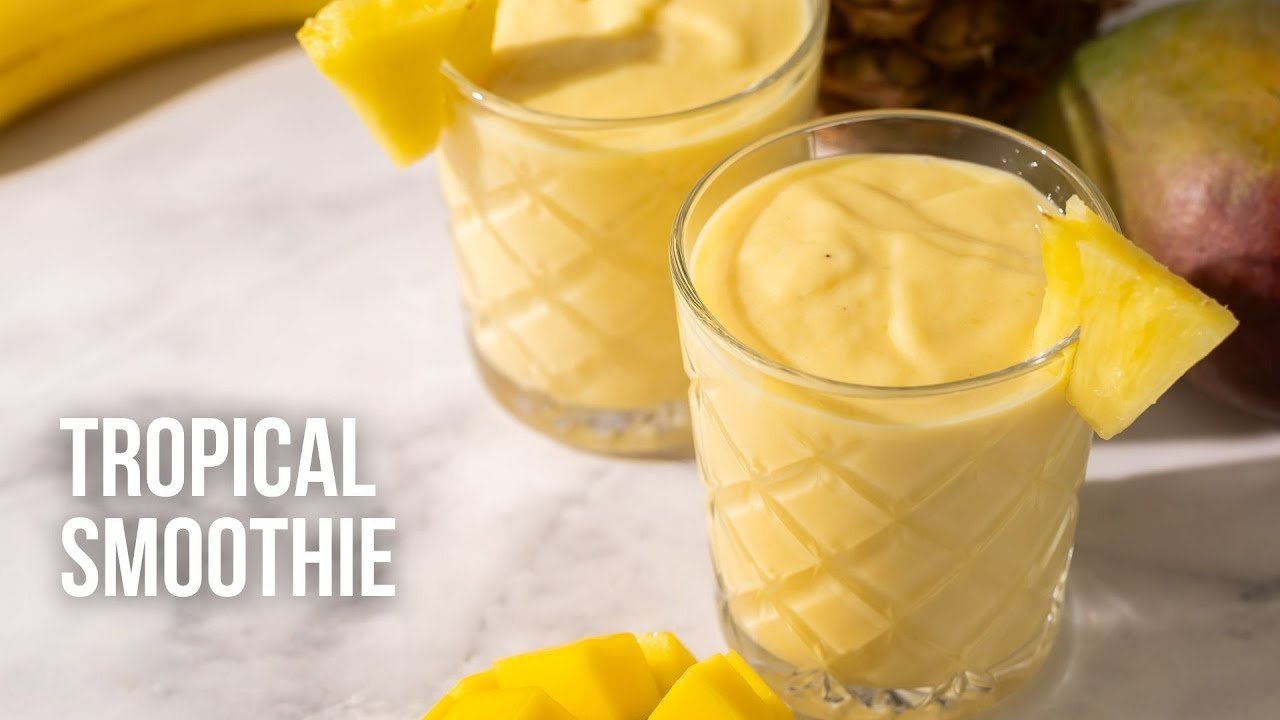
Tropical Smoothie Recipe: Craving a refreshing, delicious, and healthy drink? You’re in for a treat! A tropical smoothie is like sunshine in a glass — packed with juicy fruits, creamy textures, and a burst of natural sweetness.
Whether you’re starting your day with a vitamin boost or cooling down on a hot afternoon, this step-by-step guide will help you create the perfect tropical smoothie that tastes like vacation in every sip. It’s easy, fun, and totally customizable!
Why Tropical Smoothies Are So Popular
Tropical smoothies have become a hit around the world — and for good reason. First off, they taste amazing. With the natural sweetness of fruits like mango, pineapple, and banana, these smoothies are like a treat and a health booster rolled into one. Plus, they’re super quick to make, require no cooking, and fit into nearly every kind of diet, from plant-based to high-protein.
They also evoke a sense of escape. Imagine sipping a cool mango-pineapple blend while the sun kisses your face — even if you’re just sitting at your desk. That’s the tropical smoothie magic. They’re feel-good drinks that energize your body and lift your mood. And in today’s health-conscious world, smoothies make it easy to get your daily fruits and nutrients without any fuss.
Health Benefits of Tropical Smoothies
Rich in Vitamins and Minerals
Tropical fruits like mangoes, papayas, pineapples, and bananas are nutritional powerhouses. They’re naturally rich in vitamins A, C, and E — essential for your skin, immune system, and vision. Pineapple is especially high in vitamin C, which helps combat colds and infections. Mangoes are full of beta-carotene, which your body converts to vitamin A.
Boosts Immunity Naturally
Thanks to the abundance of antioxidants and vitamins, tropical smoothies are amazing immune boosters. Regular consumption can help your body fight off viruses and bacteria, especially during cold and flu season. Adding ginger or turmeric gives it an anti-inflammatory kick, making your smoothie both tasty and medicinal.
Great for Digestion and Hydration
Fruits like papaya and pineapple contain natural enzymes — papain and bromelain — that help your body digest proteins more efficiently. Meanwhile, the high water content in tropical fruits keeps you hydrated, especially in hot climates. Plus, fiber from fruits promotes better gut health, making tropical smoothies a go-to for digestion support.
List of Ingredients You’ll Need
To whip up the perfect tropical smoothie, here’s a complete list of ingredients you’ll want on hand. You can mix and match based on your taste and availability.
Fruits (Fresh or Frozen)
- 1 cup of pineapple chunks
- 1 ripe mango, peeled and chopped
- 1 banana
- ½ cup papaya (optional)
- ½ cup passion fruit pulp (optional but flavorful)
Liquid Base
- 1 cup coconut water (light and hydrating)
- OR 1 cup almond milk (for creaminess)
- OR 1 cup pineapple juice (extra tropical punch)
Sweeteners (Optional)
- 1–2 teaspoons honey or agave syrup
- 1 Medjool date (natural sweetener)
Add-ins for Extra Nutrition
- 1 tablespoon chia seeds (fiber + omega-3s)
- 1 tablespoon flaxseeds (heart-healthy)
- ½ cup Greek yogurt (for creaminess and protein)
- A handful of spinach (for added greens)
Equipment You’ll Need
Creating a tropical smoothie doesn’t require a full kitchen — just a few basic tools:
- High-speed blender (key for smooth texture)
- Cutting board and sharp knife (for prepping fruit)
- Measuring cups/spoons (to balance ingredients)
- Glass or smoothie jar (for serving)
Optional but helpful:
- Strainer (if you prefer pulp-free smoothies)
- Reusable straw (eco-friendly and smoothie-friendly)
Tips for Choosing the Best Tropical Fruits
Not all fruits are created equal when it comes to smoothies. For the best flavor and texture, here’s what to look for:
- Pineapples: Should be golden on the outside with a sweet aroma. A ripe pineapple should give slightly when squeezed.
- Mangoes: Soft to the touch and fragrant. Avoid rock-hard mangoes — they won’t blend well and will lack sweetness.
- Bananas: Slightly overripe is best — those with brown spots. They add natural sweetness and a creamy texture.
- Papayas & Passion Fruits: Look for bright color and softness. A ripe passion fruit will be slightly wrinkled on the outside — don’t worry, that means it’s perfect!
If you can’t find fresh tropical fruits, frozen ones work just as well — and they make your smoothie extra cold and creamy.
How to Prepare Ingredients Before Blending
Prepping is key to getting a smooth, lump-free drink. Here’s what to do:
- Wash all fruits thoroughly under cool water. Even if you plan to peel them, this helps remove pesticides or dirt.
- Peel and chop fruits into small chunks. The smaller the pieces, the easier they blend.
- Remove seeds or pits from mangoes and passion fruits.
- If using frozen fruits, let them thaw for 5–10 minutes so they blend more easily (unless you want an icy texture).
- Measure your liquid base, sweeteners, and any add-ins ahead of time.
Good prep saves time — and prevents over-blending, which can warm up your smoothie.
Step-by-Step Guide to Making a Tropical Smoothie
Let’s get blending! Follow this detailed step-by-step guide to make a tropical smoothie that’s smooth, creamy, and packed with tropical goodness.
Step 1: Gather Your Ingredients
Start by laying out all your ingredients and equipment. This includes your fruits (fresh or frozen), liquid base, and any extras you’re using like seeds or yogurt. Having everything ready keeps the process smooth and enjoyable.
Step 2: Prepare the Fruits
Peel and chop all your fruits into medium-sized chunks. Bananas should be peeled and sliced. Mangoes need to be sliced around the pit, then scored and scooped. Pineapples should be peeled, cored, and chopped into small chunks. This step ensures everything blends evenly.
Step 3: Add Ingredients to Blender
Start with the liquid base — pour it into the blender first to help the blades move freely. Then add your fruits, followed by sweeteners and any add-ins like seeds or yogurt. This layering method helps blend everything smoothly from bottom to top.
Step 4: Blend Until Smooth
Secure the lid and start blending on low speed, gradually increasing to high. Blend for about 45–60 seconds or until the texture is silky and no chunks remain. If it’s too thick, add a splash more liquid. If it’s too thin, toss in a few ice cubes or more frozen fruit.
Step 5: Taste and Adjust
Take a small taste. Want it sweeter? Add a bit of honey or another date. Not tropical enough? A splash of pineapple juice or squeeze of lime can enhance the flavor. Blend again briefly to mix.
Step 6: Serve Immediately
Pour your smoothie into a chilled glass or jar. Top it with fresh fruit slices, chia seeds, or a paper umbrella for tropical vibes. Drink it right away to enjoy the freshest flavor and the chill factor!
Tropical Smoothie Variations to Try
One of the best things about tropical smoothies is how customizable they are. You can tweak the ingredients to match your taste, dietary needs, or whatever fruits you have on hand. Here are a few delicious tropical smoothie variations that’ll transport your taste buds straight to the islands.
Mango Pineapple Smoothie
This is a classic and crowd-pleaser combo. Mango adds a rich, creamy texture, while pineapple brings in a citrusy zing that wakes up your senses.
Ingredients:
- 1 cup frozen mango
- 1 cup pineapple chunks
- ½ banana
- 1 cup coconut water
- 1 tablespoon chia seeds
Blend all together and serve chilled. It’s like sipping a sunset!
Coconut Banana Smoothie
Creamy, dreamy, and full of healthy fats, this version is perfect if you’re looking for a filling smoothie that’s also super refreshing.
Ingredients:
- 1 banana
- ½ cup coconut milk
- ½ cup Greek yogurt
- 1 tablespoon honey
- A pinch of cinnamon
Great as a breakfast smoothie that’ll keep you energized for hours.
Papaya Passion Fruit Smoothie
This smoothie feels fancy and tastes super tropical. Papaya helps with digestion, and passion fruit adds a tangy, fragrant twist.
Ingredients:
- ½ cup papaya
- ½ cup passion fruit pulp
- 1 banana
- ½ cup almond milk
- 1 teaspoon agave syrup
It’s tropical with a touch of luxury — perfect for summer brunch or self-care days.
How to Make It Vegan or Dairy-Free
Making your tropical smoothie vegan is super simple — in fact, most tropical smoothies are already dairy-free if you skip the yogurt or use plant-based milk. Here are some quick swaps and tips:
- Use coconut milk, almond milk, oat milk, or soy milk instead of dairy.
- Swap Greek yogurt with plant-based yogurt, like coconut or almond yogurt.
- Replace honey with maple syrup, agave nectar, or Medjool dates for natural sweetness.
These swaps don’t just make your smoothie vegan — they also enhance the tropical flavor and keep it light and refreshing.
Using Frozen vs. Fresh Fruit
Wondering whether to use frozen or fresh fruit for your smoothie? Both have their perks, and your choice can totally change the smoothie’s vibe.
Fresh Fruit
- Pros: Naturally juicy, flavorful, and easy to prep.
- Cons: Might make your smoothie thinner and less cold.
Frozen Fruit
- Pros: Gives your smoothie a thicker, creamier texture. Also, no need for ice!
- Cons: Needs a high-powered blender to break down smoothly.
Pro tip: A mix of both is usually best — fresh bananas with frozen mango or pineapple makes for the perfect texture and taste combo.
Tropical Smoothie for Weight Loss
Tropical smoothies can definitely be part of a weight-loss plan — as long as you’re mindful about what you add. Here’s how to keep your smoothie slimming and satisfying:
- Skip added sugars like honey or fruit juices. Stick to whole fruits.
- Add fiber-rich ingredients like chia seeds or oats to keep you full longer.
- Include protein by adding Greek yogurt, nut butter, or protein powder.
- Watch your portion size — smoothies can be calorie-dense if you’re not careful.
A smoothie loaded with pineapple, mango, banana, and coconut water is naturally sweet and filling, and can easily replace a meal if balanced correctly.
Common Mistakes to Avoid
Even with the best ingredients, your smoothie can turn out… not so great. Here are common tropical smoothie mistakes and how to fix them:
1. Making it too watery
Adding too much liquid makes your smoothie thin and bland. Start with less liquid and add more if needed.
2. Using underripe fruit
Unripe mango or banana can ruin the flavor. Make sure your fruit is ripe and fragrant.
3. Overloading your blender
Trying to blend everything at once can jam your blender. Layer the ingredients properly — liquids at the bottom, frozen stuff last.
4. Forgetting balance
Too many sweet fruits? Add citrus. Too thick? Add more liquid. Not sweet enough? Try a date or a splash of juice.
Mastering these tips ensures you get a silky, flavorful smoothie every time.
How to Store Smoothies Properly
Made a little too much smoothie? No problem! Here’s how to store leftovers without ruining the taste or texture:
Short-Term (Up to 24 hours):
- Store in a sealed mason jar or airtight container in the fridge.
- Add a bit of lemon juice to preserve color and freshness.
- Shake well before drinking — ingredients may separate.
Long-Term (Up to 1 Month):
- Pour into an ice cube tray and freeze.
- Blend frozen cubes later with a splash of liquid for a quick smoothie fix.
- Avoid freezing smoothies with dairy, as texture can become grainy.
Storing it right helps reduce waste and gives you a quick grab-and-go option for busy mornings.
FAQs about Tropical Smoothie Recipe
1. Can I make a tropical smoothie without banana?
Yes! You can substitute avocado, mango, or Greek yogurt for creaminess without the banana flavor.
2. Are tropical smoothies good for kids?
Absolutely. Just skip added sugars and load it with fresh fruits and even sneaky greens like spinach. Kids usually love the sweet tropical taste.
3. What protein can I add to a tropical smoothie?
Great protein sources include Greek yogurt, nut butters, protein powder, or even tofu for a vegan twist.
4. How do I thicken my tropical smoothie?
Use frozen fruits, add Greek yogurt, oats, or chia seeds. Avoid adding too much liquid early on.
5. Can I prep tropical smoothies in advance?
Yes! You can portion your fruits in freezer bags for quick blending later, or freeze whole smoothies in jars or cubes.
Conclusion
A tropical smoothie isn’t just a drink — it’s a vacation in a glass. It’s healthy, easy to make, and loaded with fresh flavor and feel-good nutrients. Whether you’re looking to boost your immune system, power through a workout, or just enjoy a delicious treat, tropical smoothies are a perfect choice.
And the best part? You can mix, match, and experiment endlessly to find your perfect blend. Keep a stash of frozen fruits in your freezer, stock your pantry with superfood add-ins, and you’ll always be just a blend away from island bliss.
So what are you waiting for? Grab your blender and start creating your own tropical escape — one smoothie at a time.