Red Curry Chicken Recipe: If you’re craving a meal that’s bursting with bold flavors, creamy textures, and just the right amount of heat, then Red Curry Chicken should be on your menu tonight. This Thai-inspired dish combines tender chicken with a rich, coconut-based red curry sauce, making it a cozy comfort meal that still packs an exotic punch. Whether you’re new to Thai cooking or a seasoned kitchen pro, this dish is not only easy to make but also incredibly satisfying. Plus, it’s ready in under 45 minutes!
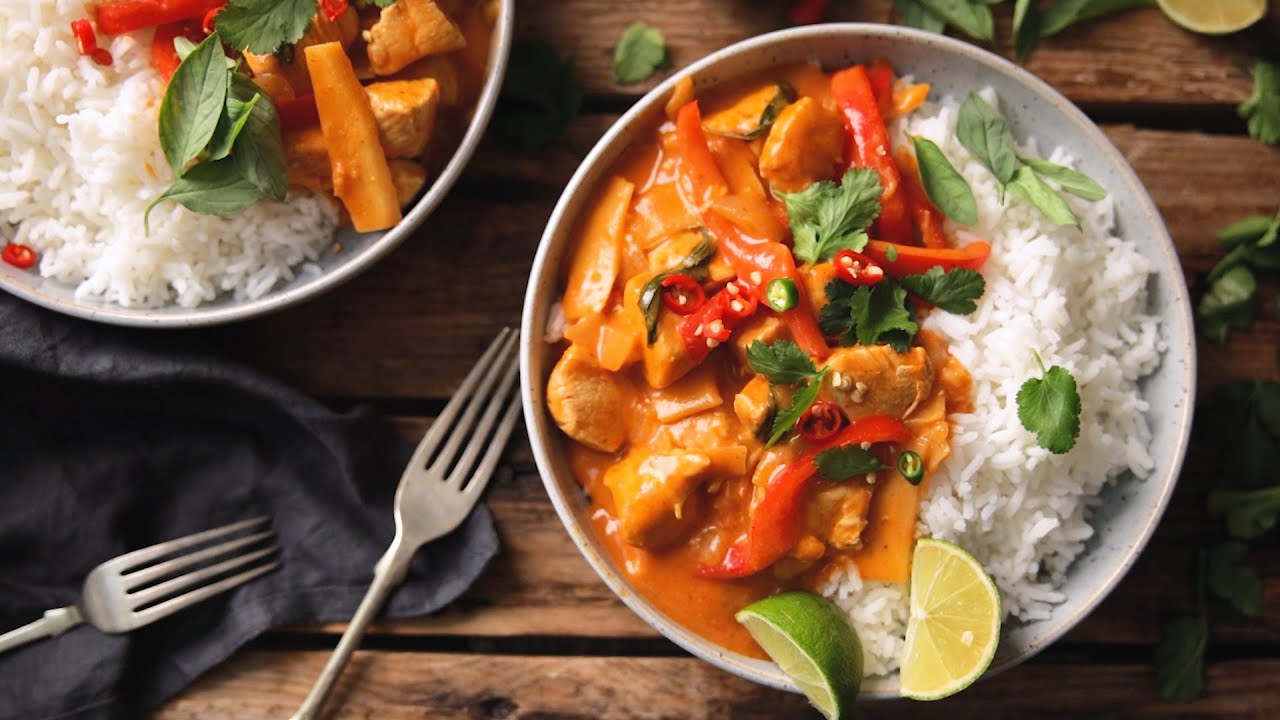
Imagine a bowl of warm, fragrant curry, the red color shimmering with coconut cream, and bits of chicken and veggies peeking out. The aroma of lemongrass, garlic, and red chilies fills the air—it’s irresistible. Let’s explore how to bring this restaurant-worthy dish into your home kitchen, step by step.
What is Red Curry Chicken?
Red Curry Chicken is a classic Thai dish made with red curry paste, coconut milk, chicken (usually boneless), and a mix of vegetables like bell peppers and bamboo shoots. The red curry paste is the star here—it gives the dish its signature vibrant color and spicy-sweet depth. While traditional recipes can vary slightly based on region or cook, the core ingredients remain the same.
Originating from Thailand, red curry (called “Gaeng Phed” in Thai) is known for its medium heat level compared to green curry (hotter) and yellow curry (milder). The red hue comes from dried red chilies used in the paste, along with other ingredients like garlic, galangal, shallots, coriander, and kaffir lime.
This dish has found its way into homes and restaurants all over the world thanks to its addictive flavor and adaptability. It’s a dish that balances flavor and fire, and when cooked right, it’s pure magic on a plate.
Why You’ll Love This Recipe
You don’t need to be a professional chef to nail this recipe. It’s ideal for beginners and busy folks who want to make something impressive without spending hours in the kitchen.
Here’s why this red curry chicken recipe stands out:
- Fast and easy: One pot and 45 minutes or less.
- Loaded with flavor: Each bite is creamy, spicy, savory, and a little sweet.
- Customizable: Don’t eat meat? Swap in tofu or shrimp. Want it spicier? Add extra curry paste.
- Meal prep friendly: Store it in the fridge and enjoy it for up to 3 days—it gets better as it sits.
- Perfect with rice: Pour it over jasmine rice and you’ve got a full meal.
Once you try it, this will be one of your go-to recipes for quick dinners, meal prepping, or even impressing guests.
List of Ingredients You’ll Need
Here’s what you’ll need to make this delicious Thai red curry chicken:
Main Ingredients:
- 1.5 lbs (700g) boneless, skinless chicken thighs or breasts (cut into bite-sized pieces)
- 2 tablespoons red curry paste (adjust to taste)
- 1 tablespoon vegetable oil or coconut oil
- 1 can (13.5 oz) full-fat coconut milk
- 1 cup chicken broth or water (optional for thinner curry)
- 1 tablespoon fish sauce
- 1 tablespoon brown sugar
- 1 red bell pepper (sliced)
- 1 green bell pepper (sliced)
- 1 small zucchini (sliced)
- 1/2 cup bamboo shoots (optional)
- Fresh Thai basil leaves or cilantro (for garnish)
- 1 lime (cut into wedges)
Optional Ingredients:
- Kaffir lime leaves (2–3 torn leaves for extra aroma)
- Fresh chili slices for added heat
- Jasmine rice or sticky rice (for serving)
That’s it! You probably have most of these in your pantry already—or they’re easy to find at any grocery store or Asian market.
Ingredient Breakdown & Alternatives
Let’s say you don’t have everything on hand—don’t worry. This dish is super forgiving, and here are some swaps you can try:
- Red curry paste: Store-bought works great, but homemade is next level. If it’s too spicy, mix it with a little tomato paste.
- Coconut milk: Full-fat gives the best creaminess, but lite coconut milk works too.
- Chicken: Thighs are juicier, but breasts work. You can also use shrimp, tofu, or even chickpeas.
- Fish sauce: Adds umami. No fish sauce? Try soy sauce or tamari for a vegan-friendly twist.
- Brown sugar: Adds sweetness to balance the heat. Honey or maple syrup also works.
- Veggies: Don’t have bell peppers? Try carrots, green beans, eggplant, or snap peas.
This dish invites creativity, so don’t be afraid to make it your own!
Kitchen Tools You’ll Need
Making red curry chicken doesn’t require fancy gadgets. Here’s what you’ll need:
- A large skillet, saucepan, or wok
- Wooden spoon or spatula
- Cutting board and knife
- Measuring cups and spoons
- Ladle (for serving)
- Rice cooker or pot (if making rice on the side)
That’s it—simple tools for a restaurant-quality meal.
Step-by-Step Guide to Make Red Curry Chicken
Let’s walk through the full process of making Thai red curry chicken, step by step:
Step 1: Prep Your Ingredients
Before anything hits the pan, make sure everything is chopped and ready. Slice the chicken into even bite-sized pieces. Cut your bell peppers, zucchini, and any other veggies you’re using. Tear the Thai basil leaves and have your coconut milk and red curry paste nearby.
Tip: This dish moves fast, so having your mise en place (everything in place) helps a ton.
Step 2: Heat the Oil and Fry the Curry Paste
Heat 1 tablespoon of oil in your pan over medium heat. Add the red curry paste and stir-fry it for 1–2 minutes until it becomes fragrant. This step is super important—it wakes up all the spices and flavors in the paste.
You’ll know it’s ready when your kitchen smells amazing.
Step 3: Add the Chicken
Toss in the chicken pieces and stir to coat them in the curry paste. Cook for 4–5 minutes, until the chicken starts to brown slightly but isn’t cooked through yet.
This helps the chicken soak up the base flavors early on.
Step 4: Add Coconut Milk and Simmer
Pour in the coconut milk and stir to combine. Let it come to a gentle simmer. If your curry feels too thick, you can add a splash of chicken broth or water.
Simmer for 10–12 minutes until the chicken is cooked through and the sauce thickens slightly.
Step 5: Add Veggies and Seasonings
Now, toss in your bell peppers, zucchini, bamboo shoots, and any other veggies. Stir in the fish sauce and brown sugar.
Let it simmer for another 5–7 minutes until the veggies are tender but not mushy.
Step 6: Taste and Adjust
Taste your curry. Want more saltiness? Add a splash more fish sauce. Too spicy? Stir in a bit more coconut milk or sugar.
Cooking is all about balance—trust your taste buds!
Step 7: Garnish and Serve
Turn off the heat and stir in fresh Thai basil or cilantro. Squeeze in a bit of lime juice if you like a tangy touch.
Serve hot over jasmine rice, and boom—you’ve just made an incredible red curry chicken.
Pro Tips for the Best Red Curry Chicken
Cooking red curry chicken isn’t rocket science, but there are a few tricks to elevate it from good to restaurant-quality. These little tips make a big difference in flavor, texture, and overall presentation.
- Sauté the curry paste properly – One of the most important steps is frying the red curry paste in oil before adding anything else. It’s like unlocking all the flavor molecules. Don’t skip this step or rush it.
- Use full-fat coconut milk – Want that silky, rich curry texture you get at Thai restaurants? Full-fat coconut milk is key. Lite versions work in a pinch, but they’ll water down the sauce.
- Don’t overcook the chicken – Chicken dries out fast, especially breast meat. Keep an eye on it and take it off the heat once it’s just cooked through.
- Add fresh herbs last – Basil or cilantro should go in after you turn off the heat. This keeps their flavor fresh and prevents them from getting bitter or slimy.
- Balance your flavors – Thai cooking is all about sweet, salty, sour, and spicy. Taste as you go and adjust with sugar, fish sauce, or lime juice to hit the perfect balance.
- Make it ahead – Like many curries, red curry chicken actually tastes better the next day. The flavors continue to develop and meld overnight.
Red Curry Chicken Serving Suggestions
Now that your curry is ready, it’s time to build the perfect plate. While red curry chicken is amazing on its own, pairing it with the right sides takes it to a whole new level.
Here are some tasty options to complete your meal:
- Steamed jasmine rice – A classic. The fluffy rice soaks up the curry like a sponge and balances the heat.
- Sticky rice – For a more traditional Thai-style meal.
- Rice noodles or egg noodles – A great gluten-free option and makes the dish feel heartier.
- Roti or naan bread – Not traditional, but great for scooping up sauce.
- Cucumber salad – A light, cooling side that pairs beautifully with the curry’s heat.
- Fresh spring rolls – Want to go all out? Serve with a side of fresh rolls for a Thai-inspired dinner party.
Don’t forget a cold drink! Thai iced tea, coconut water, or even a sparkling lime soda go great with the spicy warmth of red curry.
What to Serve With Red Curry Chicken
If you’re looking to create a full meal or dinner spread, consider adding some of these dishes alongside your red curry chicken:
- Thai Papaya Salad (Som Tum): It’s crunchy, spicy, and tangy – a great contrast to the creamy curry.
- Tom Yum Soup: A hot and sour soup that pairs well with the rich red curry.
- Thai Fried Rice: Switch things up from plain white rice.
- Grilled Satay Skewers: A protein-packed side that adds variety.
- Mango Sticky Rice: The perfect Thai dessert to cool things down after the curry heat.
Mix and match to suit your taste and how elaborate you want your meal to be.
How to Store and Reheat Leftovers
Red curry chicken makes fantastic leftovers—some say it’s even better the next day. Here’s how to store and reheat it without losing the magic.
Storing in the Fridge:
- Let the curry cool completely before storing.
- Place in an airtight container.
- Store in the fridge for up to 3-4 days.
Freezing Instructions:
- You can freeze it for up to 2 months.
- Use freezer-safe containers or heavy-duty zip bags.
- Thaw in the fridge overnight before reheating.
Reheating Tips:
- Stovetop method: Reheat gently over medium-low heat in a saucepan. Add a splash of water or coconut milk to loosen it if it thickens.
- Microwave method: Use a microwave-safe bowl. Cover loosely and heat in 60-second bursts, stirring between rounds.
Avoid overheating, especially if using chicken breast, as it can dry out quickly.
Common Mistakes to Avoid
Even simple recipes have their pitfalls. Watch out for these common mistakes when making red curry chicken:
- Using cold ingredients straight from the fridge – Let your chicken come to room temperature before cooking. It’ll cook more evenly and stay juicy.
- Overcrowding the pan – Too much chicken at once can drop the pan temperature, leading to steaming instead of searing.
- Skipping the curry paste sauté – This is a big one. Skipping this step dulls the flavor dramatically.
- Adding all the veggies at once – Some veggies cook faster than others. Add heartier ones first and delicate ones (like bell peppers) toward the end.
- Using low-quality curry paste – Not all red curry pastes are created equal. If you find yours lacks flavor, try brands like Mae Ploy or Maesri.
- Neglecting to taste and adjust – Thai cooking thrives on flavor balance. Don’t be afraid to tweak things!
Avoid these and you’re well on your way to curry perfection.
Make It Your Own: Variations to Try
This red curry chicken recipe is a base you can build on. Want to switch things up? Check out these tasty variations:
1. Red Curry Shrimp
Swap chicken for shrimp. It cooks faster and adds a seafood twist. Just toss in raw shrimp during the last 5–6 minutes of cooking.
2. Vegetarian Red Curry
Use tofu or chickpeas instead of meat. Add more veggies like mushrooms, carrots, baby corn, or broccoli.
3. Vegan Red Curry
Make it plant-based by using soy sauce instead of fish sauce, and tofu or tempeh for the protein.
4. Low-Carb or Keto Version
Skip the sugar, replace rice with cauliflower rice, and go light on starchy veggies.
5. Spicy Red Curry
Double the curry paste or add Thai bird’s eye chilies for more kick. A drizzle of chili oil doesn’t hurt either.
Health Benefits of Red Curry Chicken
Red curry chicken isn’t just delicious—it’s also packed with nutritional perks:
- High in protein: Thanks to the chicken or tofu, it’s a filling, muscle-friendly meal.
- Coconut milk: Rich in healthy fats and MCTs (medium-chain triglycerides) that give you energy.
- Antioxidant-rich spices: The curry paste often contains garlic, chilies, and galangal—all known for anti-inflammatory and antioxidant properties.
- Veggie-packed: Add a rainbow of vegetables for a dose of vitamins, minerals, and fiber.
- Gluten-free and dairy-free: Naturally free of gluten and dairy, making it perfect for sensitive stomachs.
Like any dish, moderation is key, especially if you’re watching fat or sodium, but red curry chicken can absolutely be part of a balanced, healthy diet.
FAQs about Red Curry Chicken Recipe
1. Can I use green or yellow curry paste instead of red?
Yes! Green curry is spicier and more herbal, while yellow curry is milder and a bit sweeter. They’ll give you different flavor profiles but still taste amazing.
2. Is red curry chicken spicy?
It can be, depending on the brand of curry paste and how much you use. If you’re sensitive to spice, start with a smaller amount and taste as you go.
3. Can I make this dairy-free?
Absolutely. The recipe is already dairy-free as it uses coconut milk instead of cream or milk.
4. How long can I store leftovers?
In the fridge, leftovers last 3–4 days. In the freezer, they’re good for up to 2 months.
5. What vegetables go best with red curry?
Bell peppers, zucchini, bamboo shoots, carrots, snap peas, and eggplant all work beautifully. Pick your favorites or use what’s in your fridge!
Conclusion
There you have it—the ultimate step-by-step guide to making Thai red curry chicken at home. Whether you’re cooking for your family, meal-prepping for the week, or trying something new for date night, this dish checks all the boxes: flavorful, easy, and downright crave-worthy.
With simple ingredients, bold taste, and easy swaps, you can make this dish entirely your own. From rich coconut milk to the spicy-sweet red curry paste and fresh herbs on top—it’s a party in every bite.
So, grab your wok, turn on the heat, and let those Thai aromas fill your kitchen. You’ll be surprised how easy it is to bring such vibrant, authentic flavor into your home.