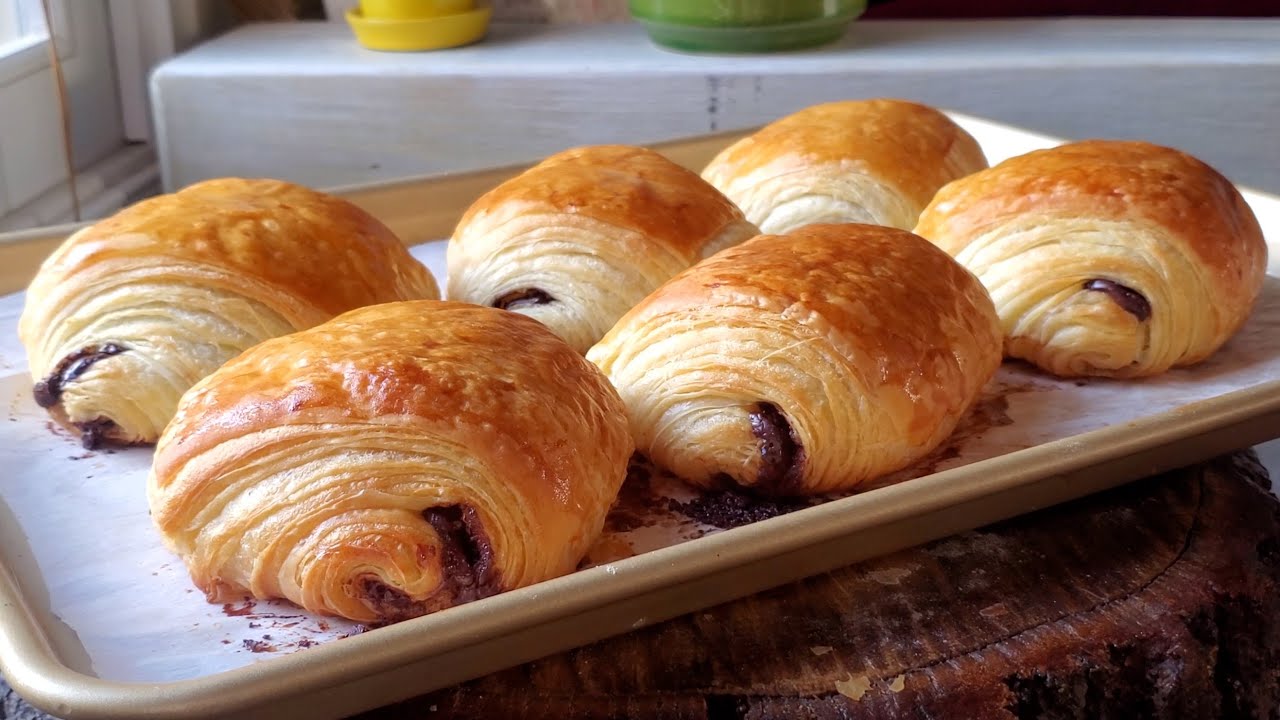
Pain au Chocolat Recipe: Craving that warm, buttery, flaky French pastry filled with rich, melting chocolate? Pain au chocolat is your golden ticket to pastry paradise. This guide breaks down everything you need—from ingredients to techniques—so you can bake these chocolate-stuffed croissants at home like a true French pâtissier. Whether you’re new to baking or a seasoned pastry enthusiast, you’ll find this guide incredibly useful and rewarding.
Let’s dive deep into this delightful treat and bring the taste of Paris to your kitchen!
What is Pain au Chocolat?
Pain au chocolat, pronounced “pan oh shoh-koh-lah”, is a classic French viennoiserie—essentially a pastry made from a yeast-leavened dough similar to croissants. But instead of being rolled into crescents, it’s folded into rectangles and filled with bars of dark chocolate. The outer crust is crisp and golden brown, while the interior is tender and layered, with pockets of chocolate creating an indulgent surprise in every bite.
Think of it like a croissant’s chic cousin who studied abroad and now walks the streets of Paris in a trench coat and beret. Elegant, a little mysterious, and absolutely irresistible.
Why You’ll Love This Recipe
This pain au chocolat recipe isn’t just about recreating a bakery-quality pastry at home—it’s about the full, satisfying experience. From the moment you begin mixing the dough to the scent of buttery pastry filling your kitchen, this process is pure magic.
Here’s why you’ll fall in love with this recipe:
- Authentic French Taste: Rich, buttery layers just like you’d find at a Parisian bakery.
- Step-by-Step Instructions: Perfect for beginners and home bakers.
- Versatility: Use this dough recipe for other pastries like croissants or almond croissants.
- Make-Ahead Friendly: Dough can be made ahead and frozen for future bakes.
- Fun for the Family: Kids will love helping you roll and shape the pastries.
If you’ve ever hesitated to make laminated dough at home, this guide will help you conquer that fear—and maybe become your new weekend ritual.
Origins of Pain au Chocolat
Let’s take a short walk through history. Pain au chocolat hails from France, but its roots dig even deeper. It’s part of the larger category of viennoiseries, which originated in Austria and were popularized in France in the 19th century. The French took the Austrian kipferl, refined it, and turned it into what we now call the croissant.
Pain au chocolat emerged as a variation of the croissant, typically enjoyed during breakfast or as a mid-day snack with a cup of espresso. In some parts of southern France, it’s also referred to as chocolatine, sparking a long-standing (and slightly hilarious) debate between regions over which name is correct.
One thing’s for sure—no matter what you call it, it’s always delicious.
Difference Between Croissant and Pain au Chocolat
People often confuse pain au chocolat with croissants, and while they share the same dough, they differ in shape, filling, and sometimes purpose. Here’s a quick comparison:
| Feature | Croissant | Pain au Chocolat |
|---|---|---|
| Shape | Crescent | Rectangular |
| Filling | None (typically) | Dark chocolate batons |
| Serving Occasion | Breakfast, brunch | Breakfast, snack, dessert |
| Appearance | Curved with pointy ends | Straight with visible chocolate |
So, if you’re in the mood for chocolate and buttery layers, pain au chocolat is your best friend.
Tools & Equipment You’ll Need
Making pain au chocolat at home doesn’t require fancy bakery gear, but having the right tools can make things easier and give you more consistent results.
Baking Tools
- Rolling pin (preferably long and heavy)
- Bench scraper or dough cutter
- Pastry brush
- Ruler (helps with precision)
- Baking trays
- Parchment paper or silicone baking mat
Pastry Essentials
- Stand mixer with dough hook (optional, but helpful)
- Plastic wrap or clean kitchen towel
- Sharp knife or pizza cutter
- Cooling rack
These tools help you shape and handle the dough with more precision. Laminated dough is all about finesse, and these items keep the process smooth and mess-free.
Ingredients You’ll Need
You don’t need a ton of ingredients to make pain au chocolat, but you do need to use high-quality ones. This is not the time to cheap out on butter!
For the Dough
- 4 cups (500g) bread flour
- 1/2 cup (100g) granulated sugar
- 1 tbsp (10g) salt
- 1 tbsp (10g) instant yeast
- 1 1/4 cups (300ml) cold whole milk
- 2 tbsp (30g) unsalted butter (room temp)
For the Butter Layer
- 1 1/4 cups (285g) high-fat European-style unsalted butter (cold)
For the Filling
- 24 dark chocolate batons or high-quality dark chocolate (about 40–50g per baton)
Optional Glaze
- 1 egg + 1 tbsp milk (for egg wash)
The quality of your butter and chocolate directly impacts the taste and flakiness. Use European-style butter (like Plugra or Président) with higher fat content for best results.
Choosing the Right Chocolate
You can’t have pain au chocolat without that indulgent chocolate center. But not just any chocolate will do.
Types of Chocolate to Use
- Dark chocolate (60–70% cacao): Rich, slightly bitter, pairs beautifully with the sweet dough.
- Chocolate batons: Specifically made for baking, they stay intact during baking without burning.
Where to Buy Chocolate Batons
- Online baking supply stores (e.g., King Arthur, Amazon)
- Specialty grocery stores
- European markets
If you can’t find batons, simply chop a quality chocolate bar into thick sticks. Avoid chocolate chips—they’re meant to hold their shape and don’t melt well inside the pastry.
The Secret to Flaky Layers
Here’s the real trick: lamination. That’s the fancy word for folding layers of butter into dough repeatedly, which creates those iconic flaky layers when baked. The process might seem intimidating at first, but with a bit of patience and care, it becomes second nature.
Here’s what helps:
- Keep everything cold – Dough, butter, your kitchen—cold is key.
- Use a light touch – Don’t press down too hard when rolling.
- Rest the dough – Allowing rest between folds relaxes the gluten and makes rolling easier.
If you’ve ever made puff pastry, the concept is similar—but croissant dough uses yeast, making it softer and more elastic.
Step-by-Step Guide to Making Pain au Chocolat
Time for the fun part—let’s get baking!
Step 1: Preparing the Dough
Begin by mixing flour, sugar, salt, yeast, milk, and a little butter to form a soft dough. Knead until smooth and elastic, then shape it into a rectangle. Cover and chill for at least one hour. Cold dough is essential for proper lamination later.
Step 2: Making the Butter Block
Take chilled butter and pound or roll it into a thin, even rectangle between parchment paper. The butter should be firm yet pliable—not melting, not brittle. Refrigerate until ready to use.
Step 3: Lamination Process (Folding & Rolling)
Roll the dough into a large rectangle and place the butter block in the center. Fold the dough over the butter like a letter, sealing the edges. Roll out again and complete two to three folds, chilling between each fold. This creates the flaky layers classic to French pastries.
Step 4: Shaping the Pain au Chocolat
Roll the laminated dough into a long sheet and cut into rectangles. Place chocolate batons or dark chocolate pieces near one end and roll the dough tightly around the chocolate.
Step 5: Proofing the Dough
Arrange the pastries seam-side down on a baking tray. Let them proof in a warm place until puffy and almost doubled in size.
Step 6: Baking to Perfection
Brush with egg wash and bake at 400°F (200°C) for 15–20 minutes until golden, flaky, and crisp. Cool slightly before enjoying!
Tips for the Best Results
To make your pain au chocolat bakery-worthy, here are some tried-and-true tips:
- Use the best butter you can afford. European-style butter with 82–85% fat content will give superior results.
- Keep everything cold. Chill dough and butter between every fold to prevent melting.
- Don’t rush the process. Allow the dough to rest and relax. Patience = flaky layers.
- Use a kitchen thermometer. The proofing temperature matters—a slightly warm but not hot environment is ideal.
- Egg wash carefully. Avoid letting it drip down the sides, which can seal layers and hinder rise.
Once you master the technique, you’ll be hooked on making these again and again.
How to Store & Reheat
You’ve baked a batch of gorgeous pain au chocolat—how do you keep them fresh?
Storing
- Store at room temperature in an airtight container for up to 2 days.
- For longer storage, freeze unbaked shaped pastries before proofing.
Freezing
- Freeze shaped, unproofed pain au chocolat on a tray, then transfer to a zip-lock bag.
- When ready to bake, thaw in the fridge overnight, proof, and bake fresh.
Reheating
- Warm in a 300°F (150°C) oven for 5–8 minutes.
- Avoid microwaving, as it ruins the flakiness.
Nothing beats freshly baked, but reheated ones can still be heavenly.
Common Mistakes to Avoid
Even experienced bakers slip up. Here’s what to watch for:
- Over-proofing: Leads to butter leakage and flat pastries.
- Too-warm butter: Melts into the dough and ruins the lamination.
- Skipping rest times: Makes dough hard to roll and less flaky.
- Inconsistent rolling: Uneven layers bake unevenly.
- Using chocolate chips: They don’t melt properly and might taste burnt.
Follow the method closely, and you’ll dodge most issues effortlessly.
Serving Suggestions
Pain au chocolat is perfect on its own, but you can elevate the experience:
- With espresso – Classic French café style.
- With fresh berries – Adds brightness and balances the richness.
- With whipped cream – For an indulgent brunch.
- Dusted with powdered sugar – Adds a hint of sweetness and charm.
- Sliced and served with vanilla ice cream – Dessert heaven!
Pair it with whatever makes you smile—it’s hard to go wrong.
FAQs about Pain au Chocolat Recipe
Can I freeze Pain au Chocolat?
Absolutely! Freeze the shaped, unbaked pastries before proofing. When you’re ready to bake, thaw overnight in the fridge, proof as normal, and bake fresh.
What’s the best flour for croissant dough?
Use bread flour or high-protein flour. It gives structure and helps form strong gluten strands essential for lamination.
How long should I proof the dough?
About 2 to 2.5 hours at room temperature. It should become noticeably puffy but not double in size.
Can I use puff pastry instead?
Technically yes, but puff pastry lacks the yeasty flavor and tender interior of traditional croissant dough. It’s a shortcut, not a replacement.
Is it okay to use milk chocolate?
You can, but dark chocolate balances the sweetness of the dough better. If you prefer milk chocolate, choose a high-quality brand that melts well.
Conclusion
There you have it—a step-by-step journey to creating authentic, flaky, buttery pain au chocolat right in your own kitchen. Sure, it takes some patience and attention to detail, but the reward is beyond worth it. From the rich, dark chocolate core to the crackly golden exterior, this pastry delivers that luxurious French bakery experience with every bite.
Once you’ve tried homemade pain au chocolat, it’s hard to settle for store-bought again. So put on some French café music, roll up your sleeves, and bake your way to buttery bliss.
Bon appétit!