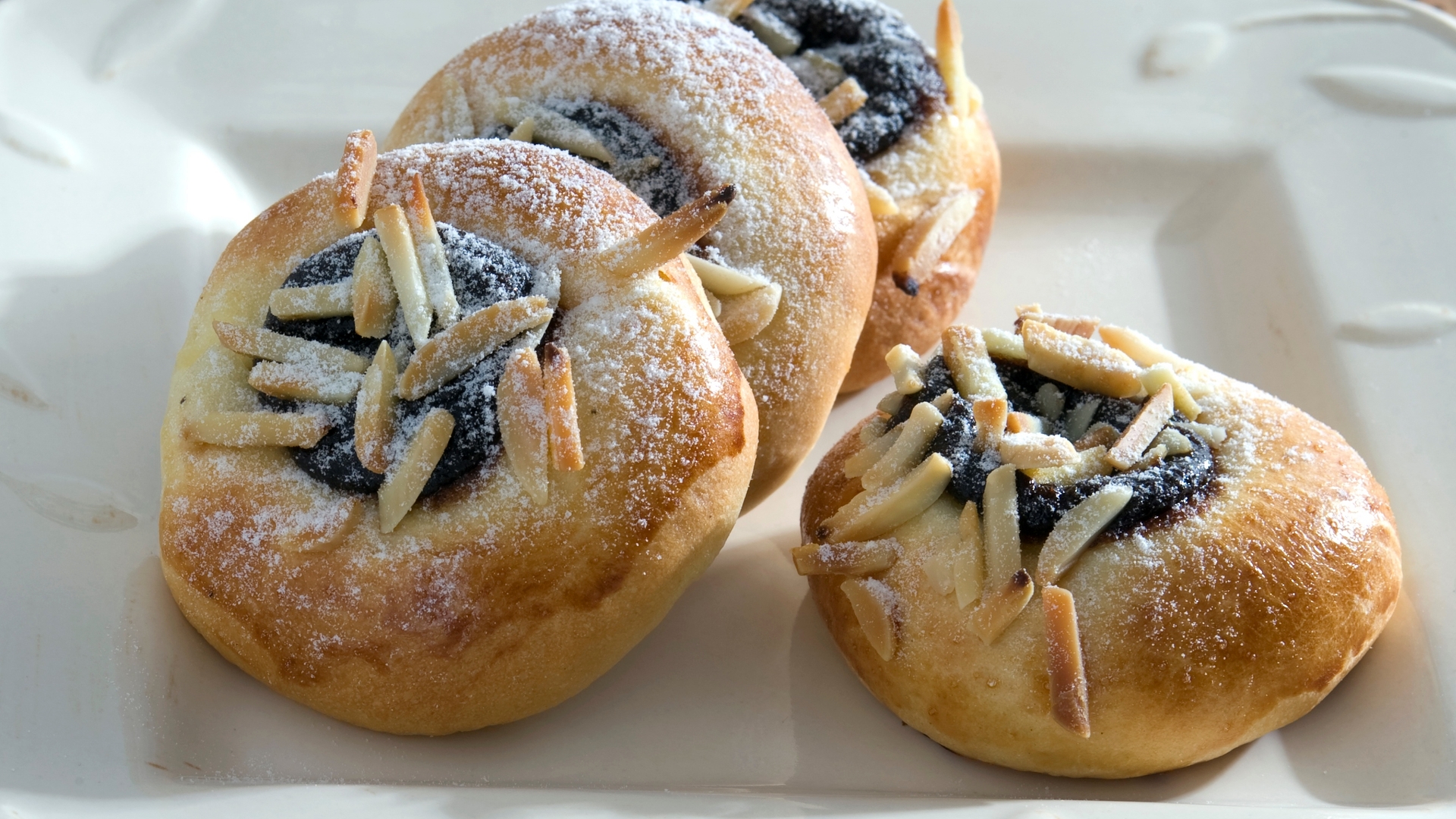
Kolaches Czech Recipe: If you’ve ever wandered into a Czech bakery or visited a town with strong Czech heritage, chances are you’ve come across the delightfully sweet, pillowy pastries known as kolaches. Pronounced “koh-lah-cheese,” these soft buns with fruit or cheese filling in the center are more than just a snack—they’re a symbol of tradition, family, and celebration. Dating back to the 18th century, kolaches were originally made in rural Czech kitchens for special occasions like weddings and religious holidays. Grandmothers would rise early to prepare the yeasty dough and hand-make each pastry with love, often passing down the recipe through generations.
Kolaches are often enjoyed for breakfast or served alongside coffee during social gatherings. They’re not overly sweet, which makes them an ideal companion to a warm beverage or an afternoon treat. And while you may have seen savory versions of kolaches (popular in Texas), the traditional Czech kolaches are always sweet—filled with poppy seed paste, fruit jam, or sweetened farmer’s cheese. Each bite is a delicious testament to Czech culture, balancing tender bread with the rich and fruity or creamy filling.
What Makes Kolaches Unique?
Unlike other pastries that might be filled inside or covered with frosting, kolaches have a distinct appearance. They are round, thumbprint-style buns with an indented center filled with sweet goodness. Their signature topping, called “posypka” (a buttery crumble), adds a delightful texture and enhances the sweetness. The dough is yeast-leavened, rich with eggs and butter, yet it remains soft and light—never too dense or overly sugary.
What truly sets kolaches apart is their versatility. Though they stem from a very specific cultural background, people all over the world have fallen in love with them. You’ll find modern adaptations using Nutella, apple pie filling, lemon curd, and even pumpkin spice. But no matter the innovation, the heart of the kolache remains rooted in its Czech origins: a pastry made to be shared, enjoyed, and celebrated.
Ingredients You’ll Need
Dough Ingredients
The dough is the soul of any kolache, and for an authentic Czech recipe, you’ll need the following high-quality ingredients:
- 4 cups all-purpose flour
- 1 packet (2 1/4 tsp) active dry yeast
- 1 cup whole milk (warm, around 110°F)
- 1/4 cup granulated sugar
- 1/2 teaspoon salt
- 2 large eggs
- 1/2 cup unsalted butter (melted and cooled)
- 1 teaspoon vanilla extract
Make sure all your ingredients are at room temperature, especially the eggs and butter. This helps the dough rise evenly and blend smoothly without clumping.
Filling Ingredients
Here are a few traditional Czech filling options—feel free to make one or several:
For fruit filling (apricot, plum, or cherry):
- 1 1/2 cups dried fruit
- 3/4 cup water
- 2 tablespoons sugar
- 1 teaspoon lemon juice
For sweet cheese filling:
- 8 oz farmer’s cheese or ricotta
- 2 tablespoons sugar
- 1 egg yolk
- 1/2 teaspoon vanilla extract
For poppy seed filling:
- 1/2 cup ground poppy seeds
- 1/4 cup milk
- 2 tablespoons honey or sugar
- 1/2 teaspoon lemon zest
Each filling has its own nostalgic flavor, deeply rooted in Czech cuisine. The fruit fillings offer tartness, while the cheese is creamy and rich. Poppy seed filling is earthy and traditional, favored in many Eastern European homes.
Topping and Optional Add-ons
For Posypka (crumb topping):
- 1/4 cup all-purpose flour
- 1/4 cup granulated sugar
- 2 tablespoons cold butter (cut into small pieces)
Optional add-ons:
- Egg wash (1 egg beaten with 1 tbsp milk for brushing)
- Powdered sugar for dusting after baking
- Lemon zest or cinnamon in the topping for flavor variation
Equipment You’ll Need
To keep your baking smooth and stress-free, gather the following tools:
- Large mixing bowl
- Wooden spoon or stand mixer with dough hook
- Measuring cups and spoons
- Saucepan (for cooking fruit filling)
- Baking sheets
- Parchment paper
- Pastry brush
- Clean kitchen towel or plastic wrap
- Rolling pin
Having everything prepped in advance is key to enjoying the process. Kolaches may take a bit of time, but with the right tools and ingredients, you’re already halfway to a successful bake.
Step-by-Step Guide to Making Czech Kolaches
Step 1: Preparing the Dough
Start by activating your yeast. In a small bowl, mix the warm milk (not hot—just warm to the touch) with a tablespoon of sugar and the yeast. Let it sit for about 5–10 minutes until it becomes foamy. This step is crucial. If your mixture doesn’t foam, your yeast might be expired or the milk too hot. In that case, start over.
In a large mixing bowl, combine the flour, remaining sugar, and salt. Make a well in the center and pour in the foamy yeast mixture, beaten eggs, melted butter, and vanilla. Mix until the dough starts coming together. Then, either knead by hand on a floured surface for 8–10 minutes or use a stand mixer with a dough hook for about 5–7 minutes.
The dough should be soft, slightly sticky but not wet. If it’s too dry, add a tablespoon of milk. If too sticky, add a bit of flour. Once kneaded, form the dough into a ball, place it in a lightly oiled bowl, cover with a clean towel or plastic wrap, and let it rise in a warm spot for 1 to 1.5 hours, or until doubled in size.
The key here is patience. Don’t rush the rising process—it gives your kolaches that irresistible, airy texture.
Step 2: Letting the Dough Rise
Once your dough has doubled in size, it’s time to get it ready for shaping. Punch down the dough gently to release the air, and transfer it to a lightly floured surface. Divide the dough into equal pieces—usually about 12 to 16 portions, depending on how large you want each kolache. For a more traditional size, go for pieces that weigh roughly 2 ounces each.
Roll each piece into a smooth ball. It helps to pinch the edges underneath to create surface tension on the top, giving you that perfectly domed bun. Place the dough balls on a parchment-lined baking sheet, spaced a few inches apart. Lightly cover them with a kitchen towel and let them rest again for about 30 minutes. This second rise allows the gluten to relax and the buns to become ultra fluffy when baked.
During this time, preheat your oven to 375°F (190°C). Don’t skip the second rise—it’s the secret to getting that bakery-style texture that makes Czech kolaches so satisfying.
Step 3: Making the Fillings
While the dough rests, prepare your chosen fillings. If you’re going with fruit fillings, combine the dried fruit, water, sugar, and lemon juice in a small saucepan. Cook over medium heat until the fruit softens and the mixture thickens—about 10 to 15 minutes. Mash it slightly or use a food processor to get a smoother consistency.
For the sweet cheese filling, mix the cheese, sugar, egg yolk, and vanilla until creamy. If you’re using ricotta, drain any excess liquid to avoid a runny filling.
For poppy seed filling, heat the milk in a small pot, then add the ground poppy seeds and honey or sugar. Stir continuously until it forms a thick paste. Finish with lemon zest for that authentic Czech aroma.
Once your fillings are ready, let them cool to room temperature. Warm fillings can melt into the dough and create soggy centers, so cooling is key.
Step 4: Shaping the Kolaches
Now comes the fun part—shaping your pastries. Gently flatten each dough ball with your fingertips or the bottom of a small glass to form a small well in the center. Be careful not to press all the way through—you’re creating a dip for the filling, not a hole.
Traditionally, Czech kolaches are shaped like a small round with an indented center, similar to a thumbprint cookie but bigger and more elegant. Use your fingers to smooth and widen the indentation slightly. Don’t worry if they’re not all identical; the homemade look adds to their charm.
If you want to ensure the filling doesn’t spread, you can make a deeper well and even chill the shaped dough briefly before filling it. This helps maintain the shape during baking.
Step 5: Filling the Dough Circles
Spoon about 1–1.5 teaspoons of filling into each well. Don’t overfill them—the dough will expand while baking and can push the filling out. If using multiple types of fillings, try creating a pattern on your tray or label the different sections to keep track of flavors.
Once filled, brush the exposed dough with egg wash to give the kolaches a shiny, golden finish. The egg wash also helps the posypka topping adhere better.
Optional: Sprinkle a small amount of sugar or cinnamon on the cheese or fruit fillings for extra depth of flavor. This is your chance to personalize your kolaches while keeping the traditional foundation.
Step 6: Applying the Posypka (Crumb Topping)
The posypka, or crumb topping, is what elevates kolaches from simple pastries to irresistible treats. In a small bowl, mix the flour and sugar. Cut in the cold butter using a pastry cutter or your fingers until it forms a crumbly texture. You’re looking for small, pea-sized crumbs—not a sandy mixture.
Sprinkle the posypka generously over the filled kolaches. It should mostly land on the dough, but a bit on the filling adds a lovely sweet crunch. Don’t be shy with it—this topping caramelizes slightly during baking, creating a beautiful contrast of textures.
Some bakers like to mix in a pinch of cinnamon or even crushed nuts for a twist, but classic kolaches stick with the simple three-ingredient posypka for that authentic taste.
Step 7: Baking to Golden Perfection
Bake your kolaches in the preheated oven at 375°F (190°C) for about 15 to 18 minutes, or until the edges turn a beautiful golden brown and the filling is gently bubbling. Rotate your baking sheet halfway through if your oven has hot spots to ensure even browning.
Once baked, remove them from the oven and allow them to cool on the pan for 5 minutes before transferring to a wire rack. This cooling period helps set the filling and keeps the bottoms from getting soggy.
Optional but delicious: Lightly dust with powdered sugar once cooled, especially if you’ve used fruit or cheese filling. It adds a touch of elegance and extra sweetness without overpowering the pastry.
At this point, your kitchen will smell like a Czech grandma’s bakery—warm, comforting, and completely inviting. Serve them warm or at room temperature, and watch them disappear in seconds.
Tips for Perfect Kolaches Every Time
Common Mistakes to Avoid
Even though kolaches are relatively simple to make, there are a few common pitfalls that can affect the final result. Avoiding these will help you achieve bakery-quality results at home.
- Skipping the yeast activation – Always make sure your yeast is fresh and becomes foamy before adding it to your dough. Dead yeast means your dough won’t rise properly.
- Over-kneading the dough – Too much kneading can make the dough tough and dry. Stop once it’s elastic and slightly sticky.
- Overfilling the center – It might be tempting to add more filling, but too much can cause it to overflow and burn on the baking tray.
- Not letting the dough rest twice – Both the initial and second rise are essential for the soft, fluffy texture. Rushing through this step can leave you with dense or undercooked kolaches.
- Using hot filling – Filling that’s too warm can melt into the dough before baking, resulting in a soggy mess. Always let fillings cool to room temperature before use.
Flavor Variations You Can Try
Kolaches are wonderfully versatile. If you’re feeling creative, here are some delicious twists on the traditional flavors:
- Nutella and banana – A spoonful of Nutella with a banana slice in the center.
- Apple cinnamon – Diced apples sautéed in cinnamon sugar for a fall-inspired treat.
- Peach and ginger – Peach preserves with a touch of fresh grated ginger for a sweet-and-spicy punch.
- Pumpkin spice – Sweet pumpkin puree with nutmeg and cinnamon for a cozy holiday vibe.
- Chocolate cream cheese – Mix cocoa powder and a bit of melted chocolate into the cheese filling.
The dough is a blank canvas, and once you’ve mastered the technique, the flavor possibilities are nearly endless. Just be mindful of the moisture content and consistency of any new fillings you try.
How to Store and Reheat Kolaches
Freezing and Thawing Tips
Kolaches can be made ahead of time and stored for later, which makes them perfect for weekend baking and weekday snacking. Once they’re completely cooled, place the kolaches in an airtight container or freezer-safe zip-top bag.
- To freeze: Arrange them in a single layer (or separate layers with parchment paper) and freeze for up to 3 months.
- To thaw: Let them sit at room temperature for 1–2 hours or microwave individually for 30–60 seconds.
Freezing them before adding the posypka isn’t recommended—always apply the topping before baking. If you’re freezing baked kolaches, you can refresh the texture by reheating them slightly before serving.
Best Practices for Reheating
When you’re ready to enjoy a kolache, there are a few ways to bring it back to life without drying it out:
- Microwave: Wrap the kolache in a damp paper towel and heat for 20–30 seconds.
- Oven: Preheat the oven to 300°F (150°C) and warm kolaches for 10 minutes to restore their softness and slightly crisp the exterior.
- Toaster oven: Great for a quick reheat that keeps the crumb topping crunchy.
Avoid using high heat or direct flame, as it may overcook the outer layer before the inside is warm. A low and slow reheat works best for that fresh-from-the-oven feel.
Healthier Alternatives and Modifications
Gluten-Free Kolaches
Yes, you can make gluten-free kolaches, though the texture may differ slightly from traditional ones. Use a 1:1 gluten-free flour blend that includes xanthan gum or another binder. You may need to adjust the liquid content since gluten-free flours tend to absorb more moisture.
Other tips:
- Add an extra egg or use a tablespoon of yogurt to boost elasticity.
- Be gentle when shaping—GF doughs are usually more fragile.
- Bake in muffin tins to help keep the shape if your dough is too soft.
With the right adjustments, gluten-free kolaches can be just as tasty and satisfying as the originals.
Low-Sugar Filling Options
Want to reduce sugar without losing flavor? Try these tweaks:
- Fruit puree: Use unsweetened applesauce, mashed banana, or cooked berries as a natural sweetener.
- Stevia or monk fruit: These sugar substitutes work well in both dough and fillings. Just adjust quantities since they’re often sweeter than sugar.
- Unsweetened cheese filling: Let the vanilla and natural cheese flavor shine with just a hint of honey.
If you’re baking for kids or health-conscious friends, these adjustments make kolaches feel indulgent without the sugar crash.
Serving Suggestions and Pairings
What to Serve with Kolaches
Kolaches are perfect on their own, but pairing them with the right beverage or side dish can turn them into an unforgettable meal or snack spread.
Beverage pairings:
- Hot coffee or espresso
- Herbal teas like chamomile or mint
- Mulled wine or cider (especially in winter)
Side dish ideas:
- A small bowl of Greek yogurt with honey
- Fresh fruit salad
- Savory cheeses for contrast
Serve them warm with a dusting of powdered sugar or a dollop of whipped cream for extra flair.
Festive Presentation Ideas
Kolaches are made for sharing, especially around holidays or at family gatherings. Try these presentation ideas:
- Arrange a mix of flavors on a wooden serving board for a “kolache flight.”
- Use mini cupcake liners for individual servings at a party.
- Wrap them in wax paper and tie with twine as a rustic gift or bake sale item.
You can even use cookie cutters to slightly shape the dough into hearts or stars for seasonal flair—just keep the center for the filling.
The Cultural Significance of Kolaches in Czech Heritage
Kolaches at Weddings and Festivals
In Czech culture, kolaches aren’t just a pastry—they’re a symbol of togetherness. At weddings, they’re served to guests as a symbol of prosperity and sweetness in marriage. You’ll also find them at festivals, religious holidays, and community gatherings, often prepared in large batches by multiple generations of the same family.
Some regions have their own kolache traditions, such as intricate braids or designs on top of the dough or the use of local fruits for filling. Baking kolaches is a communal act, deeply rooted in hospitality and love.
Symbolism and Traditions
Kolaches often represent more than food—they’re symbols of heritage and resilience. Czech immigrants brought the recipe with them to America, especially Texas, where the pastry has become a local favorite.
Even today, making kolaches is seen as a way of honoring one’s ancestry. Recipes are often handwritten, passed down, and fiercely protected. And every bite of a well-made kolache carries with it a little piece of Czech history.
FAQs about Kolaches Czech Recipe
Can I use store-bought dough for Kolaches?
Yes, you can use frozen bread dough or crescent roll dough as a shortcut, but the flavor and texture won’t be as authentic as homemade. Still, it’s a great option if you’re pressed for time.
What are the most traditional fillings?
Poppy seed, apricot, prune, and sweetened farmer’s cheese are the most traditional Czech fillings. Each has a unique texture and flavor that connects back to Central European roots.
How long do homemade Kolaches last?
They’re best enjoyed within 2 days, but can be stored in an airtight container at room temperature for up to 3 days. For longer storage, freeze them for up to 3 months.
Can I make Kolaches without eggs?
Yes, but the dough may be slightly less rich. Substitute with unsweetened applesauce, mashed banana, or a commercial egg replacer for similar results.
What’s the difference between Czech and Texan Kolaches?
Czech kolaches are sweet and typically filled with fruit or cheese. Texan versions often include savory fillings like sausage or jalapeños and are technically closer to klobasniky, a different pastry inspired by kolaches.
Conclusion
Czech kolaches are more than just pastries—they’re a rich, cultural experience wrapped in a soft, buttery dough. With their origins in festive Czech traditions and a taste that resonates across generations, these sweet treats continue to win hearts all around the world. Whether you’re baking them for the first time or reviving a family recipe, kolaches bring joy, warmth, and a delicious sense of home. Mastering them is easier than you think, and the effort is well worth the reward.