Ground Beef Jerky Recipe: If you love snacking but want something protein-packed, flavorful, and preservative-free, ground beef jerky is the perfect choice. Unlike traditional jerky, which is usually made from thinly sliced cuts of beef, ground beef jerky is made by mixing ground beef with seasonings, shaping it into strips, and then dehydrating it until perfectly chewy.
One of the biggest benefits of ground beef jerky is how much easier it is to prepare compared to traditional sliced jerky. You don’t need to worry about cutting the meat into thin strips; instead, you simply mix, shape, and dry. Plus, ground beef absorbs seasoning more evenly, making each bite bursting with flavor.
So whether you want a road-trip snack, something healthy to munch on at work, or just a homemade treat, ground beef jerky is worth trying. In this guide, we’ll go through the ingredients you need, step-by-step instructions, and tips to make your jerky perfect every time.
Ingredients You’ll Need
Essential Ingredients for Ground Beef Jerky
To make delicious ground beef jerky, you’ll need just a handful of pantry-friendly ingredients. The base always starts with ground beef, but seasonings are what truly transform it into a snack you’ll crave. The essential ingredients include:
- Ground beef (lean, about 90/10 ratio)
- Soy sauce – adds a salty, umami flavor
- Worcestershire sauce – deepens the savory taste
- Liquid smoke – gives a smoky, grilled flavor
- Garlic powder – enhances flavor with a mild pungency
- Onion powder – balances out the meatiness
- Black pepper – adds a subtle kick
- Salt – necessary for seasoning and preservation
Optional Ingredients for Extra Flavor
If you want to take your jerky to the next level, consider adding:
- Crushed red pepper flakes for spiciness
- Brown sugar or honey for sweetness
- Smoked paprika for a richer smoky flavor
- Chili powder or cayenne for a fiery kick
- Sesame oil for an Asian-inspired twist
Best Ground Beef to Use
Choosing the right ground beef is crucial. The ideal choice is lean beef (at least 90/10 or 93/7). Too much fat will cause the jerky to spoil faster since fat doesn’t dehydrate well. If you use fattier beef, the jerky may develop a greasy texture and won’t last as long.
If you can, opt for grass-fed beef for a richer flavor and better nutritional value.
Tools and Equipment Required
Dehydrator vs Oven – Which is Better?
When it comes to drying your jerky, you have two main options: a food dehydrator or an oven.
Dehydrator:
- Best for consistent results
- Allows airflow and temperature control
- Produces the classic jerky texture
- Energy-efficient
Oven:
- Works well if you don’t own a dehydrator
- Requires leaving the oven door slightly open for airflow
- Can take longer and may dry unevenly
Both methods work, but if you plan on making jerky often, a dehydrator is worth investing in.
Other Useful Tools for Making Jerky
Aside from the dehydrator or oven, you’ll need:
- Mixing bowls for combining seasonings
- Piping bag or jerky gun to shape strips evenly
- Baking sheets and racks if using an oven
- Airtight containers or vacuum sealer for storage
Having the right tools makes the process smoother and ensures your jerky turns out perfect every time.
Preparing the Ground Beef Mixture
Mixing the Meat with Seasonings
The heart of any good jerky recipe is the seasoning mix. Start by placing your ground beef in a large mixing bowl. Add in your soy sauce, Worcestershire sauce, garlic powder, onion powder, black pepper, liquid smoke, and any optional seasonings you love.
Use your hands (with gloves if preferred) to knead the mixture until everything is fully incorporated. This step is important because evenly mixed seasonings ensure consistent flavor in every bite.
Resting and Marinating Time
Once the beef is well-seasoned, cover the bowl with plastic wrap and let it rest in the refrigerator. Ideally, you should let it marinate for at least 4–24 hours. The longer it sits, the deeper the flavors will penetrate the meat.
Tips for Getting the Best Texture
- Mix thoroughly but don’t overwork the beef, or it will become tough.
- Chill the meat before shaping—it makes it easier to handle.
- For more chewiness, press the beef firmly when shaping strips.
Step-by-Step Guide to Making Ground Beef Jerky
Step 1 – Choosing and Preparing the Beef
Select lean ground beef with as little fat as possible. Remove any excess moisture by blotting the meat with paper towels before seasoning.
Step 2 – Mixing the Seasoning Blend
Combine all spices and sauces in a bowl, then mix with the ground beef until well blended.
Step 3 – Shaping and Laying Out the Jerky
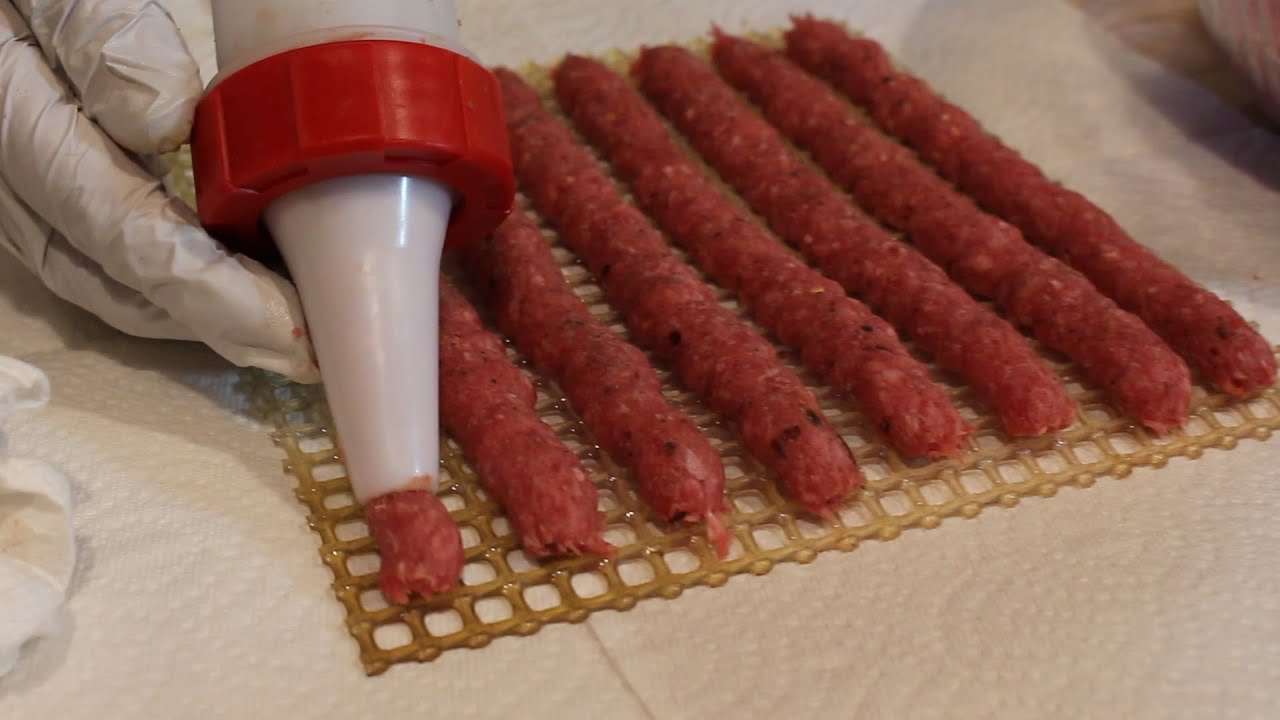
Use a jerky gun or piping bag to form thin strips of meat. If you don’t have one, flatten the meat between parchment paper and cut it into strips.
Step 4 – Drying the Jerky Properly
- Dehydrator method: Set the temperature to 160°F (71°C) and dry for 4–6 hours.
- Oven method: Preheat oven to the lowest setting (usually 170–175°F). Place strips on a baking rack and dry for 6–8 hours, leaving the door slightly open for airflow.
Step 5 – Storing and Preserving Your Jerky
Once dried, allow the jerky to cool before storing. Keep it in airtight containers at room temperature for up to 2 weeks. For longer storage, refrigerate or freeze.
Flavor Variations for Ground Beef Jerky
One of the best things about making homemade jerky is the endless opportunity for creativity. You’re not tied to one flavor profile—you can experiment with different seasonings, sauces, and spices to make jerky exactly how you like it. Here are some tried-and-true variations you can test out in your own kitchen.
Spicy Jerky
If you’re the kind of person who enjoys a little heat in every bite, spicy jerky will be your go-to. To make it, simply add cayenne pepper, chili flakes, or hot sauce into your seasoning mix. You can also use chipotle powder or jalapeño flakes for a smoky kick. The beauty of spicy jerky is that you can adjust the heat level to your liking—go for a subtle warmth or full-on fiery hot.
A trick for even better flavor is to add a touch of honey or brown sugar along with the spice. This creates a sweet-heat balance that makes the jerky addictive. The combination of sweet and spicy keeps your taste buds guessing and makes the snack irresistible.
Sweet and Tangy Jerky
For those who prefer a milder, more snack-friendly flavor, sweet and tangy jerky is perfect. Add brown sugar, honey, or maple syrup to the seasoning mix, along with some apple cider vinegar or pineapple juice for tanginess. This gives your jerky a barbecue-like flavor that’s both satisfying and refreshing.
This style of jerky is especially popular with kids or anyone who doesn’t like too much spice. It’s also fantastic for road trips because the flavor stays exciting, even after a few bites.
Garlic and Herb Jerky
If you’re a fan of savory and aromatic snacks, garlic and herb jerky is the way to go. Add minced garlic, garlic powder, rosemary, thyme, and oregano into your mix. For a stronger flavor, you can also use Italian seasoning blends.
This variation has a rich, earthy flavor that pairs wonderfully with beef. It’s less about heat and more about depth—perfect for people who enjoy gourmet-style snacks without added sugar.
Storage Tips for Homemade Ground Beef Jerky
One of the biggest advantages of making jerky at home is controlling how it’s stored and preserved. Store-bought jerky often comes with preservatives and vacuum sealing, but you can achieve long-lasting results at home with the right storage methods.
Room Temperature Storage
If you’ve dried your jerky properly and kept the fat content low, you can safely store it at room temperature in an airtight container or vacuum-sealed bag for up to two weeks. Keep it in a cool, dry place, away from direct sunlight.
Refrigeration and Freezing
For longer storage, refrigerating or freezing your jerky is the safest choice:
- Refrigeration: Keeps jerky fresh for up to 1 month when stored in a sealed container.
- Freezing: Extends shelf life up to 6 months or longer if vacuum sealed.
When freezing, separate jerky strips with parchment paper so they don’t stick together. Always allow frozen jerky to thaw at room temperature before eating.
Pro tip: Divide jerky into smaller portions before storing. That way, you only take out what you need without exposing the rest to air repeatedly.
Common Mistakes to Avoid When Making Ground Beef Jerky
Even though making ground beef jerky is straightforward, a few common mistakes can ruin the final product. Let’s go through them so you can avoid wasting time and ingredients.
Using the Wrong Fat Content
One of the biggest mistakes is using fatty ground beef (like 80/20). Fat doesn’t dehydrate well, and over time, it can go rancid, making your jerky unsafe to eat. Always stick to lean beef with 90% lean or higher.
Over-Drying or Under-Drying
Getting the drying time right is crucial.
- If you over-dry, the jerky becomes brittle and too tough to chew.
- If you under-dry, moisture remains, which can cause mold growth.
The best test is the bend test: Jerky should bend and crack slightly but not break in half. If it snaps, it’s over-dried; if it feels soft and moist, it needs more time.
Not Storing Properly
Leaving jerky exposed to air is a recipe for spoilage. If not stored in airtight containers, your jerky will lose flavor and freshness quickly. Always seal it properly to preserve taste and texture.
Health Benefits of Homemade Ground Beef Jerky
Jerky isn’t just a tasty snack—it’s also surprisingly healthy when made at home. Store-bought options often come loaded with preservatives, sugar, and artificial flavorings, but making it yourself ensures you control every ingredient.
High Protein Snack
Ground beef jerky is packed with protein, making it an ideal snack for:
- Gym-goers looking for a post-workout boost
- Hikers and campers needing portable energy
- Busy professionals wanting a quick, filling snack
A single serving can provide 10–15 grams of protein, which helps keep you full longer.
Low in Preservatives and Additives
Unlike store-bought jerky, homemade versions let you skip unnecessary chemicals. You can make it low-sodium, sugar-free, or even keto-friendly, depending on your dietary needs.
It’s a guilt-free snack that tastes amazing while still being healthy.
FAQs about Ground Beef Jerky Recipe
1. Can I make beef jerky without a dehydrator?
Yes! An oven works just fine. Simply set it to the lowest temperature and keep the door slightly open for airflow.
2. How long does ground beef jerky last?
At room temperature, it lasts about 2 weeks. Refrigerated, it can last a month, and frozen, up to 6 months.
3. What’s the best ground beef to use for jerky?
Always use lean beef, preferably 90/10 or leaner, to avoid excess fat.
4. Can I freeze homemade beef jerky?
Absolutely. Freezing extends the shelf life significantly, especially if you vacuum seal it.
5. How do I know if my jerky is fully dried?
Perform the bend test—jerky should bend and crack slightly without snapping in half.
Conclusion
Making ground beef jerky at home is easier than you think—and once you try it, you may never go back to store-bought again. With just a few simple ingredients, a dehydrator or oven, and some patience, you can create delicious, protein-packed jerky in any flavor you like.
The best part? You’re in control of everything—from the type of beef you use to the seasonings you add. Whether you love it spicy, sweet, or savory, there’s a recipe out there for you. Plus, homemade jerky is healthier, fresher, and more budget-friendly than prepackaged options.
So grab some lean ground beef, pick your seasonings, and start experimenting—you’ll end up with a snack that’s tasty, satisfying, and tailor-made to your preferences.