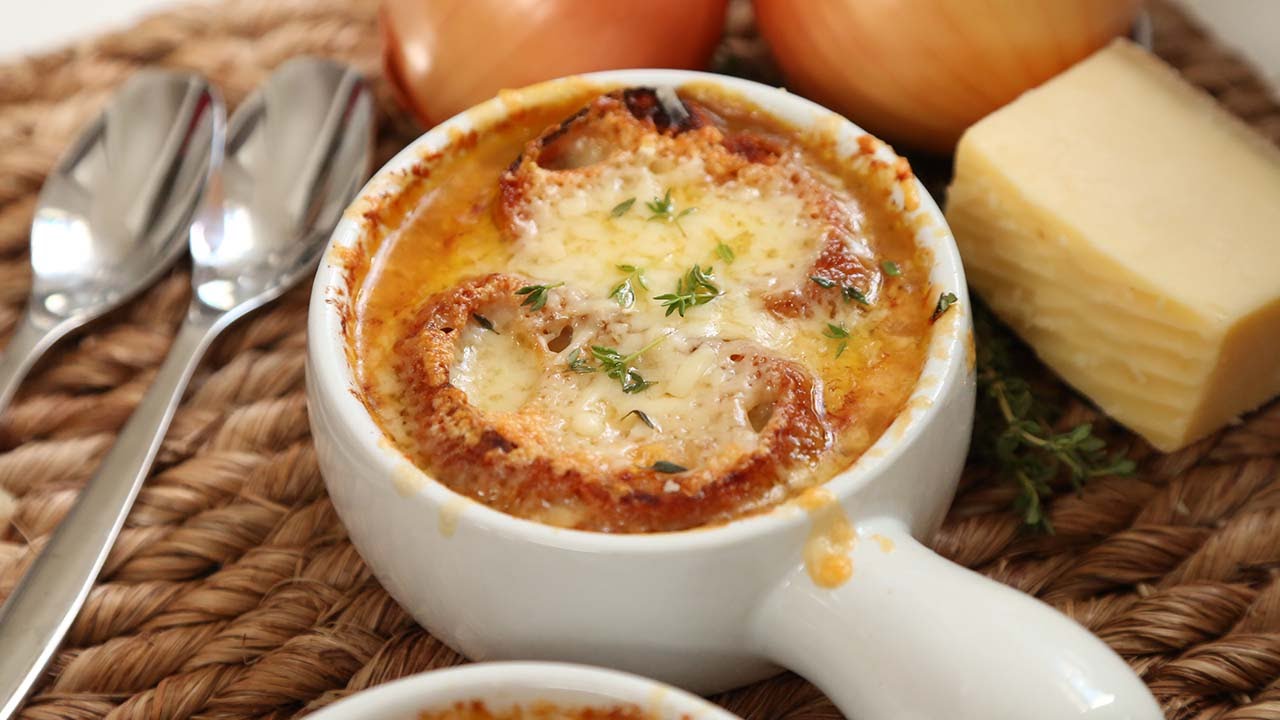
Classic French Onion Soup Recipe: French Onion Soup is one of those magical dishes that transforms the simplest ingredients into something deeply comforting and full of flavor. Imagine a bowl filled with sweet, slow-cooked onions bathed in a rich broth, topped with crispy toasted bread, and smothered in gooey, golden cheese — that’s the magic we’re talking about. Its origins trace back to humble beginnings in France, where onions were cheap and plentiful, making this soup a budget-friendly meal for the working class. Over time, it evolved into a beloved classic served in bistros and fine dining restaurants worldwide.
One of the charms of French Onion Soup is its dual personality — it’s rustic enough to serve in a casual setting yet elegant enough to impress guests at a dinner party. The flavors are deep and layered, thanks to the slow caramelization of onions, which coaxes out their natural sweetness. The broth, often made from beef stock, provides a savory backbone, while the melted cheese on top adds a decadent richness.
It’s a dish that invites patience. Rushing it means you miss out on the complex, almost jammy onion base that makes this soup shine. But the good news? The process is straightforward, and with a few tips, you can master it at home without breaking a sweat. By the end of this guide, you’ll have all the know-how to create a steaming bowl of authentic French Onion Soup worthy of a Parisian café.
Ingredients You’ll Need
When it comes to French Onion Soup, the ingredient list is surprisingly short — but every item plays a vital role in building that rich, layered flavor. The key is quality. You don’t need the most expensive cheese or artisan bread, but choosing fresh, flavorful ingredients will make a noticeable difference.
Fresh Ingredients for the Best Flavor
- Yellow onions (6–8 medium) – These are the star of the show. Yellow onions strike the perfect balance between sweet and pungent, and they caramelize beautifully.
- Garlic cloves (2–3) – Adds a subtle aromatic depth.
- Fresh thyme sprigs (2–3) – Brings an earthy freshness to the broth.
- Parsley (optional, for garnish) – A pop of color and freshness.
Pantry Staples to Have on Hand
- Unsalted butter (4 tablespoons) – For richness and to help caramelize onions.
- Olive oil (2 tablespoons) – Prevents the butter from burning and adds a hint of fruitiness.
- Beef stock or broth (8 cups) – Provides the soup’s savory backbone. Chicken or vegetable stock can be used, but beef stock gives the most traditional flavor.
- Dry white wine or sherry (½ cup) – For deglazing the pot and adding acidity.
- Salt and freshly ground black pepper – Essential for seasoning at every step.
Optional Add-Ons and Variations
- Gruyère cheese (8 ounces, shredded) – The classic choice for topping. Melts into a nutty, creamy blanket.
- French baguette slices – Toasted to hold up under the cheesy topping.
- Swiss, Comté, or Emmental cheese – Alternative cheeses that also melt beautifully.
- Splash of brandy or cognac – For an extra French twist.
The best part? Most of these are everyday kitchen staples. The magic lies in how you bring them together.
Kitchen Tools and Equipment
You don’t need a professional chef’s arsenal to make French Onion Soup, but the right tools will make the process smoother and the results more consistent.
Essential Tools for Making French Onion Soup
- Large, heavy-bottomed pot or Dutch oven – Helps cook the onions evenly without burning. A cast-iron Dutch oven is ideal for retaining heat.
- Sharp chef’s knife – For slicing onions evenly.
- Wooden spoon – Perfect for stirring without scratching your pot.
- Ladle – For serving the soup without disturbing the toppings.
Tips for Choosing the Right Soup Pot
A heavy-bottomed pot is crucial because caramelizing onions takes time, and you want steady, even heat. Thin-bottomed pots tend to create hot spots, which can scorch the onions. Enamel-coated cast iron is excellent because it’s both durable and non-reactive, meaning it won’t alter the taste of your soup. If you plan to serve the soup directly from the pot at the table, choose one that’s attractive enough to double as a serving dish.
Preparing the Onions
Choosing the Right Onion Variety
Not all onions are created equal when it comes to French Onion Soup. Yellow onions are the go-to choice for their balanced sweetness and depth of flavor. White onions can be too sharp, and red onions, while tasty, might give the soup an unusual color. If you want a slightly sweeter soup, try mixing yellow onions with a few Vidalia or Walla Walla onions.
Proper Slicing Techniques for Even Cooking
Slice the onions thinly — about ⅛ inch thick. Too thin, and they may disintegrate during cooking; too thick, and they’ll take forever to soften. Consistent slices ensure even caramelization. To avoid tears while cutting, chill the onions in the fridge for 30 minutes beforehand or cut them near a small fan to blow away the onion fumes.
How to Caramelize Onions Perfectly
Caramelization is the heart of this recipe. Start with a mix of butter and olive oil over medium heat, then add the sliced onions with a pinch of salt. This draws out moisture and jumpstarts the softening process. Stir often to prevent sticking but not so frequently that they can’t brown. Over 40–50 minutes, they’ll transform from sharp and raw to sweet and golden brown. The slow process allows the natural sugars in the onions to develop, giving the soup its signature flavor.
Step-by-Step Guide to Making French Onion Soup
Step 1 – Caramelizing Onions
Place your pot over medium heat and melt the butter with olive oil. Add the onions and a pinch of salt. Stir to coat them evenly, then let them cook slowly, stirring every few minutes. Around the 20-minute mark, you’ll notice them turning golden; by 40–50 minutes, they should be deeply caramelized with a jammy texture. Don’t rush this — it’s where the magic happens. If the onions start to stick or brown too quickly, lower the heat and add a splash of water to loosen them.
Step 2 – Deglazing the Pot
Once your onions are perfectly caramelized, it’s time to unlock all the flavor stuck to the bottom of the pot. This process is called deglazing, and it’s one of the most satisfying steps in cooking French Onion Soup. Those brown bits you see at the bottom are concentrated flavor — liquid gold for your broth.
To deglaze, keep your pot over medium heat and pour in about ½ cup of dry white wine, sherry, or even brandy for a richer, more traditional touch. As soon as the liquid hits the hot pot, it will sizzle and release steam — this is your cue to grab a wooden spoon and gently scrape the bottom, loosening all those caramelized onion bits.
The wine adds brightness and acidity, which balances the sweetness of the onions. If you prefer a non-alcoholic version, you can use a splash of apple cider vinegar or even a bit of stock for deglazing. Just remember: don’t skip this step. Without deglazing, you lose a huge part of the depth that makes French Onion Soup so special.
Once you’ve scraped up every last bit, let the liquid simmer for 2–3 minutes until it reduces slightly. This concentrates the flavor and ensures your soup won’t taste too acidic. Now, you’re ready for the next step — building the broth.
Step 3 – Adding Broth and Seasonings
After deglazing, it’s time to introduce the heart of the soup: beef stock. Slowly pour in about 8 cups of high-quality stock, stirring as you go to evenly distribute the caramelized onions throughout. If you’re vegetarian, use vegetable stock, but be aware it will have a lighter flavor profile.
Now is when you add your seasonings. A few sprigs of fresh thyme bring herbal notes, while two bay leaves add a subtle depth. Season with salt and freshly ground black pepper to taste. If you want extra richness, a small splash of Worcestershire sauce works wonders.
Bring the soup to a gentle simmer — not a rolling boil — and let it cook for about 30–40 minutes. This gives the flavors time to meld together into that deep, savory goodness French Onion Soup is known for. Stir occasionally and adjust seasoning if needed.
By this stage, the kitchen should smell irresistible. The broth will be rich, the onions soft, and you’ll have a base that’s ready for its signature topping.
Step 4 – Toasting the Bread and Melting Cheese
French Onion Soup wouldn’t be complete without that famous cheese-topped bread floating on top. This step transforms a good soup into a showstopper.
Start by slicing a French baguette into thick rounds — about ¾ to 1 inch thick. Arrange the slices on a baking sheet and toast them under the broiler until they’re golden brown on both sides. This double toasting helps them stay crisp even when sitting in hot soup.
Next comes the cheese. The classic choice is Gruyère, known for its nutty, slightly sweet flavor and perfect melting quality. You’ll want about ½ cup of shredded cheese per serving. If you’re feeling adventurous, mix in some Comté or Emmental for extra complexity.
Once the bread is toasted, sprinkle the cheese generously over the top and return it to the broiler for 2–3 minutes, or until the cheese is melted and bubbling with golden brown spots.
Step 5 – Serving Your Soup Like a Pro
Presentation matters with French Onion Soup — after all, it’s as much about the experience as the flavor. Traditionally, the soup is served in oven-safe bowls or crocks that can go directly under the broiler. This way, you can place the toasted, cheesy bread right on top of the soup before serving.
To assemble:
- Ladle hot soup into each oven-safe bowl.
- Place one or two slices of cheese-topped toast directly on the surface.
- Sprinkle with a little extra cheese if you want that ultimate gooey effect.
- Place the bowls under the broiler for a final melt.
Carefully remove the bowls (they will be extremely hot) and serve immediately, garnished with a sprinkle of chopped parsley if desired.
The first spoonful is pure magic — a blend of sweet caramelized onions, savory broth, crunchy bread, and creamy melted cheese. And that’s when you realize all that patience was worth it.
Tips for Perfecting Your French Onion Soup
Making French Onion Soup is simple in theory, but small adjustments can take it from “good” to “restaurant-quality.” Here are some tried-and-true tips:
- Patience with caramelization – This step is the backbone of the dish. Don’t be tempted to raise the heat to speed up the process; slow cooking brings out the onions’ natural sweetness without bitterness.
- Stock quality matters – Since broth is a major component, a rich, flavorful stock makes all the difference. Homemade beef stock is ideal, but a high-quality store-bought option can work if time is short.
- Balance the flavors – Onions are sweet, so you need acidity (from wine or vinegar) and umami depth (from broth and cheese) to create harmony.
- Cheese coverage – Go generous with the cheese, ensuring it stretches beautifully with every spoonful. A mix of cheeses can create a more complex flavor.
- Serve immediately – Once the cheese is melted, the bread will slowly soften. Serving right away ensures the perfect combination of textures.
Common Mistakes to Avoid
Even experienced cooks can fall into a few traps with French Onion Soup. Avoiding these will ensure your soup always turns out perfect:
- Undercaramelized onions – Rushing the onion step leads to a flat, one-dimensional flavor.
- Over-salting early – As the soup reduces, flavors intensify, including saltiness. Season lightly at first and adjust later.
- Thin broth – Using too much water or weak stock makes the soup taste bland.
- Overcooking cheese under the broiler – The cheese should bubble and brown slightly, not burn. Keep a close eye on it.
- Serving in non-oven-safe bowls – Using the wrong dish can result in cracking or shattering when placed under the broiler.
Storing and Reheating French Onion Soup
French Onion Soup stores surprisingly well, making it a great make-ahead meal. Here’s how:
- Refrigerator: Store the soup (without bread or cheese topping) in an airtight container for up to 4 days.
- Freezer: Cool completely before freezing in portion-sized containers. It can last up to 3 months.
- Reheating: Gently warm on the stove over medium-low heat until hot. Avoid boiling, as it can change the texture of the onions.
- Topping: Always add fresh bread and cheese when serving; never store the soup with the toppings in place, as they will become soggy.
French Onion Soup Variations
While the traditional recipe is beloved, there’s room for creativity:
- Vegetarian Version – Use vegetable stock and skip the Worcestershire sauce (or use a vegetarian version).
- Mushroom Twist – Add sautéed mushrooms along with the onions for an earthy depth.
- Cheese Blend Upgrade – Mix Gruyère with aged cheddar or Fontina for a richer melt.
- Garlic Lovers’ Soup – Roast a head of garlic and add the soft cloves to the onions while cooking.
- Low-Carb Option – Skip the bread entirely and just melt the cheese directly on the soup.
FAQs about Classic French Onion Soup Recipe
1. Can I make French Onion Soup without wine?
Yes, you can use stock or a splash of apple cider vinegar for acidity instead.
2. What’s the best cheese substitute for Gruyère?
Swiss, Comté, or Emmental work well.
3. Can I make this soup in advance?
Absolutely — just store the soup without the bread and cheese, then assemble before serving.
4. Why are my onions bitter?
They were likely cooked over too high heat, causing burning instead of caramelization.
5. Is French Onion Soup gluten-free?
Yes, if you use gluten-free bread for the topping.
Conclusion
French Onion Soup is proof that a handful of simple ingredients can create something extraordinary when treated with care. From the slow caramelization of onions to the final gooey cheese topping, every step plays a role in building a comforting, deeply flavored dish.
Whether you’re serving it as a starter for a dinner party or enjoying it on a quiet evening at home, it’s a recipe worth mastering. And once you’ve made it a few times, you’ll find yourself craving that first cheesy, savory spoonful more often than you expect.