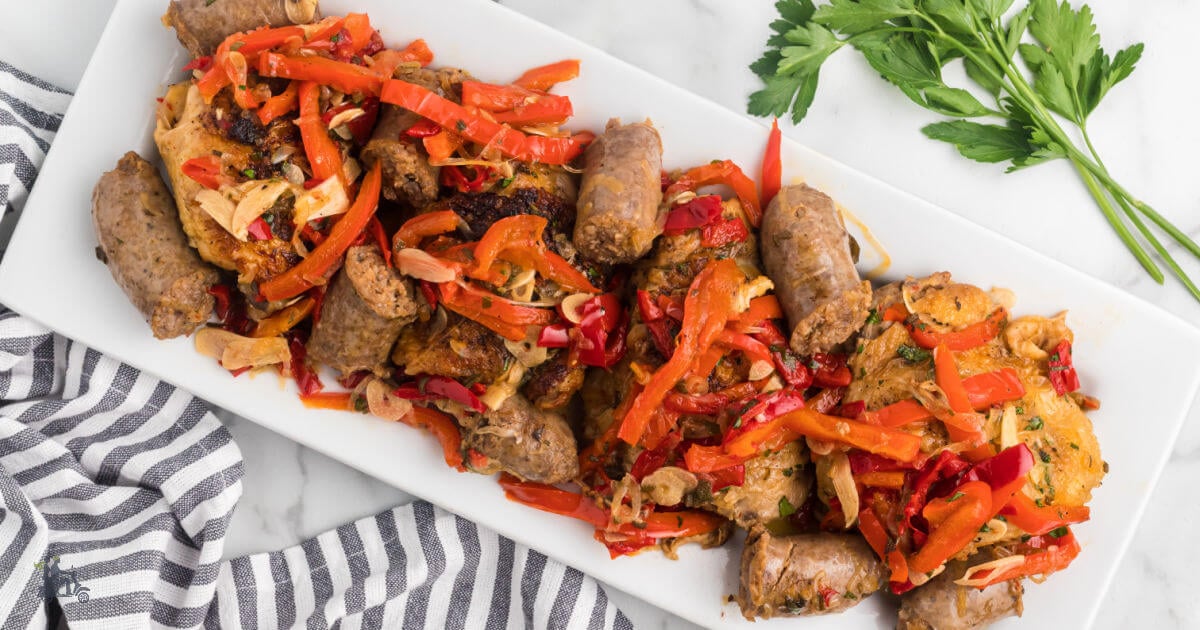
Chicken Scarpariello Recipe: Chicken Scarpariello, often called “Shoemaker’s Chicken,” is a rustic Italian-American dish known for its bold, tangy, and slightly spicy flavors. The name “Scarpariello” comes from the Italian word scarpari, meaning “shoemaker,” possibly referring to the idea that it’s a dish thrown together with whatever’s on hand—just like a shoemaker might use leftover scraps of leather to make something functional.
This dish is a beautiful balance of savory chicken, sweet peppers, tangy vinegar, and aromatic herbs, often paired with Italian sausage for an extra punch. It’s beloved in Italian-American kitchens, especially in the Northeast U.S., where it became a restaurant favorite in the mid-20th century.
The magic of Chicken Scarpariello lies in its combination of contrasting flavors—sweet and sour, spicy and mild, juicy and crispy. Imagine golden-brown chicken pieces simmering in a zesty sauce of white wine, chicken broth, and vinegar, mingling with vibrant bell peppers, onions, and garlic. The result? A dish that feels both homey and sophisticated, perfect for Sunday dinners or special occasions.
Cooking Chicken Scarpariello isn’t complicated, but the flavor payoff is enormous. This step-by-step guide will walk you through everything—from selecting the best ingredients to plating it like a pro—so you can confidently recreate this restaurant-quality dish at home.
Ingredients You’ll Need
To make the perfect Chicken Scarpariello, you need a harmonious blend of proteins, vegetables, seasonings, and liquids. Here’s your complete shopping list, broken down into categories for easier preparation.
Main Protein Ingredients
- Bone-in, skin-on chicken thighs or drumsticks – These cuts retain more flavor and stay juicier during cooking than boneless, skinless breasts.
- Italian sausage (mild or hot) – Adds a rich, seasoned kick that complements the tangy sauce. Choose fresh sausage for the best results.
Vegetables and Aromatics
- Bell peppers – A mix of red, yellow, and green peppers provides sweetness and color contrast.
- Onions – Yellow or white onions bring a subtle sweetness when sautéed.
- Garlic cloves – Fresh garlic is essential for that robust Italian aroma.
Liquids and Sauces
- Dry white wine – Such as Pinot Grigio or Sauvignon Blanc, for acidity and depth.
- Chicken broth – Adds body and savory richness to the sauce.
- White wine vinegar – Delivers that signature tangy bite.
Seasonings and Herbs
- Salt and freshly ground black pepper – The basics for seasoning.
- Dried oregano – A staple Italian herb for warmth and earthiness.
- Fresh rosemary or thyme – For fragrant undertones.
Optional Add-ins for Extra Flavor
- Cherry peppers in brine – For extra heat and tang.
- Capers – Adds a briny punch.
- Crushed red pepper flakes – For those who like more spice.
By having all your ingredients prepped and ready before you start cooking, you’ll find the process smooth and enjoyable. This “mise en place” approach ensures that once you begin, you can focus on flavor rather than scrambling for missing items.
Essential Tools for Cooking Chicken Scarpariello
Before we jump into the cooking process, let’s make sure you have the right tools. While you can improvise, having the proper equipment will make your cooking experience much easier and your results more consistent.
Cookware Recommendations
- Large, heavy-bottomed skillet or Dutch oven – Retains heat well and allows even cooking. Cast iron or enameled cast iron is ideal.
- Tongs – Essential for turning chicken and sausage without piercing them, which helps retain juices.
- Wooden spoon – Gentle on cookware and perfect for stirring without damaging your pan.
Prep Tools for Efficiency
- Sharp chef’s knife – For clean cuts on both meat and vegetables.
- Cutting board – Preferably two: one for meats and one for vegetables to avoid cross-contamination.
- Measuring cups and spoons – Accuracy matters, especially when balancing acidity and sweetness.
Having these tools ready not only speeds up your workflow but also helps you achieve a professional-level presentation.
Step-by-Step Guide to Making Chicken Scarpariello
This dish comes together in several stages, each building layers of flavor. Take your time with each step for the best results.
Step 1 – Prepping the Chicken
Start by patting your chicken pieces dry with paper towels. This step is crucial because moisture on the skin prevents proper browning. Season generously with salt, pepper, and a light sprinkle of oregano.
If you’re using sausage links, cut them into 2–3-inch pieces so they cook evenly and fit well in the pan.
Pro tip: Let the chicken sit at room temperature for about 20 minutes before cooking. Cold meat can seize up and cook unevenly, whereas room-temperature meat browns more beautifully.
Step 2 – Browning the Sausage
Heat a large skillet or Dutch oven over medium-high heat and add a drizzle of olive oil. Once hot, add the sausage pieces and brown them on all sides. You don’t need to cook them through at this stage—just get that golden crust for maximum flavor.
Remove the sausage and set it aside. The browned bits left in the pan (fond) will form the base of your sauce, so don’t clean the pan yet!
Step 3 – Sautéing Vegetables and Aromatics
With the sausage removed but the flavorful fond still in the pan, add a little more olive oil if needed. Toss in the onions and cook for about 3–4 minutes until they begin to soften. Next, add the sliced bell peppers. Stir occasionally, allowing them to slightly char for extra flavor depth.
Once the vegetables have started to soften, add the minced garlic. Be careful here—garlic can burn quickly. Sauté for just 30 seconds until fragrant. The mixture of onions, peppers, and garlic will already be filling your kitchen with a mouthwatering aroma, hinting at what’s to come.
If you’re including optional cherry peppers, now’s the time to add them. They’ll release a tangy heat into the dish that elevates the flavor profile without overpowering it.
Step 4 – Deglazing and Adding Liquids
Now comes one of the most important steps: deglazing the pan. Pour in the white wine while scraping the bottom of the pan with a wooden spoon to loosen up all those browned bits left from the chicken and sausage.
Let the wine simmer for 2–3 minutes to allow the alcohol to cook off, leaving behind just the rich, tangy flavor. Next, add the chicken broth and vinegar. This combination is what gives Chicken Scarpariello its signature “sweet and sour” balance.
Taste the liquid at this stage—you should get a hint of tanginess without it being too sharp. Adjust by adding a touch more vinegar for brightness or a pinch of sugar if you prefer a milder finish.
Step 5 – Simmering to Perfection
Return the browned chicken and sausage to the pan, nestling them into the vegetables and sauce. Reduce the heat to medium-low and let everything simmer for 20–25 minutes.
This slow cooking allows the flavors to meld while ensuring the chicken cooks through and remains juicy. You can cover the pan partially to prevent too much evaporation, but leave enough space for the sauce to reduce and thicken naturally.
During this stage, toss in fresh rosemary or thyme sprigs for fragrance. About halfway through cooking, taste the sauce and adjust seasonings as needed. Remember, the sauce should be savory, tangy, and just slightly sweet.
Serving Suggestions
Traditional Serving Styles
Chicken Scarpariello is hearty enough to stand alone, but traditionally, it’s served with something to soak up that gorgeous sauce. Here are the most popular ways:
- Crusty Italian bread – Perfect for dipping into the tangy, savory sauce.
- Pasta – Linguine or penne work beautifully. Toss them lightly in olive oil before adding to the plate to keep them from sticking.
- Roasted potatoes – Their crispy edges pair wonderfully with the saucy chicken.
Side Dish Pairings
Balance the richness of the main dish with light sides such as:
- A simple green salad with lemon vinaigrette
- Steamed asparagus or green beans
- Grilled zucchini
The goal is to complement the bold flavors without overwhelming them.
Tips for Perfect Chicken Scarpariello
Flavor-Boosting Techniques
- Sear, don’t steam: Make sure your chicken has room in the pan. Overcrowding leads to steaming instead of browning.
- Layer your seasonings: Season the chicken before browning and taste the sauce as it cooks, adjusting along the way.
- Control the heat: If using cherry peppers, start with a few and add more after tasting to avoid overpowering the dish.
Common Mistakes to Avoid
- Overcooking the chicken: Bone-in pieces can handle longer cooking, but they still need attention to avoid drying out.
- Skipping the deglaze: The fond is essential to deep flavor—don’t miss it.
- Using too much vinegar: A little goes a long way. You can always add more at the end if needed.
Variations of the Recipe
Spicy Chicken Scarpariello
If you’re a fan of bold heat, you can easily adapt this dish into a fiery version. Simply use hot Italian sausage instead of mild, increase the number of hot cherry peppers, and add a pinch of crushed red pepper flakes during the vegetable sauté. You can also swap white wine vinegar for a splash of hot pepper vinegar for an extra layer of spice.
The trick with spice is balance—heat should enhance, not dominate. Taste your sauce midway and toward the end of cooking. If it feels too hot, stir in a tablespoon of honey or a small pat of butter to mellow the bite. This variation pairs beautifully with creamy polenta, as the smooth texture offsets the spiciness.
Vegetarian Version
While Chicken Scarpariello is traditionally meat-based, you can create a plant-forward adaptation that still captures its vibrant flavors. Replace the chicken with thick slices of portobello mushrooms or cubes of extra-firm tofu. Use vegetarian Italian-style sausage for that herby, savory kick.
You’ll follow the same cooking process—browning the vegetarian sausage, sautéing peppers and onions, then building the sauce. Since there’s no meat fat to deepen the flavor, add a splash of soy sauce or mushroom broth for extra umami.
This version is light, healthy, and just as satisfying when paired with a side of crusty bread.
Storing and Reheating Leftovers
Best Storage Practices
Chicken Scarpariello tastes even better the next day as the flavors have more time to blend. Store leftovers in an airtight container in the refrigerator for up to 3–4 days. If you plan to freeze it, place it in freezer-safe containers or heavy-duty freezer bags, removing as much air as possible to prevent freezer burn. Frozen portions will keep for up to 3 months.
Label containers with the date so you know when to use them.
Reheating Without Losing Flavor
For the best results, reheat Chicken Scarpariello slowly. Place it in a covered skillet over low heat, adding a splash of chicken broth or water to loosen the sauce if it has thickened. Avoid microwaving on high, as this can dry out the chicken. If you must microwave, use medium power and cover loosely to retain moisture.
Nutritional Information
Calorie Count and Macronutrients
A standard serving of Chicken Scarpariello (about 1 chicken thigh, some sausage, vegetables, and sauce) contains approximately:
- Calories: 420–480
- Protein: 28–32g
- Carbohydrates: 8–12g
- Fat: 25–30g
The numbers vary depending on the type of sausage used and whether you keep the chicken skin on.
Health Benefits of Key Ingredients
- Chicken: A lean source of protein that supports muscle maintenance.
- Bell Peppers: Rich in vitamin C and antioxidants.
- Garlic: Contains compounds that may support heart health and immunity.
- Olive Oil: Provides healthy monounsaturated fats.
Opting for organic chicken and nitrate-free sausage can make the dish even healthier without sacrificing flavor.
FAQs about Chicken Scarpariello Recipe
1. Can I use boneless chicken?
Yes, boneless thighs or breasts will work, but they may cook faster, so keep an eye on them to avoid drying out.
2. Can I make it in advance?
Absolutely. In fact, making it a day ahead often enhances the flavor as the sauce develops more depth.
3. Is it better spicy or mild?
That’s personal preference. If you’re cooking for a crowd, go mild and let guests add spice to taste.
4. Can I freeze Chicken Scarpariello?
Yes. Cool it completely before freezing, and use within 3 months for best quality.
5. What’s the best wine to pair with it?
A crisp white wine like Pinot Grigio or Sauvignon Blanc pairs beautifully, complementing the tangy sauce without overpowering the dish.
Conclusion
Chicken Scarpariello is more than just a dinner—it’s a flavorful journey that brings together savory, sweet, and tangy elements in perfect harmony. With the right ingredients, careful preparation, and a little patience, you can create a dish that feels indulgent yet comforting.
Whether you stick to the classic recipe or experiment with variations, this Italian-American favorite is bound to become a staple in your kitchen. It’s versatile enough for weeknight cooking yet impressive enough for entertaining guests. And best of all, the leftovers might be even better than the first serving.
So the next time you’re craving a bold, hearty meal, reach for your skillet and whip up a batch of Chicken Scarpariello—you won’t regret it.