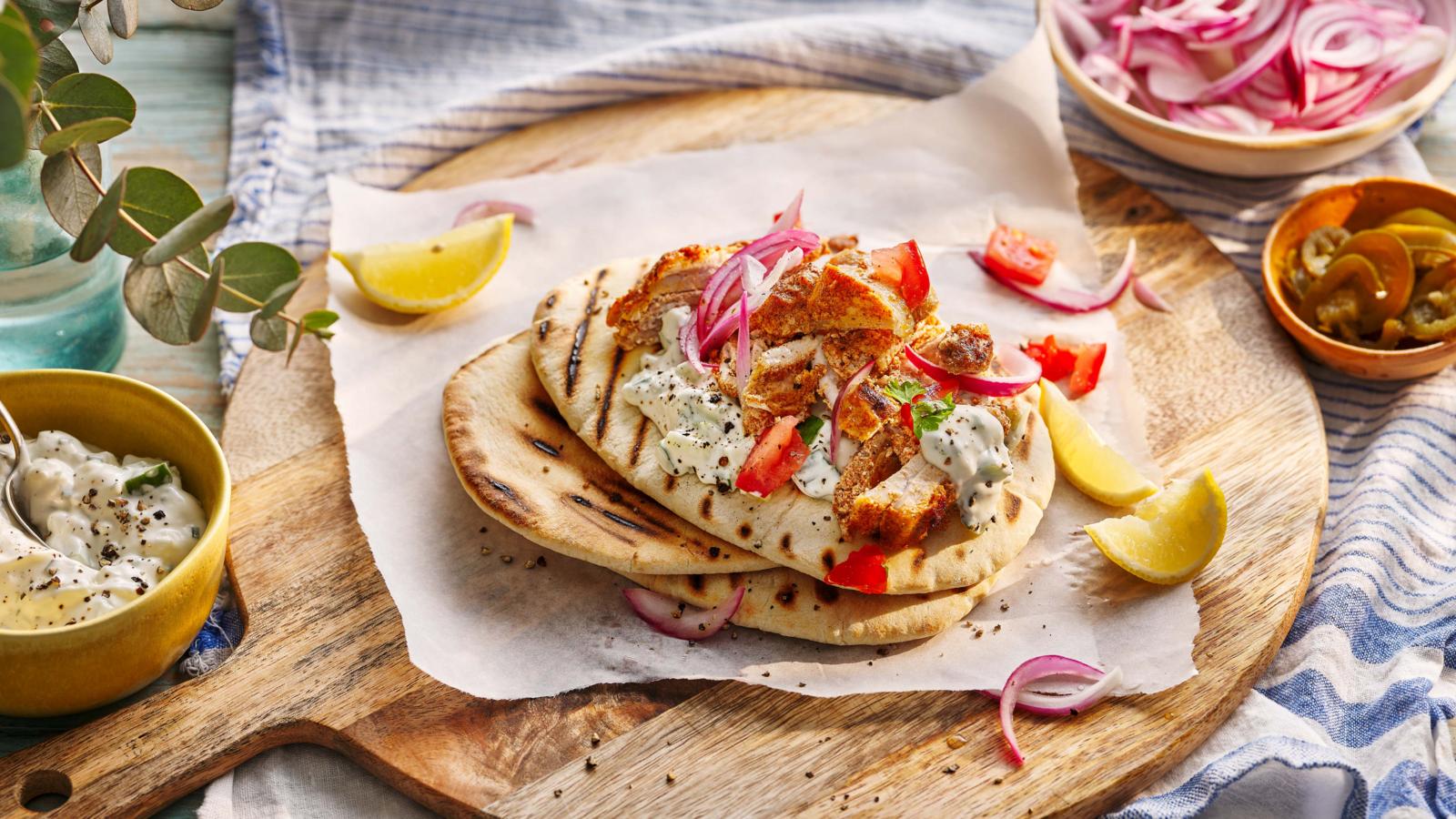
Chicken Gyros Recipe: If there’s one dish that can instantly transport you to the sunny streets of Athens, it’s the chicken gyro. This beloved Greek street food is a perfect blend of juicy, flavorful chicken, creamy and tangy tzatziki sauce, and warm, pillowy pita bread—all wrapped together into a handheld meal that’s as satisfying as it is delicious. The word “gyro” itself means “turn” in Greek, referring to the way the meat is traditionally cooked on a vertical rotisserie. While pork and lamb are common choices, chicken gyros have gained immense popularity for their lighter taste and slightly healthier profile.
Chicken gyros have become a global comfort food, popping up in food trucks, Mediterranean restaurants, and even high-end eateries. What makes them so special is the balance of flavors—savory, garlicky chicken paired with refreshing cucumber yogurt sauce, plus the crunch of fresh vegetables like lettuce, tomatoes, and onions.
This dish is also incredibly versatile. You can keep it traditional or play around with the fillings to suit your taste. Whether you’re planning a quick weeknight dinner or a crowd-pleasing weekend feast, chicken gyros fit the bill perfectly. And the best part? You don’t need a rotisserie to enjoy them at home—your oven, grill, or skillet will do just fine.
Why Make Chicken Gyros at Home?
While buying a ready-made gyro from your favorite Greek restaurant is convenient, there’s something magical about making it yourself. For starters, you have complete control over the ingredients. Want extra garlic in your marinade? Go for it. Prefer a spicier kick? Add some chili flakes. Cooking at home also means you can choose the freshest vegetables, use high-quality meat, and even make your pita bread from scratch if you’re feeling adventurous.
Another big reason to make chicken gyros at home is cost. A single gyro wrap at a restaurant can cost as much as an entire batch of homemade ones. Plus, when you prepare them yourself, you can make extra for lunch the next day. They store well and taste just as good reheated.
Lastly, homemade gyros let you create an experience. Imagine inviting friends over and setting up a “gyro bar” where everyone builds their own wrap. It’s interactive, fun, and delicious. Once you see how easy it is to make them, you’ll wonder why you didn’t start sooner.
Ingredients You’ll Need
For the Chicken Marinade
The marinade is the heart of the gyro. It’s what infuses the chicken with those Mediterranean flavors we all crave. Here’s what you’ll need:
- 1 ½ lbs (about 700g) boneless, skinless chicken thighs or breasts
- 3 tablespoons olive oil
- Juice of 1 large lemon
- 3 cloves garlic, minced
- 2 teaspoons dried oregano
- 1 teaspoon ground cumin
- 1 teaspoon smoked paprika
- ½ teaspoon ground coriander
- Salt and black pepper to taste
Each ingredient has a role to play—olive oil keeps the meat moist, lemon juice tenderizes it, and the spices create that unmistakable Greek flavor profile.
For the Tzatziki Sauce
No chicken gyro is complete without tzatziki, the cool and creamy yogurt-based sauce that ties everything together. You’ll need:
- 1 cup Greek yogurt (full-fat for best texture)
- 1 medium cucumber, grated and drained
- 2 cloves garlic, minced
- 1 tablespoon olive oil
- Juice of ½ lemon
- 1 tablespoon fresh dill, chopped (or 1 teaspoon dried)
- Salt and pepper to taste
The cucumber brings a fresh crunch, while dill adds a bright herbal note.
For the Gyro Assembly
Finally, to build your gyros:
- 4–6 pita breads or flatbreads
- 1 large tomato, sliced
- 1 small red onion, thinly sliced
- Fresh lettuce leaves
- Optional extras: feta cheese, olives, pickled vegetables
These toppings are flexible—mix and match according to your preferences.
Step-by-Step Guide to Making Chicken Gyros
Step 1 – Prepare the Marinade
A great marinade is all about balance—acid, fat, and seasoning. In a large mixing bowl, whisk together olive oil, lemon juice, minced garlic, oregano, cumin, smoked paprika, coriander, salt, and pepper. If you want an extra layer of flavor, you can also add a tablespoon of plain Greek yogurt to help tenderize the chicken further.
Once your marinade is ready, add the chicken pieces and coat them well. Make sure every part of the chicken is covered; you can use your hands for a more even distribution. At this stage, resist the temptation to cook right away—letting the chicken soak in the marinade is key to unlocking deep, rich flavors.
If you’re in a rush, even 30 minutes can make a difference, but ideally, you should marinate the chicken for at least 2–4 hours in the refrigerator. For maximum flavor infusion, marinate overnight. This gives the spices and aromatics enough time to penetrate the meat, ensuring every bite is bursting with taste.
Step 2 – Marinate the Chicken
Marinating the chicken is where the magic really begins. Once your chicken is fully coated in the marinade, transfer it into an airtight container or a resealable plastic bag. This ensures that none of the flavorful liquid escapes and that every piece of chicken stays in contact with the seasoning.
When storing it in the fridge, place the bag or container on the bottom shelf to avoid cross-contamination with other foods. The ideal marinating time is between 4–12 hours. Any longer than 24 hours, and the lemon juice might start breaking down the protein too much, giving the chicken a mushy texture.
If you’re in a hurry, you can speed things up by gently massaging the marinade into the chicken before refrigerating. This helps the flavors penetrate faster. However, don’t skip marinating entirely—without it, your chicken will lack that signature gyro taste.
During the marinating process, the spices bloom, the lemon tenderizes the meat, and the olive oil locks in moisture. By the time you’re ready to cook, your kitchen will already smell like a Greek taverna.
Step 3 – Make the Tzatziki Sauce
While the chicken is marinating, you can prepare the tzatziki sauce. Start by peeling your cucumber (optional, but it makes for a smoother texture). Grate it using the coarse side of a box grater, then place the grated cucumber in a clean kitchen towel or cheesecloth. Squeeze out as much liquid as you can—this step is crucial to prevent your sauce from becoming watery.
In a mixing bowl, combine the Greek yogurt, minced garlic, olive oil, lemon juice, chopped dill, and a pinch of salt and pepper. Stir well until everything is evenly mixed. Taste and adjust seasoning as needed—more lemon for tang, more dill for freshness, or more garlic if you like a punchier flavor.
Cover the bowl with plastic wrap and refrigerate for at least 30 minutes before serving. This resting time allows the flavors to meld beautifully. The result should be a thick, creamy, and refreshing sauce that perfectly balances the savory chicken.
Step 4 – Cook the Chicken
Once your chicken is marinated, it’s time to cook. You have several options depending on your kitchen setup and personal preference:
- Grill Method: Preheat your grill to medium-high. Place the chicken on the grates and cook for about 5–6 minutes per side until fully cooked and slightly charred.
- Skillet Method: Heat a tablespoon of olive oil in a large skillet over medium-high heat. Cook the chicken for 5–7 minutes per side until golden brown.
- Oven Method: Preheat the oven to 400°F (200°C). Arrange the chicken on a baking sheet lined with parchment paper and bake for 20–25 minutes, flipping halfway through.
Whichever method you choose, aim for an internal temperature of 165°F (74°C) for safe consumption. Once cooked, let the chicken rest for 5 minutes before slicing. Resting helps the juices redistribute, keeping the meat tender and flavorful.
Step 5 – Warm the Pita Bread
The bread might seem like a small detail, but warming it makes all the difference. Cold pita can be stiff and prone to tearing, while warm pita is soft, pliable, and comforting.
Here are a few ways to warm your pita:
- On the Grill: Place directly over the grates for 30–60 seconds per side.
- In a Skillet: Heat over medium heat for about 1 minute per side until slightly toasted.
- In the Oven: Wrap in foil and warm at 350°F (175°C) for 5–7 minutes.
Once warm, keep them wrapped in a clean kitchen towel to retain heat until serving. This way, they stay soft and ready to hold your flavorful fillings without falling apart.
Step 6 – Assemble Your Gyros
Now comes the most satisfying part—putting it all together. Lay a warm pita bread flat on a plate or clean surface. Start by spreading a generous spoonful of chilled tzatziki sauce down the center. This creamy layer acts as both a flavor booster and a moisture barrier, keeping your pita from getting soggy.
Next, pile on slices of the juicy, cooked chicken. You can cut the chicken into thin strips or bite-sized pieces, depending on your preference. Then, add your fresh vegetables—crisp lettuce, juicy tomato slices, and thin rings of red onion. These add freshness and crunch, balancing the richness of the meat and sauce.
If you’re feeling extra indulgent, sprinkle some crumbled feta cheese over the top for a salty tang. A few Kalamata olives or pickled peppers can also give your gyro a Mediterranean punch.
To wrap the gyro, fold the pita in half over the fillings and secure it with a piece of parchment paper or foil for easier eating. If you want a more traditional look, roll it into a cone shape and tuck the bottom closed.
Serve immediately while the pita is warm and the chicken is still juicy. Pair with a side of Greek salad, roasted potatoes, or even fries for the ultimate Greek street food experience.
Tips for Perfect Chicken Gyros
Choosing the Right Chicken
The cut of chicken you choose can make a big difference in flavor and texture. Boneless, skinless chicken thighs are often preferred for gyros because they stay juicy even after high-heat cooking. They have a bit more fat than chicken breasts, which means more flavor and tenderness.
If you prefer a leaner option, chicken breasts can work too—just be careful not to overcook them, as they can dry out quickly. One trick is to pound the chicken breasts to an even thickness before marinating so they cook evenly.
When shopping for chicken, look for fresh, high-quality meat with a pinkish hue and no strong odor. Organic or free-range chicken often has better flavor and texture, but any good-quality chicken will work well if prepared correctly.
Getting the Marinade Just Right
The marinade is the foundation of your gyro flavor, so don’t rush it. Using freshly squeezed lemon juice instead of bottled gives a brighter, cleaner taste. Fresh garlic is also a must—powder just doesn’t deliver the same punch.
If you like a deeper flavor, you can add a pinch of cinnamon or nutmeg to the spice mix. These warm spices are often found in traditional Greek meat marinades and can give your gyros a more authentic profile.
Always taste the marinade before adding the chicken. It should be bold and well-balanced because some of the flavor will mellow during cooking.
Serving Suggestions
Chicken gyros are fantastic on their own, but they shine even brighter with the right sides and drinks. Consider serving them with:
- Greek Salad – A mix of cucumbers, tomatoes, onions, olives, and feta dressed in olive oil and oregano.
- Oven-Roasted Potatoes – Seasoned with lemon, garlic, and oregano for a zesty complement.
- French Fries – A popular street-style pairing in Greece, sometimes even tucked inside the gyro itself.
- Cold Drinks – Iced tea with lemon, a crisp white wine, or even a Greek beer like Mythos.
If you’re hosting, set up a build-your-own gyro station with bowls of toppings and sauces so guests can customize their wraps. It’s interactive, fun, and makes serving easier.
Common Mistakes to Avoid
Overcooking the Chicken
Dry chicken is the fastest way to ruin a gyro. Always monitor your cooking time and use a meat thermometer to check doneness. The safe internal temperature for chicken is 165°F (74°C), but pulling it off the heat at 160°F (71°C) and letting it rest for a few minutes will keep it moist and tender.
Using Store-Bought Sauce
While store-bought tzatziki might seem like a shortcut, it rarely matches the freshness and flavor of homemade. Many pre-made versions are too thin, overly salty, or lacking in real garlic and dill flavor. The homemade version only takes a few minutes and makes a world of difference.
Skipping Resting Time
Resting cooked chicken for at least 5 minutes before slicing allows the juices to redistribute, ensuring each bite is tender and flavorful. If you slice it too soon, the juices will run out, leaving the meat dry.
Nutritional Value of Chicken Gyros
Chicken gyros are not just delicious—they can also be a well-balanced, nutrient-rich meal when prepared with fresh, wholesome ingredients. Let’s break down the nutritional profile of a typical homemade chicken gyro.
A single gyro with chicken, pita bread, tzatziki, and vegetables generally contains:
- Calories: Around 400–500 kcal (depending on portion size and toppings)
- Protein: 30–35g from the chicken and Greek yogurt
- Carbohydrates: 40–45g from the pita and vegetables
- Fat: 12–18g, mostly healthy fats from olive oil and yogurt
- Fiber: 3–5g from fresh vegetables and whole-grain pita
The chicken provides lean protein, which is essential for muscle repair and keeping you full. The olive oil in the marinade and tzatziki delivers heart-healthy monounsaturated fats, while the vegetables add fiber, vitamins, and antioxidants.
If you want to make your gyros even healthier, you can:
- Use whole wheat pita bread for extra fiber.
- Reduce oil slightly in the marinade.
- Add more fresh vegetables for volume without adding many calories.
- Use low-fat Greek yogurt for a lighter tzatziki.
When compared to heavier fast food options, chicken gyros can be a satisfying and nutrient-dense meal, making them a great choice for lunch or dinner.
Storage and Reheating Tips
One of the best things about chicken gyros is that they store and reheat well, making them perfect for meal prep. Here’s how to keep them fresh:
- Cooked Chicken: Store in an airtight container in the refrigerator for up to 3–4 days. For longer storage, freeze in portions for up to 2 months.
- Tzatziki Sauce: Keep in a sealed container in the fridge for up to 3 days. Do not freeze, as yogurt can separate.
- Pita Bread: Store in a bread bag or sealed container at room temperature for 2–3 days or freeze for up to 1 month.
Reheating Methods:
- For chicken, warm it in a skillet over medium heat for 2–3 minutes or in the oven at 350°F (175°C) for 10 minutes.
- Pita bread can be reheated in a dry skillet, on the grill, or wrapped in foil in the oven.
Avoid microwaving pita for too long, as it can turn tough and chewy. If reheating in the microwave, cover it with a damp paper towel to keep it soft.
Variations You Can Try
Spicy Chicken Gyros
If you like a kick of heat, add cayenne pepper or chili flakes to your marinade. You can also drizzle spicy harissa sauce or sriracha over the finished gyro for an extra punch.
Vegetarian Gyros
Replace chicken with grilled halloumi cheese, roasted chickpeas, or marinated grilled vegetables like zucchini, eggplant, and bell peppers. You can keep the tzatziki or swap it for hummus for a vegan-friendly option.
Low-Carb Gyros
For a lighter version, skip the pita and serve the chicken and toppings over a bed of lettuce for a gyro salad. You still get all the flavor without the extra carbs.
FAQs about Chicken Gyros Recipe
1. Can I use beef instead of chicken?
Yes, beef works well, but the cooking time and seasoning may need slight adjustments for best results.
2. How long should I marinate the chicken?
For best flavor, marinate for at least 4 hours, ideally overnight.
3. Can I make tzatziki sauce in advance?
Absolutely! It even tastes better the next day as the flavors develop.
4. What’s the best pita bread for gyros?
Soft, slightly thick pita bread works best—it’s sturdy enough to hold the fillings without tearing.
5. Are chicken gyros healthy?
Yes, especially if made with fresh ingredients, lean meat, and plenty of vegetables.
Conclusion
Making chicken gyros at home is easier than you might think—and the results are so rewarding. With juicy, flavorful chicken, creamy tzatziki, warm pita, and crisp vegetables, this dish delivers the perfect combination of textures and tastes. Whether you stick to the traditional recipe or customize it to suit your preferences, you’ll end up with a satisfying, crowd-pleasing meal.
So next time you’re craving Greek street food, skip the takeout and make your own chicken gyros from scratch. Trust me—you’ll not only save money but also enjoy a fresher, healthier, and more flavorful meal.