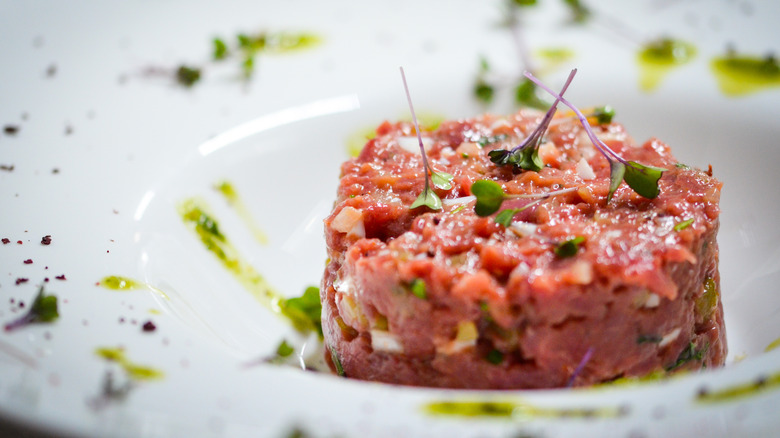
Beef Tartare Recipe: Beef tartare is one of those elegant, timeless dishes that feels luxurious yet surprisingly simple once you know how it’s done. It’s raw, it’s refined, and it packs a punch of flavor that makes it a favorite among food lovers. This delicacy may look like something reserved for high-end restaurants, but with the right approach, you can recreate it in your own kitchen.
So, what exactly is beef tartare? It’s a dish made of finely chopped or ground raw beef, seasoned with various ingredients like onions, capers, mustard, and raw egg yolk. Served cold, typically with toast or crackers, it delivers a burst of freshness and umami that delights the palate.
The dish is believed to have originated in France, though similar versions exist in other cultures. The name “tartare” refers to the Tatars, a nomadic group known for eating raw meat, although that’s more legend than fact. Regardless of its origins, today’s beef tartare is all about precision, balance, and quality.
Whether you’re making it for a date night, an appetizer at a dinner party, or just for the fun of trying something new, this guide will walk you through each step—ensuring your tartare is both safe and spectacular.
Choosing the Right Ingredients
The secret to perfect beef tartare lies in the ingredients. Since there’s no cooking involved, every component needs to be top-notch.
Best cuts of beef: Start with the freshest, leanest cut you can find. The most commonly recommended cuts include:
- Beef tenderloin – ultra-tender and mild in flavor
- Top round or sirloin – slightly more flavorful but still lean
- Eye of round – affordable and easy to work with
Avoid fatty cuts like ribeye or chuck, as the fat doesn’t break down and can be chewy in tartare form.
Essential flavorings and add-ins: Your tartare base is the beef, but the flavor comes from these additions:
- Shallots or red onion – for sharpness and bite
- Capers – for acidity and salt
- Dijon mustard – a classic, adds depth and tang
- Worcestershire sauce – brings umami and richness
- Parsley or chives – fresh herbs brighten the mix
- Salt and freshly ground black pepper – essential seasoning
- Olive oil or a splash of lemon juice – for balance
- Raw egg yolk – adds creaminess (optional but traditional)
Quality is everything. Always use pasture-raised or organic eggs if including yolk, and make sure the beef is from a trusted butcher or supplier who understands it’s for raw consumption.
Preparing Your Kitchen and Tools
Making tartare requires more prep than cooking, so having the right tools and a clean setup is key.
Tools you’ll need:
- Sharp chef’s knife – for clean, even dicing
- Cutting board – preferably separate for meat
- Mixing bowl – stainless steel works best
- Spoon or spatula – for mixing
- Plate or ring mold – for presentation
- Optional: food processor (though hand-chopping is preferred)
Hygiene and safety precautions:
When working with raw meat, safety comes first:
- Always keep your meat refrigerated until the moment you’re ready to prepare.
- Wash your hands thoroughly before and after handling raw beef.
- Use sanitized tools and surfaces.
- Prepare and serve immediately—don’t let raw tartare sit out.
It’s also a good idea to trim any sinew or connective tissue from the beef beforehand, as these can be tough to chew and affect the final texture.
Step-by-Step Beef Tartare Recipe
Let’s dive into the action. Here’s your step-by-step guide to making the perfect beef tartare.
Step 1: Selecting and trimming the beef
Buy your beef the same day you plan to serve it. Trim off any fat, sinew, or gristle. You want only the cleanest, leanest portions for your tartare. Pat it dry with paper towels to remove excess moisture.
Step 2: Chilling and dicing the beef
Pop the beef into the freezer for 10–15 minutes. This firms it up, making it easier to cut. Then, using your sharpest knife, dice the beef into small, even cubes—about the size of a pencil eraser. Uniform pieces ensure better texture and flavor distribution.
Step 3: Preparing the seasoning base
In a bowl, mix together your flavor base: minced shallots, chopped capers, a dollop of mustard, a dash of Worcestershire sauce, salt, pepper, and your chosen herbs. Add a drizzle of olive oil or a squirt of lemon juice to bring everything together.
Step 4: Mixing ingredients to taste
Add the diced beef to your seasoning mixture. Gently fold with a spoon—don’t mash it. Taste and adjust. More salt? A little more mustard? This is your moment to dial in the flavor.
Step 5: Plating and garnishing
For a restaurant-worthy presentation, pack the tartare into a ring mold on the plate. Press lightly, then lift the mold for a neat shape. Top with an egg yolk if desired, or garnish with microgreens, extra herbs, or a few capers.
Serve immediately with toasted bread, crostini, or crackers.
Serving Suggestions
Beef tartare is already a showstopper on its own, but pairing it with the right sides and garnishes can take it to the next level. Whether you’re serving it as an appetizer or a light main course, here are some ideas to elevate the dish.
1. The Classics: Toast and Crackers
One of the most traditional accompaniments is a crisp, toasted bread or cracker. The crunch contrasts beautifully with the soft texture of the tartare. Try:
- Thin slices of toasted baguette
- Rye bread crisps
- Buttered toast triangles
- Lavash crackers or sourdough crisps
A neutral, lightly salted base works best so it doesn’t overpower the beef.
2. Fresh Greens
Balance the richness of the meat with something light and fresh. A simple salad with lemon vinaigrette or microgreens can do wonders. Bitter greens like arugula or frisée add a peppery contrast that complements the flavors of the tartare.
3. Pickled Vegetables
Acid is key when serving raw dishes. Consider quick-pickled onions, cucumbers, or radishes on the side. These add a tangy crunch that helps cleanse the palate between bites.
4. Egg Yolk or Quail Egg
For the authentic touch, a raw egg yolk placed right on top of the tartare is a must. You can also use a quail egg for a more elegant look. The yolk adds a creamy richness when stirred into the meat.
5. Truffle Oil or Shaved Truffles
If you want to go full gourmet, a light drizzle of truffle oil or a few truffle shavings over the tartare will add depth and luxury. Just a little goes a long way.
6. Wine Pairings
- Red wine lovers: Go for a light-bodied red like Pinot Noir or Gamay.
- White wine lovers: A crisp Sauvignon Blanc or even Champagne works beautifully.
- Cocktails: A dry Martini or Negroni adds a sophisticated touch.
7. Cheese and Charcuterie Board Add-ons
If you’re doing a spread, tartare can be a centerpiece surrounded by cheese, olives, nuts, and charcuterie. Just make sure it’s chilled and served separately to avoid flavor clashing.
Final Tips for Perfect Beef Tartare
Even though it’s a raw dish, beef tartare requires finesse and attention to detail to make it shine. Here are some final tips to ensure your tartare is restaurant-quality every single time.
1. Texture is Everything
Texture can make or break this dish. The beef should be tender and finely diced—never ground. Ground meat becomes mushy and loses the appeal of that hand-cut finish. Keep everything uniformly chopped to create a satisfying mouthfeel.
2. Keep It Cold
Temperature matters—a lot. The beef should be cold but not frozen. Serving it too warm may alter the taste and texture, while too cold will dull the flavors. Keep your serving plate in the fridge before plating to help maintain temperature.
3. Taste as You Go
Don’t just follow measurements blindly. Mix your seasoning base first, then taste. Adjust as needed before folding in the beef. Once the beef is in, do one more final taste. You want that balance of salt, acid, and richness.
4. Don’t Overmix
Be gentle when mixing the beef with the seasonings. Overmixing can ruin the texture and make it too soft. Think of folding, not stirring. You’re aiming for a delicate blend of flavors—not a meat paste.
5. Keep it Simple
Beef tartare doesn’t need 20 ingredients to be great. Focus on freshness and balance. Sometimes less really is more. Let the beef shine, and use garnishes to complement, not dominate.
6. Prepare Right Before Serving
This is not a dish to make hours in advance. It’s best enjoyed fresh. If you must prep ahead, dice the beef and keep it sealed in the fridge. Assemble the rest right before serving to maintain flavor and safety.
7. Invest in Quality
This cannot be overstated: better beef equals better tartare. Splurge on the highest-quality, freshest cut you can afford. If you’re unsure, ask your butcher specifically for tartare-grade meat.
8. Add a Personal Twist
Want to get creative? You can give your tartare a global spin:
- Add soy sauce, sesame oil, and scallions for an Asian vibe.
- Mix in jalapeños, lime juice, and cilantro for a Mexican twist.
- Use smoked paprika and garlic for a Spanish flair.
Just remember to balance flavors and avoid overwhelming the beef.
FAQs about Beef Tartare Recipe
1. Is it safe to eat raw beef tartare?
Yes, as long as you use fresh, high-quality beef and follow proper food safety guidelines. Always buy from a trusted butcher and consume immediately after preparation.
2. Can I prepare tartare in advance?
It’s best served fresh, but you can dice the beef and prep your ingredients a couple of hours ahead. Keep everything cold and mix just before serving.
3. What wine pairs well with beef tartare?
Light reds like Pinot Noir or bold whites like Sauvignon Blanc pair beautifully. Sparkling wines like Champagne also work well due to their acidity.
4. What are good alternatives to beef?
You can try tuna tartare, salmon tartare, or even beet tartare for a vegetarian option. Each has its own unique twist on the classic.
5. How can I make it spicier or milder?
For more heat, add hot sauce, chili flakes, or finely diced jalapeños. To mellow the flavors, reduce mustard or capers and use a milder herb like parsley.
Conclusion
Beef tartare might seem intimidating at first—after all, it’s raw beef! But when made properly, it’s a celebration of simplicity, freshness, and elegance. With the right cut of meat, a few quality ingredients, and careful preparation, you can create a dish that’s not only delicious but downright impressive.
From picking your meat to adding the final garnish, every step of the process is an opportunity to make something truly special. Don’t be afraid to experiment a little, trust your taste buds, and most importantly—enjoy the process.
So the next time you’re looking to wow your dinner guests (or just treat yourself), go raw—with style.