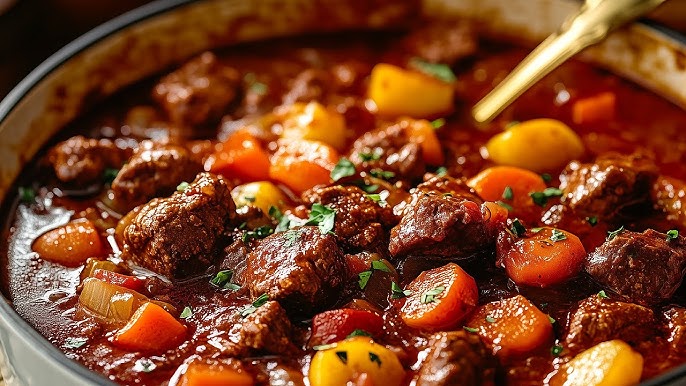
Beef Goulash Recipe: Beef Goulash is more than just a hearty beef stew—it’s a rich, comforting dish steeped in tradition and flavor. Imagine tender chunks of beef swimming in a smoky, paprika-infused sauce, paired with soft onions, garlic, and sweet peppers. Sounds heavenly, right? This iconic dish, originally from Central Europe, specifically Hungary, has made its way around the globe and into many homes, kitchens, and hearts.
Often misunderstood as just a meat stew, authentic beef goulash is characterized by its use of sweet Hungarian paprika, slow cooking techniques, and deeply layered flavors. It’s typically served with egg noodles, mashed potatoes, rice, or even a crusty slice of rustic bread to mop up the juicy goodness. Its simplicity is part of what makes it magical—humble ingredients come together to create a symphony of taste.
Whether you’re a cooking novice or a seasoned home chef, beef goulash is an approachable dish that delivers every time. And the best part? It’s even better the next day as the flavors develop and intensify overnight.
Origins and Cultural Significance
Goulash dates back to the 9th century when Hungarian shepherds prepared this meal in large cauldrons over open fires. The name comes from the Hungarian word gulyás, which means herdsman. Originally, it was made with dried meat and onions, and over time, as paprika was introduced into Hungarian cuisine in the 18th century, it became a defining ingredient in the dish.
In Hungary, goulash is not just food—it’s culture. It embodies hospitality, tradition, and national pride. There are countless regional variations: some thicker like a stew, others more soup-like, and many include vegetables such as carrots, potatoes, or bell peppers.
International versions often take creative liberties, adding pasta or cheese, especially in American-style goulash. But today, we’re sticking close to the roots with a recipe that honors the classic Hungarian approach, with a bit of flexibility for modern home cooks.
Ingredients Needed for Traditional Beef Goulash
Main Ingredients
To cook a truly mouth-watering beef goulash, you’ll need to assemble the following core ingredients:
- Beef chuck (or stewing beef) – 2 lbs, cut into 1-inch cubes
- Onions – 2 large, finely chopped
- Garlic cloves – 3, minced
- Tomato paste – 2 tablespoons
- Hungarian sweet paprika – 3 tablespoons
- Beef broth – 3 cups
- Caraway seeds (optional, but authentic) – 1 teaspoon
- Salt and pepper – to taste
- Bay leaves – 2
- Vegetable oil or lard – for browning the meat
These are the backbone of a traditional goulash. Each element plays a critical role. For instance, using Hungarian paprika (not just any paprika) is essential for achieving that unmistakable depth and color.
Optional Add-ins for Extra Flavor
You can elevate your goulash with a few creative or regional touches:
- Bell peppers – diced, for sweetness and texture
- Potatoes – peeled and cubed, to bulk up the stew
- Red wine – adds depth and richness
- Carrots – for a sweet undertone
- Sour cream – for garnish and a creamy finish
These additions aren’t mandatory but can be game-changers depending on your preferences. The key is to let the beef and paprika remain the stars of the show.
Tools and Equipment Required
Kitchen Tools You’ll Need
Before you roll up your sleeves, make sure you’ve got these tools handy:
- A heavy-bottomed pot or Dutch oven – crucial for even cooking and flavor development
- A wooden spoon or spatula – for stirring without scraping the pot
- A sharp knife – for trimming and cubing the beef
- Cutting board – for prepping your ingredients
- Measuring spoons and cups – precision makes perfect
Having these tools ready will streamline your cooking process and help prevent any mid-cooking chaos.
Tips for Preparation
- Prep everything in advance. Chopping onions and garlic while the beef is searing is a recipe for stress.
- Use room-temperature meat. Cold meat drops the pot’s temperature, which can prevent proper searing.
- Don’t overcrowd the pot. Sear the meat in batches so each piece gets that golden-brown crust.
These little tips might seem minor, but they go a long way in delivering a top-tier beef goulash that’s bursting with flavor.
Step-by-Step Beef Goulash Recipe
Step 1 – Prepping the Ingredients
Start by getting all your ingredients ready. Cube the beef into bite-sized chunks, dice your onions, mince the garlic, and measure out your spices. This step is all about setting yourself up for success. When everything is within arm’s reach, you’ll flow effortlessly from one step to the next.
Cutting the beef against the grain ensures tenderness. Also, pat the meat dry with paper towels. Why? Because moisture on the surface of the meat can steam it instead of searing it, robbing you of that rich, meaty flavor.
Now that your prep is done, it’s time to bring everything together for the real magic.
Step 2 – Searing the Beef
This is where the flavor journey truly begins. Heat 1–2 tablespoons of oil in your heavy-bottomed pot or Dutch oven over medium-high heat. When the oil is shimmering, add your beef cubes in a single layer—don’t crowd the pan. Sear the meat in batches if necessary, turning each piece to brown all sides.
This step isn’t about cooking the meat through—it’s about creating those beautiful, golden-brown edges. That browning is known as the Maillard reaction, and it’s what gives your goulash that rich, meaty depth that simmering alone can’t achieve.
Once each batch is done, transfer the beef to a plate and set it aside. Don’t wipe out the pot! The brown bits left behind (called fond) are flavor gold, and you’ll be using them in the next step.
Step 3 – Sautéing the Onions and Garlic
Now, lower the heat to medium. If the pot looks a bit dry, add another splash of oil. Toss in your chopped onions and sauté them until they’re soft, golden, and just starting to caramelize—about 10 to 12 minutes.
Add your minced garlic and stir for 1–2 minutes until fragrant. Garlic burns easily, so keep an eye on it. This aromatic base is the soul of your goulash, and taking your time here pays off later with deeper flavor.
At this point, your kitchen should already smell amazing. The onions should be sweet and tender, mingling beautifully with the savory beef residue.
Step 4 – Adding the Paprika and Tomato Paste
With the onions and garlic perfectly sautéed, it’s time to add the star ingredient: Hungarian paprika. Remove the pot from the heat temporarily to avoid burning the paprika—it turns bitter if it gets scorched.
Add the paprika and tomato paste, and stir quickly to coat the onions. This step blooms the paprika, releasing its full aroma and infusing the dish with its signature brick-red hue.
Now add a small splash of beef broth (about ½ cup) to deglaze the pot, scraping up any bits stuck to the bottom. Return the seared beef to the pot, along with the rest of the broth. Toss in your bay leaves, caraway seeds, and a generous pinch of salt and pepper.
Give everything a good stir and bring it to a gentle simmer.
Step 5 – Simmering to Perfection
Cover the pot loosely and let it simmer over low heat for 1.5 to 2 hours. This slow simmering process is where the magic happens. The beef becomes incredibly tender, the flavors meld together, and the broth thickens into a rich, hearty sauce.
Stir occasionally to prevent sticking and to ensure even cooking. If the liquid reduces too much, add a bit more broth or water to maintain a stew-like consistency.
Toward the last 30 minutes, you can add optional veggies like chopped bell peppers or cubed potatoes for extra heartiness.
Once the meat is fork-tender and the sauce is luscious and thick, remove the bay leaves, taste, and adjust seasoning as needed. You’ve just made a pot of authentic, soul-warming beef goulash.
Serving Suggestions
Best Side Dishes to Pair With
Beef goulash is delicious on its own, but pairing it with the right side dish can elevate the entire meal:
- Egg noodles – The most traditional pairing. The noodles soak up the sauce beautifully.
- Mashed potatoes – Creamy and rich, a perfect match for goulash’s bold flavors.
- Rice or couscous – Excellent options if you prefer a lighter base.
- Crusty bread or dinner rolls – For dunking and sopping up every last drop.
In Hungary, csipetke (small pinched egg noodles) are a classic addition. You can also try it with spätzle (German egg noodles) for a twist.
Presentation Tips
Want to make your goulash look as good as it tastes? Try these simple plating tips:
- Serve it in a deep bowl with a dollop of sour cream and a sprinkle of fresh parsley.
- Add a few twists of freshly ground pepper for a rustic touch.
- Serve alongside a crisp cucumber salad or pickled vegetables to cut through the richness.
Presentation might seem like an afterthought, but it truly enhances the dining experience. A well-plated dish invites people in before they even take a bite.
Storage and Reheating Tips
How to Store Leftover Goulash
Got leftovers? Great—goulash gets even better the next day! Here’s how to store it properly:
- Refrigerate: Let the goulash cool to room temperature, then transfer it to an airtight container. Store in the fridge for up to 4 days.
- Freeze: For longer storage, freeze it in portion-sized containers. It will last up to 3 months.
To avoid mushy textures, it’s best to freeze the stew without potatoes or pasta if you plan on adding them later.
Best Methods to Reheat Without Losing Flavor
To reheat and maintain that just-cooked freshness:
- Stovetop: Reheat gently over medium heat, stirring occasionally. Add a splash of water or broth if it looks too thick.
- Microwave: Use a microwave-safe bowl, cover loosely, and reheat in 1-minute bursts, stirring in between.
- Slow cooker: Perfect for reheating large batches. Set it to low and let it warm through for about an hour.
Always reheat to an internal temperature of 165°F (74°C) to ensure it’s safe to eat.
Tips for the Perfect Goulash Every Time
Common Mistakes to Avoid
Even though goulash is a relatively simple dish, there are a few pitfalls that can compromise the flavor and texture. Here’s what to watch out for:
- Skipping the sear: Browning the beef builds flavor. If you toss raw beef straight into the broth, your stew will be flat and bland.
- Burning the paprika: Paprika is delicate and burns easily. Always add it off the heat or with plenty of liquid to prevent bitterness.
- Overcrowding the pot: Searing too much meat at once leads to steaming instead of browning. Do it in batches, and you’ll taste the difference.
- Using lean cuts of beef: Goulash needs marbled, connective tissue-rich cuts like chuck roast. Lean beef will dry out during the long cook time.
- Adding all veggies too early: If you’re using veggies like peppers or potatoes, add them during the last 30 minutes to keep them from becoming mush.
By avoiding these mistakes, you’ll ensure your goulash turns out flavorful, tender, and delicious every single time.
Flavor Enhancing Tips
Want to take your goulash to the next level? Try these pro tips:
- Add a splash of red wine during the deglazing step to build a richer base.
- A dash of Worcestershire sauce or soy sauce adds a layer of umami.
- A spoonful of sour cream stirred in at the end creates a creamy, tangy twist.
- Fresh herbs like parsley or thyme can brighten the final dish.
- Slow cook it even longer: If you have time, let it simmer for 3+ hours on low. The flavors deepen the longer it cooks.
Don’t be afraid to taste and adjust as you go. A little seasoning tweak can transform your stew from good to unforgettable.
FAQs about Beef Goulash Recipe
Can I make goulash in a slow cooker?
Absolutely! Goulash works wonderfully in a slow cooker. After searing the beef and sautéing the onions and garlic, transfer everything to the slow cooker and cook on low for 6–8 hours or high for 3–4 hours. Add vegetables halfway through if you want them to retain some texture.
What cuts of beef work best?
The best cut for goulash is beef chuck because of its marbling and connective tissue. It becomes tender and flavorful after slow cooking. You can also use brisket or stewing beef, but avoid lean cuts like sirloin, which can become tough.
Can I freeze beef goulash?
Yes, goulash freezes very well. Let it cool completely, then store it in airtight containers for up to 3 months. When reheating, thaw in the fridge overnight and reheat on the stove for best results. If you added potatoes, be aware they might get a little mushy after freezing.
Is goulash gluten-free?
Traditional Hungarian goulash is naturally gluten-free as long as you don’t add flour to thicken it or serve it with wheat-based noodles or bread. Always double-check your paprika and broth for any additives if you’re cooking for someone with celiac disease.
How spicy is traditional goulash?
Authentic Hungarian goulash isn’t overly spicy. It’s rich and smoky thanks to sweet paprika, but not hot. You can always add a pinch of hot paprika or chili flakes if you prefer more heat.
Conclusion
Beef goulash isn’t just a meal—it’s a warm hug in a bowl. Whether you’re cooking it on a chilly night or preparing a comfort dish for friends and family, this Hungarian classic is always a hit. With tender beef, bold paprika flavor, and a slow-simmered richness, it’s no wonder goulash has stood the test of time across cultures and continents.
What makes it truly special is its versatility. You can stick to the traditional roots or customize it to suit your pantry and preferences. Either way, by following this step-by-step guide, you’re guaranteed to create a dish that’s full of soul and satisfaction.
So, grab your Dutch oven, gather your ingredients, and give this recipe a try. Once you’ve tasted homemade beef goulash, you’ll never look at stew the same way again.