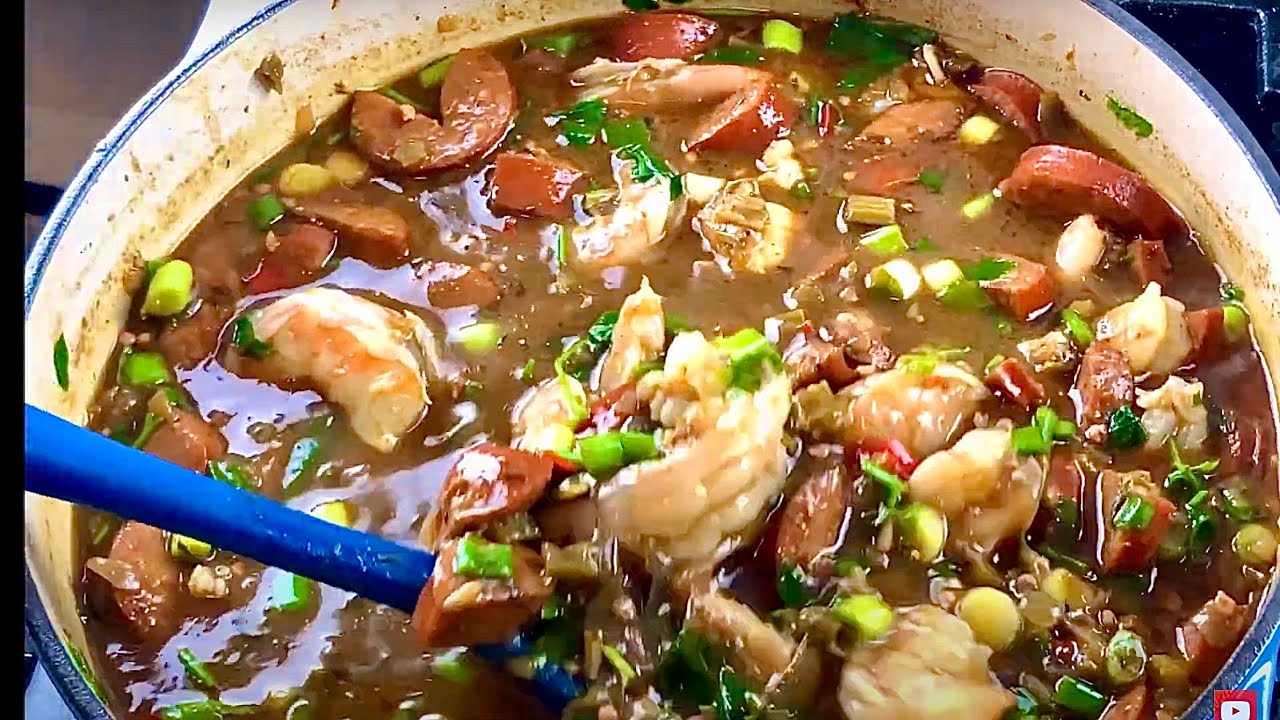
Authentic Gumbo Recipe: Gumbo is more than just a dish—it’s a deeply rooted tradition in Southern cuisine, particularly in Louisiana. It’s the kind of recipe that gets passed down through generations, each cook adding their own spin, but always staying true to the heart of the dish. At its core, gumbo is a thick, flavorful stew, combining meat or seafood (sometimes both), vegetables, and a robust, spicy broth, thickened with a roux or other thickeners like okra or filé powder. It’s hearty, it’s rich, and it’s got that soulful kick that makes you crave another bowl.
What makes gumbo special is how it blends different cultures into one pot—Creole, Cajun, African, French, and Native American influences all have a seat at the table. It’s not just food; it’s a cultural experience, with every bite telling a story. Gumbo can be made with chicken and sausage, shrimp and crab, or all of the above. Whether served at family gatherings, Sunday dinners, or Mardi Gras celebrations, gumbo is a symbol of Southern hospitality and history.
Why Gumbo Represents Louisiana’s Culinary Heritage
Louisiana’s food culture is like nowhere else in the U.S., and gumbo is the star of the show. It represents a melting pot of traditions. The French brought roux, West Africans introduced okra, Native Americans added filé powder, and the Spanish influence is present in the use of peppers and tomatoes. That’s what makes gumbo so uniquely Southern—it’s not one person’s recipe, it’s everyone’s.
What’s fascinating about gumbo is that no two pots are the same. In New Orleans, you might find Creole gumbo, rich with tomatoes and seafood. Travel west into the bayous, and you’ll encounter a Cajun version, deep brown from roux, heavy on smoked sausage, and without a tomato in sight. This diversity reflects the people of Louisiana—a mix of cultures coexisting, sharing, and evolving together.
When you cook gumbo, you’re taking part in this heritage. It’s not just about feeding people—it’s about connecting with a community, respecting history, and adding your own flavor to a centuries-old tradition.
Ingredients You’ll Need
Proteins – Chicken, Sausage, Seafood Options
Gumbo’s flexibility is part of its charm. Depending on what you have available—or your personal taste—you can choose different proteins. The most traditional combinations include:
- Chicken and Andouille Sausage: A classic Cajun combo. Andouille adds a smoky, spicy depth, while chicken provides richness. Bone-in thighs are often preferred for extra flavor.
- Seafood Gumbo: Shrimp, crab, and sometimes oysters are common. Make sure the seafood is fresh. Frozen is fine, but fresh Gulf seafood takes it up a notch.
- Surf and Turf: For the bold, use both meat and seafood. It’s a party in a pot—chicken, sausage, shrimp, crab, all mingling in the same delicious broth.
No matter what you choose, browning the meat before adding it to the gumbo is key. It builds that deep flavor base that sets great gumbo apart from the rest.
Vegetables – The Holy Trinity of Cajun Cooking
Forget carrots and celery—the backbone of Cajun and Creole cooking is the “Holy Trinity”: onion, bell pepper, and celery. These three ingredients, finely chopped, are sautéed to form the aromatic base of the gumbo. It’s a bit like the mirepoix in French cooking but with a Southern soul.
- Onion: Yellow onions are standard, sweet and full of depth.
- Bell Pepper: Green is traditional, but red and yellow can add a subtle sweetness and color.
- Celery: Adds a crisp, earthy flavor and balances the richness of the roux.
These veggies do more than flavor—they anchor the gumbo with a comforting, home-cooked foundation. Some cooks add garlic, green onions, or even tomatoes (especially in Creole gumbo), but the trinity is non-negotiable.
Spices and Seasonings for That Signature Flavor
Seasoning is where gumbo really gets its groove. You want it flavorful, but not overpowering. Here’s what you’ll typically need:
- Salt and Black Pepper: Basics, but essential.
- Cayenne Pepper: For heat. Adjust to your taste.
- Paprika: Adds color and a mild, smoky sweetness.
- Thyme: Earthy and aromatic.
- Bay Leaves: Adds depth to the simmer.
- Parsley and Green Onion: For freshness at the end.
A lot of Louisiana cooks swear by their favorite Cajun or Creole seasoning blend—like Tony Chachere’s or Slap Ya Mama. These blends make seasoning easy but watch out for salt content. You can always make your own seasoning mix to control the flavor and spice.
Roux – The Soul of Gumbo
The roux is where everything begins. It’s a mix of fat and flour, cooked slowly until it reaches a rich brown color—think the shade of dark chocolate or a deep copper penny. This isn’t a quick step. A proper gumbo roux can take 20-40 minutes, but it’s worth every second.
Here’s how to make it:
- Fat: Traditionally, lard or bacon grease was used. These days, butter or vegetable oil works just fine.
- Flour: All-purpose is standard.
You whisk the flour and fat constantly over medium heat until it darkens. Skip this step or rush it, and your gumbo won’t have that signature depth. Burn it, and you’ll need to start over. The roux not only thickens the gumbo but also gives it that nutty, roasted flavor that defines the dish.
Want to shortcut with a jarred roux? It’s doable, especially if you’re short on time, but nothing beats homemade.
How to Make Gumbo Step by Step
Step 1: Preparing the Roux
The first step, and arguably the most crucial, is making that roux. It sets the tone for the entire gumbo. Grab a heavy-bottomed pot—cast iron if you’ve got it—and set it over medium heat. Combine equal parts oil and flour (usually ¾ cup of each for a large pot) and start whisking.
Don’t walk away. Seriously. Stir constantly and adjust your heat if it seems too hot. You’ll watch the roux go from pale blonde to peanut butter, then to a deep brown. This process can take up to 30-40 minutes, but it’s non-negotiable. The darker the roux, the deeper the flavor. But be careful—if it smells burnt, toss it and try again. It’s that important.
Once your roux reaches a rich, dark brown, turn off the heat and keep stirring for a few more seconds to prevent burning. You’ve just built the foundation for a perfect gumbo.
Step 2: Sautéing the Trinity
Now that your roux is perfectly dark and rich, it’s time to build flavor with the Holy Trinity. Turn the heat back to medium and immediately add your chopped onions, bell peppers, and celery directly into the roux. You’ll hear a satisfying sizzle, and the smell will be incredible.
Cook the vegetables until they soften and begin to caramelize—usually around 10–15 minutes. Stir often so nothing sticks or burns. This step deepens the base of your gumbo and infuses the roux with the aromatics. Some people like to throw in a couple of minced garlic cloves during the last few minutes for an extra punch of flavor.
If you’re using okra (a classic gumbo thickener), now’s a good time to add it to the pan. Let it cook down to get rid of the slimy texture. The acidity in the roux helps balance it out, giving you that thick, hearty consistency that makes gumbo so satisfying.
Step 3: Adding the Proteins
Once your veggies are tender and infused with that rich roux, it’s time to add your proteins. If you’re going with chicken and sausage, add them in now. Brown the sausage slices until they’re a bit crispy and golden—this adds texture and smokiness. Chicken thighs or drumsticks should be seared slightly before being added to the pot. They’ll cook fully in the simmering broth, staying juicy and tender.
If you’re making a seafood gumbo, hold off on adding shrimp or crab just yet—they cook much faster and should go in later to avoid overcooking.
This stage is about building layers. The rendered fat from sausage, the juiciness of chicken, all meld into the roux-veggie mixture. You’re creating a savory playground for flavors to develop.
Step 4: Simmering with Stock and Seasoning
With the proteins in, it’s time to turn your mixture into a stew. Slowly pour in about 6–8 cups of chicken or seafood stock, stirring as you go to avoid lumps. The stock should be warm or room temperature—adding cold liquid to a hot roux can cause it to seize.
Add your seasonings now—salt, black pepper, cayenne, paprika, thyme, and bay leaves. If you’re using a pre-made Cajun seasoning blend, taste as you go. You want bold flavor, but not over-salted.
Bring the gumbo to a boil, then reduce to a low simmer. Cover and let it cook for 45 minutes to 1 hour, stirring occasionally. This simmering time is essential. It lets all the ingredients get to know each other—meat gets tender, flavors deepen, and the roux thickens the broth to a luxurious, silky consistency.
Now’s the time to taste and adjust the seasoning. Don’t be shy—add a splash of hot sauce, a bit more salt, or an extra sprinkle of thyme if it needs it.
Step 5: Finishing Touches – Seafood, Okra, and Filé Powder
If you’re using seafood, this is your moment. In the last 10–15 minutes of cooking, gently stir in shrimp, crab meat, or oysters. They cook fast and don’t need more than a few minutes. Overcooking seafood makes it rubbery—something we definitely want to avoid.
If you skipped okra earlier, you can add filé powder here. Made from dried and ground sassafras leaves, filé adds both thickness and a subtle earthy flavor. Don’t add it while the gumbo is still boiling—filé can get stringy if overheated. Sprinkle it in after you’ve turned off the heat, or let everyone add their own to their bowl.
Let the gumbo rest for 10–15 minutes before serving. This allows the flavors to mellow and meld even further, giving you a gumbo that tastes even better than it smells—and that’s saying something.
Serving Suggestions
Perfect Sides with Gumbo
A bowl of gumbo doesn’t need much to shine, but a few classic sides can take your meal to the next level:
- White Rice: The standard companion. Gumbo is traditionally served over a scoop of rice, which soaks up all that savory, spicy goodness.
- Crusty French Bread: Perfect for mopping up the bowl. A good gumbo leaves no drop behind.
- Potato Salad: Some Southern families serve it in the gumbo! It might sound odd, but the creamy potato balances the spice beautifully.
- Cornbread or Hush Puppies: Sweet and savory contrast that complements the dish well.
When it comes to gumbo, simplicity wins. Let the stew be the star, and the sides will simply elevate the experience.
Best Ways to Serve – With Rice or French Bread
Everyone has their gumbo ritual. Some ladle it directly over a scoop of fluffy white rice, letting the grains soak up the broth like a sponge. Others prefer serving rice on the side so you can control every bite. Then there’s the French bread lovers—tearing chunks from a baguette and dunking it into the gumbo like a stew.
If you’re feeling fancy, serve in wide, shallow bowls so the gumbo can cool slightly and thicken. Garnish with chopped green onions or parsley for color and a fresh bite. Add a dash of hot sauce for those who like extra heat, and offer filé powder on the side for the purists.
However you serve it, gumbo is meant to be shared. It’s best enjoyed around a table, with second helpings, conversation, and a good drink in hand.
Tips for the Perfect Gumbo
Common Mistakes to Avoid
Making gumbo isn’t hard, but there are a few pitfalls that can turn your masterpiece into a muddy mess. Here are some common mistakes to avoid if you want your gumbo to shine:
- Burning the Roux: This is the #1 killer of good gumbo. Once a roux is burnt, there’s no saving it. You’ll get a bitter taste that ruins the entire pot. Stir constantly, and never leave the stove while it cooks.
- Undercooking or Overcooking the Proteins: Chicken should be cooked until tender, and seafood only added in the final minutes. Shrimp, in particular, turns rubbery when overdone.
- Adding Filé Powder Too Early: Filé should be added after cooking is complete. If boiled, it becomes stringy and changes the texture in a bad way.
- Overloading with Seasoning: Gumbo is bold, but balance is key. Taste as you go, especially if you’re using pre-mixed seasoning blends.
- Skipping the Simmer: Gumbo gets better the longer it simmers. Rushing the cooking process means missing out on deep, complex flavor.
- Not Letting it Rest: Like chili or stew, gumbo benefits from a little rest before serving. Letting it sit off the heat allows the flavors to settle and deepen.
Avoid these missteps, and you’ll be on your way to a gumbo that makes people ask for the recipe.
How to Store and Reheat Gumbo
Gumbo isn’t just great on day one—it’s even better the next day. Here’s how to store and reheat it without losing its magic.
Storing Gumbo:
- Let it cool completely before refrigerating.
- Store in airtight containers. Gumbo will keep in the fridge for 3–4 days.
- For longer storage, freeze it in portions. It freezes well and lasts up to 3 months.
Reheating Gumbo:
- Thaw overnight in the fridge if frozen.
- Reheat slowly on the stove over medium-low heat. Stir frequently to prevent sticking.
- Avoid microwaving, especially seafood gumbo. It can make the proteins rubbery and unevenly heated.
Always taste before serving. You may need to freshen it up with a sprinkle of seasoning or a splash of broth if it thickened too much during storage.
FAQs about Authentic Gumbo Recipe
Can I make gumbo without a roux?
Yes, but the flavor and texture won’t be quite the same. You can thicken with okra or filé powder instead, but roux is what gives gumbo its signature deep, nutty flavor.
What’s the difference between gumbo and jambalaya?
Gumbo is a stew served over rice, while jambalaya cooks the rice directly in the dish. Gumbo has a thicker, broth-like base, and jambalaya is more like a pilaf.
How spicy should authentic gumbo be?
That’s up to you! Traditional gumbo has a kick, but it’s not overwhelming. You control the heat with cayenne, hot sauce, or your favorite Cajun spice mix.
Can gumbo be made vegetarian or vegan?
Absolutely. Use vegetable broth, skip the meat, and bulk it up with okra, beans, or mushrooms. Just make sure to build flavor with a strong roux and plenty of seasoning.
Is filé powder necessary in gumbo?
Not always. Filé is more traditional in Creole gumbo and is used as a thickener and flavor enhancer. If you use a dark roux or okra, you can skip it—but some swear it’s essential for authenticity.
Conclusion
Gumbo isn’t just food—it’s a celebration of culture, tradition, and community. With deep roots in Louisiana’s diverse heritage, this dish brings people together with every spoonful. From the smoky roux to the soulful simmer, every step in making gumbo is about patience, love, and flavor. Whether you prefer it with sausage and chicken or packed with Gulf seafood, the key to great gumbo is layering flavor, respecting the process, and cooking from the heart.
Don’t worry if your first gumbo isn’t perfect. Like any treasured recipe, it takes a little practice. But once you master the rhythm—building your roux, stirring the trinity, seasoning with care—you’ll have a go-to comfort dish that warms the soul and impresses any crowd.
So grab a bowl, pile it high with rice, and don’t forget the hot sauce. Your authentic gumbo journey starts now.