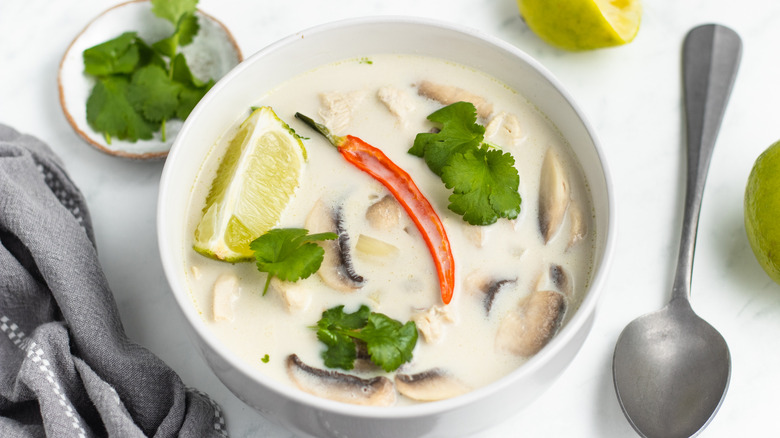
Tom Kha Gai Soup Recipe: Tom Kha Gai is not just any soup—it’s a comforting, flavorful explosion of creamy coconut milk, spicy Thai chilies, and aromatic herbs. The name “Tom Kha Gai” literally means “boiled galangal chicken” in Thai. This soup is a shining star in Thai cuisine and a go-to for anyone who craves a balance of rich, tangy, and spicy flavors.
Origins of the Dish
This iconic dish hails from Thailand and is deeply rooted in the country’s culinary traditions. Galangal, a relative of ginger, gives it a distinct spicy, citrusy aroma that sets it apart from similar soups. Originally a dish enjoyed in central Thailand, it spread throughout Southeast Asia and into international kitchens because of its irresistible taste and nourishing qualities.
Why It’s Popular Worldwide
Tom Kha Gai’s popularity goes beyond just flavor—it’s about how it makes you feel. With its creamy yet light texture, it’s perfect for cold weather, yet refreshing enough for warm days. It’s also naturally gluten-free and can be easily modified for different diets. The delicate balance of sweet, sour, salty, and spicy in one bowl makes it a masterpiece of flavor harmony.
Ingredients Required for Tom Kha Gai Soup
Main Ingredients
Let’s break down what you’ll need to make an authentic bowl of Tom Kha Gai:
- Chicken breast or thighs (boneless, sliced) – about 1 lb
- Coconut milk – 2 cups (use full-fat for richer flavor)
- Chicken broth – 2 cups
- Galangal (sliced) – 5-6 slices
- Lemongrass stalks (smashed and cut) – 2 stalks
- Kaffir lime leaves – 4-6 leaves
- Thai bird’s eye chilies (smashed) – 3-4, adjust to taste
- Mushrooms (like oyster or shiitake) – 1 cup, sliced
- Fish sauce – 2 tbsp
- Lime juice – 2-3 tbsp
- Palm sugar or brown sugar – 1 tbsp
- Fresh cilantro – for garnish
These ingredients are the heart and soul of Tom Kha Gai. Each adds a specific layer to the soup—from the creaminess of coconut milk to the citrus punch of kaffir lime.
Substitutes and Variations
Can’t find some Thai ingredients? No problem:
- Use ginger instead of galangal if necessary.
- Lemon zest can mimic kaffir lime leaves in a pinch.
- Use vegetable broth and tofu to make it vegetarian.
- For added heat, include Thai chili paste (Nam Prik Pao).
- Add shrimp or tofu instead of chicken for variation.
While authentic ingredients are ideal, these swaps still result in a delicious soup.
Essential Kitchen Tools
Cooking Equipment You’ll Need
To whip up Tom Kha Gai easily, keep these kitchen tools handy:
- Medium or large saucepan or pot
- Knife and cutting board
- Strainer (for removing herbs later)
- Ladle
- Measuring cups and spoons
These basics will help you manage the steps efficiently.
Tips for Prepping Ingredients
- Always smash your lemongrass with the back of a knife—it helps release the essential oils.
- Peel and thinly slice galangal for maximum flavor infusion.
- For mushrooms, avoid over-slicing. Thick cuts soak up the broth nicely.
- Prep your chilies last, and avoid touching your face after—these little guys are potent!
Step-by-Step Cooking Instructions
Step 1: Preparing the Broth
Start by combining your chicken broth and coconut milk in a large pot. Turn the heat to medium and let it warm gently—don’t boil it just yet. The goal here is to warm up the base so it can fully absorb the herbal notes in the next step.
Add the galangal slices, smashed lemongrass, and kaffir lime leaves. Let them simmer gently for about 10–15 minutes. These three ingredients are your aromatics and form the flavor base of the soup.
Avoid boiling the coconut milk at high heat, or it might separate. Keep the flame low to medium and be patient. Stir occasionally to keep it smooth.
Step 2: Infusing Thai Flavors
Once your broth is infused with the herbs, add the bird’s eye chilies. This step gives the soup its signature heat. If you’re spice-sensitive, go easy—start with one or two chilies.
Next, stir in the fish sauce and palm sugar. The fish sauce brings saltiness and umami, while the sugar rounds out the sharp flavors.
This is where the aroma really starts kicking in. Your kitchen will smell like a Thai street market, and that’s a good sign!
Step 3: Adding Chicken and Veggies
Now it’s time to add your sliced chicken to the simmering broth. Let it cook for about 7–10 minutes until it’s fully white and tender.
Toss in the mushrooms during the last 5 minutes of cooking. Mushrooms absorb all the delicious broth and become little flavor bombs in your soup.
You can also add veggies like baby corn, zucchini, or cherry tomatoes for color and texture. Just make sure they’re bite-sized so they cook evenly and don’t overpower the soup.
Step 4: Balancing the Flavors
The final flavor adjustment is crucial. Turn off the heat, then add fresh lime juice. This step brightens up the soup and ties all the flavors together.
Taste your soup and balance it:
- Too salty? Add a little more lime juice or a splash of water.
- Too sour? Add a pinch more sugar.
- Too bland? A dash of fish sauce should do the trick.
Flavor balancing is more art than science. Adjust to your taste!
Step 5: Finishing Touches
Now, remove the lemongrass, galangal, and kaffir lime leaves before serving. They’re too fibrous to eat but have done their job in infusing flavor.
Serve the soup hot in bowls, garnished with fresh cilantro and a slice of red chili or a lime wedge if desired.
Boom! Your homemade Tom Kha Gai is ready to enjoy.
Serving Suggestions
Best Ways to Serve Tom Kha Gai
Tom Kha Gai is one of those versatile dishes that can be enjoyed as a starter, side, or main course depending on how you present it. If you’re having it as a light meal, serve it in a generous bowl with a side of jasmine rice. The rice not only complements the rich broth but also helps soak up all the delicious flavors.
Want to turn it into a full Thai feast? Pair it with other popular Thai dishes like Pad Thai, green papaya salad (Som Tum), or Thai spring rolls. This soup works well in both casual weeknight dinners and more elaborate dinner parties. Serve it with chopsticks or a spoon—or both. And don’t forget to offer lime wedges and chopped fresh herbs on the side so your guests can personalize their bowl.
Garnishing is key. A sprinkle of chopped green onions, fresh cilantro, or even a drizzle of chili oil can elevate the look and taste. You might also consider serving it in coconut shells for that extra touch of presentation flair if you’re trying to impress guests.
Pairing with Other Dishes
Tom Kha Gai pairs beautifully with:
- Steamed jasmine or sticky rice – Classic combo, especially when you want to tone down the spice.
- Thai spring rolls or satay skewers – Great as appetizers before serving the soup.
- Thai iced tea or lemongrass iced tea – To cool down the spice and cleanse your palate.
- Pad See Ew or Thai basil chicken – If you’re going for a full-course meal.
Make it part of a Thai theme dinner night or just enjoy it solo with warm rice and a good movie. The balance of creamy and spicy flavors makes it satisfying on its own, but it’s equally at home alongside other Thai dishes.
FAQs about Tom Kha Gai Soup Recipe
1. Can I make Tom Kha Gai vegetarian?
Yes! Just substitute chicken with tofu and use vegetable broth instead of chicken broth. Skip the fish sauce or use a vegan alternative like soy sauce or mushroom soy sauce.
2. What if I can’t find galangal?
While galangal offers a unique flavor, you can substitute it with fresh ginger in a pinch. Add a bit of lemon zest to mimic the citrusy note of galangal.
3. How long does Tom Kha Gai last in the fridge?
It can last up to 3-4 days in an airtight container in the refrigerator. Just reheat it gently on the stove, and avoid boiling it to maintain the coconut milk’s texture.
4. Can I freeze Tom Kha Gai soup?
Yes, but with some caution. Coconut milk can separate when frozen. If you do freeze it, reheat slowly and stir well to recombine. Add fresh herbs and lime juice after reheating for the best flavor.
5. Is Tom Kha Gai spicy?
It can be! The spice level depends on how many chilies you use. You can totally customize the heat to suit your taste—mild, medium, or fiery.
Conclusion
Tom Kha Gai isn’t just a soup—it’s an experience. Creamy coconut milk, spicy chilies, aromatic herbs, and tender chicken come together in a bowl of pure comfort and joy. Whether you’re trying Thai food for the first time or you’re a long-time fan, this dish is a must-try.
With its unique blend of flavors and simple ingredients, it’s also surprisingly easy to make at home. You don’t need to be a chef, just follow the steps, taste as you go, and enjoy the process. From its cultural roots to its contemporary global fame, Tom Kha Gai continues to win hearts and taste buds.
So go ahead, gather your ingredients, and start simmering. Your kitchen is about to smell amazing, and your taste buds will thank you.