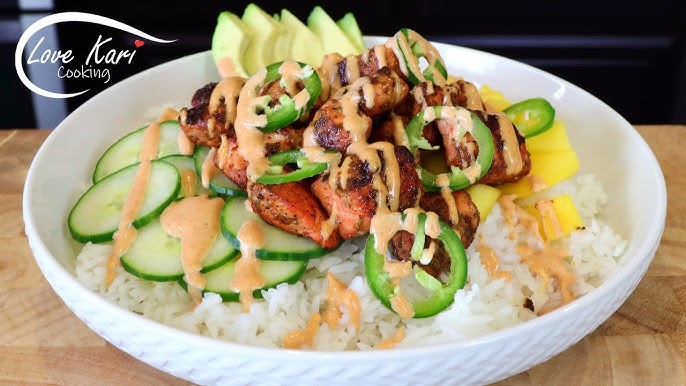
Salmon Rice Bowl Recipe: Salmon rice bowls have taken the culinary world by storm, and it’s no surprise why. They’re a vibrant, delicious, and easy-to-customize meal that’s as satisfying as it is nutritious. Whether you’re a foodie exploring global flavors or a health-conscious eater seeking a balanced meal, the salmon rice bowl fits the bill perfectly. Picture this: a bed of fluffy rice, layered with tender, flaky salmon, topped with crunchy veggies, creamy sauces, and maybe a little spice kick to keep things interesting. It’s like sushi in a bowl—but easier to make and enjoy at home.
Another big reason why these bowls are so beloved is their versatility. You can go as simple or as fancy as you like. Craving something light? Add more greens and a light vinaigrette. Want something hearty? Toss in some avocado, a fried egg, or even a drizzle of spicy mayo. Whether it’s for lunch, dinner, or even meal prep for the week, this dish never fails.
Plus, they look as good as they taste. With colorful toppings like shredded carrots, cucumbers, edamame, radishes, and scallions, these bowls are Instagram-worthy and guaranteed to make your tastebuds dance.
Nutritional Benefits of Salmon Rice Bowls
From a health standpoint, salmon rice bowls pack a punch. Salmon, the star of the dish, is loaded with omega-3 fatty acids that support heart and brain health. It’s also high in protein, which helps keep you full and supports muscle recovery—ideal for anyone with a fitness goal.
The rice provides the energy-giving carbohydrates you need to stay active throughout the day. If you’re looking for healthier options, brown rice or quinoa can be great swaps that add extra fiber.
Let’s not forget the veggies. Adding cucumber, carrots, or kale brings in antioxidants, vitamins, and minerals that boost your immune system and digestion. And with options like avocado or sesame seeds, you’re adding healthy fats that make the dish even more satisfying.
Altogether, it’s a well-rounded meal: protein, carbs, fiber, fats, and a whole lot of flavor.
Essential Ingredients for a Salmon Rice Bowl
Choosing the Best Salmon
Not all salmon is created equal. For the freshest taste and best texture, opt for wild-caught salmon if it’s within your budget. It typically has a richer flavor and firmer texture. If you’re on a tighter budget or shopping convenience, high-quality farm-raised salmon works too. Just be sure it’s responsibly sourced.
You can buy fillets or opt for pre-cut portions, but always look for salmon that’s vibrant in color and not fishy smelling. If you’re lucky to find sashimi-grade salmon, you can even serve it raw for a poke-style bowl.
Frozen salmon also works great—just make sure to thaw it properly overnight in the fridge before cooking.
Ideal Rice Options
Rice forms the base of your bowl, so it’s important to get it right. Traditional short-grain white rice or sushi rice offers the sticky texture that pairs beautifully with the salmon and toppings. However, feel free to explore:
- Brown rice for extra fiber
- Jasmine or basmati for a fragrant twist
- Cauliflower rice if you’re going low-carb
Cook your rice fresh for the best texture, or use leftovers if you’re short on time. Seasoning it with a splash of rice vinegar, sugar, and salt (just like sushi rice) can really boost the flavor profile.
Recommended Toppings and Sauces
Here’s where you can get creative. Toppings and sauces transform a simple salmon and rice combo into a flavor explosion. Some popular choices include:
- Veggies: cucumber slices, shredded carrots, avocado, edamame, radish, and pickled onions
- Herbs: scallions, cilantro, sesame seeds, nori strips
- Sauces: spicy mayo, soy sauce, sriracha, ponzu, teriyaki, or a drizzle of sesame oil
These add layers of taste and texture—crunchy, creamy, tangy, and spicy. Play with combos based on your mood or what’s in your fridge.
Step-by-Step Guide to Making a Salmon Rice Bowl
Step 1: Prepping Your Ingredients
Preparation is key to making the process smooth. Start by gathering all your ingredients—this includes your rice, salmon, toppings, and sauces. Chop your vegetables, marinate your salmon if desired, and prepare your rice ahead of time. If you’re using raw veggies, wash and slice them into thin, bite-sized pieces.
You can marinate your salmon with a mix of soy sauce, garlic, ginger, and a touch of honey for 15-30 minutes for more depth of flavor. If you’re short on time, a simple seasoning of salt and pepper works too.
Keeping everything ready and within reach will make the assembly process feel seamless and enjoyable.
Step 2: Cooking the Rice to Perfection
Rice may seem basic, but poorly cooked rice can ruin your bowl. Rinse the rice thoroughly before cooking to remove excess starch. Use a rice cooker or follow the stovetop method: combine rice and water in a 1:1.25 ratio for white rice, bring to a boil, then simmer covered on low heat for about 15 minutes. Let it sit for another 10 minutes off the heat before fluffing.
For extra sushi-style flavor, mix in a tablespoon of rice vinegar, a teaspoon of sugar, and a pinch of salt while the rice is still warm.
Once ready, keep it warm and covered until you’re ready to assemble the bowl.
Step 3: Seasoning and Cooking the Salmon
This step is where all the magic happens—transforming raw salmon into the savory, melt-in-your-mouth centerpiece of your bowl.
Oven-Baked Method: Preheat your oven to 400°F (200°C). Place your seasoned salmon fillets on a parchment-lined baking sheet. Bake for 12-15 minutes, depending on thickness, until the fish flakes easily with a fork. For extra caramelization, broil the salmon for the last 1-2 minutes.
Pan-Seared Method: Heat a tablespoon of oil in a nonstick skillet over medium heat. Place salmon skin-side down (if it has skin) and cook for 4-5 minutes until crispy. Flip and cook the other side for another 3-4 minutes. You can deglaze the pan with a splash of soy sauce or lemon juice to create a flavorful glaze.
Air Fryer Method: Season the salmon, preheat the air fryer to 375°F (190°C), and cook for 8-10 minutes. It’s quick, easy, and delivers crispy edges without needing much oil.
Whichever method you choose, ensure your salmon is cooked just right—moist inside, slightly crisp on the outside, and bursting with flavor.
Step 4: Assembling Your Bowl
Now comes the fun part—bringing everything together into one glorious bowl of goodness.
Start by adding a scoop of rice as your base. Fluff it up and spread it out slightly. Next, place your cooked salmon right on top. You can flake it into bite-sized chunks or lay the fillet whole if you prefer a more dramatic presentation.
Layer in your toppings: thinly sliced cucumbers, shredded carrots, radish, avocado slices, and edamame are classic choices. Be generous—this is where you add both nutrition and texture.
Finally, drizzle your chosen sauce. Spicy mayo gives a creamy heat, while soy-based dressings bring umami depth. Garnish with scallions, sesame seeds, or seaweed strips for a final pop.
Step 5: Adding Final Touches
Presentation and finishing touches elevate your bowl from tasty to restaurant-quality.
- Add a soft-boiled egg with a gooey yolk for richness.
- Sprinkle furikake (a Japanese seasoning blend) on top for umami flair.
- Add pickled ginger or kimchi for tangy contrast.
- Drizzle with sesame oil or chili oil for an extra flavor kick.
Serve immediately while the salmon is still warm and the rice is fluffy. And there you have it—your perfect salmon rice bowl, made with love and ready to devour.
Tips and Tricks for the Perfect Bowl
How to Elevate Flavor with Simple Additions
A great salmon rice bowl isn’t just about following the recipe—it’s about adding those special little touches that make it your own. Try these tips:
- Use a squeeze of lemon or lime juice on the salmon to brighten flavors.
- Add crunch with roasted seaweed snacks or crispy onions.
- Play with textures: Mix soft elements like avocado with crispy toppings like toasted sesame seeds or nuts.
- Make your own sauce: A simple mix of mayo, sriracha, and garlic powder creates an unbeatable spicy mayo.
Try experimenting with different flavor profiles—think Korean (gochujang), Hawaiian (poke-style), or Mediterranean (with tzatziki and olives).
Common Mistakes to Avoid
Avoid these common pitfalls to keep your bowl top-tier:
- Overcooking the salmon: It becomes dry and loses flavor. Keep an eye on it!
- Mushy rice: Always rinse your rice and don’t overcook it. Texture is key.
- Too much sauce: It can overpower the other flavors. Drizzle sparingly and adjust after a taste test.
- Unbalanced toppings: Too many toppings can make the bowl chaotic. Aim for balance—some crunch, some creaminess, a little tang, and heat.
Customizing Your Salmon Rice Bowl
Vegetarian and Vegan Variations
If you’re plant-based, don’t worry—you can still enjoy the salmon rice bowl experience with a few simple swaps.
- Use marinated tofu or tempeh in place of salmon. Grill or pan-fry for extra flavor.
- Jackfruit or chickpea patties can also add a meaty texture.
- Vegan sauces: Swap regular mayo for vegan mayo, and check your soy sauce is gluten-free if needed.
- Toppings: Add grilled mushrooms, pickled cabbage, or roasted sweet potatoes for depth and variety.
This way, you’re still getting a protein-rich, satisfying, and incredibly flavorful bowl—without the fish.
Low-Carb or Keto Modifications
For those watching their carbs or following a keto lifestyle, here’s how to modify:
- Swap rice with cauliflower rice or broccoli rice for a low-carb base.
- Skip sweet sauces and use tamari, garlic, or lemon-based dressings.
- Add high-fat toppings like avocado, nuts, and eggs to stay in ketosis.
- Double the protein: Use extra salmon or even add a boiled egg to keep your meal hearty.
It’s still all about balance—protein, fats, veggies, and lots of flavor—just with fewer carbs.
FAQs about Salmon Rice Bowl Recipe
Can I use canned salmon instead of fresh?
Yes! Canned salmon is a budget-friendly and convenient option. Just drain it well and season it to your liking before adding it to your bowl.
What type of rice works best for this recipe?
Sushi rice or short-grain white rice is ideal for its stickiness and texture, but brown rice, jasmine, or even quinoa can work depending on your preference.
How long can I store leftovers?
Store leftovers in an airtight container for up to 2-3 days. Keep the rice and toppings separate from the sauce to avoid sogginess.
Can I prepare the components in advance?
Absolutely. Cook the rice, prep the toppings, and store everything separately in the fridge. Assemble the bowl fresh when you’re ready to eat.
What sauces pair best with salmon rice bowls?
Spicy mayo, soy sauce, sesame oil, ponzu, and teriyaki sauce all pair beautifully. Mix and match for your favorite combo!
Conclusion
Salmon rice bowls are more than just a meal—they’re a delicious canvas for creativity. Whether you’re craving a nutritious weeknight dinner, a colorful lunch, or prepping meals ahead of time, this bowl has got your back. Packed with flavor, nutrients, and satisfying textures, it’s no wonder the salmon rice bowl has become a household favorite. From cooking the perfect salmon to piling on your favorite toppings, now you have all the tools to make it your own. So grab a bowl, get creative, and treat yourself to a homemade dish that feels like a gourmet experience every time.