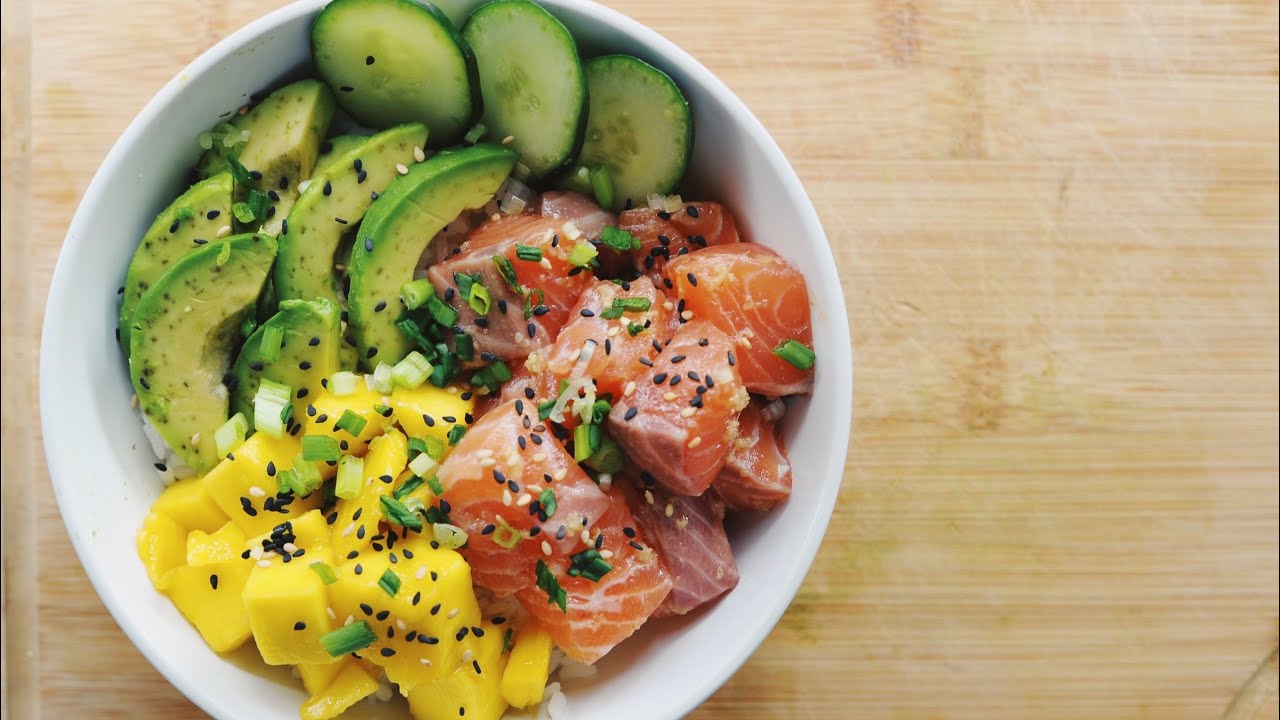
Salmon Poke Bowl Recipe: Imagine a deconstructed sushi roll in a bowl—that’s the simplest way to describe a poke bowl. Pronounced “poh-kay,” this colorful and customizable dish originated in Hawaii and has rapidly gained popularity worldwide. At its core, a poke bowl features cubes of raw fish—typically tuna or salmon—served over a bed of rice or greens, topped with a variety of vegetables, sauces, and garnishes.
Unlike traditional sushi, poke bowls are informal and easy to make at home. You can play around with flavors, textures, and toppings based on your preferences. Whether you’re a fan of spicy flavors or lean more toward something sweet and tangy, the poke bowl can easily be adapted to your taste buds. It’s a go-to meal when you’re craving something healthy, quick, and satisfying.
The Origin of Poke Bowls
The roots of the poke bowl trace back to Hawaiian fishermen who would season the cut-offs from their catch with salt, seaweed, and crushed kukui nuts as a quick snack. The term “poke” actually means “to slice” or “cut crosswise into pieces” in Hawaiian. Over time, Japanese and other Asian culinary influences blended with this tradition, introducing soy sauce, sesame oil, and rice as base ingredients.
Today, poke bowls are a cultural fusion—a culinary bridge between Hawaii and East Asia, with endless interpretations depending on where you’re eating it. But no matter how fancy or simple it gets, the essence of poke remains unchanged: fresh ingredients, bold flavors, and a balanced bowl.
Why Salmon is Perfect for Poke
Health Benefits of Salmon
Salmon isn’t just delicious—it’s a powerhouse of nutrients that support overall well-being. Rich in omega-3 fatty acids, it promotes heart health, reduces inflammation, and even supports brain function. It’s also an excellent source of high-quality protein, vitamin D, and B-vitamins, making it ideal for anyone following a healthy eating plan.
In a poke bowl, salmon adds a fatty richness that balances perfectly with crisp vegetables and tangy sauces. Its healthy fats also enhance the absorption of fat-soluble nutrients from the other toppings you might include, like avocado and sesame oil.
Whether you’re an athlete needing post-workout fuel or just trying to eat cleaner, salmon offers both flavor and function in your diet.
Taste and Texture of Salmon in Bowls
Let’s talk taste and texture. Raw salmon is buttery, mild, and slightly sweet. When it’s marinated, it absorbs all those delicious flavors from soy sauce, sesame oil, rice vinegar, and more, enhancing its natural richness. The soft, melt-in-your-mouth quality of salmon contrasts beautifully with crunchy cucumbers, creamy avocado, and fluffy rice.
It’s this harmony of textures—soft fish, firm veggies, and chewy rice—that makes the salmon poke bowl such a delight to eat. Whether you’re enjoying it chilled on a hot summer day or packing it for a lunch break, the flavor profile is always refreshing and satisfying.
Ingredients You’ll Need
Fresh Salmon – Sushi Grade
This is the star of the show. When making poke, always use sushi-grade salmon to ensure it’s safe to eat raw. You can usually find it at your local fish market or grocery store with a good seafood section. Look for salmon that is bright, firm, and smells clean—not fishy.
If you’re unsure about sourcing sushi-grade salmon, you can also flash-freeze it at home to kill any parasites. However, buying pre-frozen sushi-grade salmon is the safest and most convenient route.
Base Options – Rice, Quinoa, or Greens
Traditionally, poke bowls are served over white rice. But that doesn’t mean you can’t mix things up. Here are a few base options:
- Sushi rice: Slightly sticky and seasoned with rice vinegar.
- Brown rice: Adds more fiber and a nutty flavor.
- Quinoa: Great for a protein boost and gluten-free option.
- Mixed greens: If you’re going low-carb or want a lighter option.
The key is to use a neutral base that complements, rather than competes with, the flavors of the toppings and sauce.
Classic Toppings and Add-ins
This is where you can get creative! Here are some must-have and optional toppings:
- Avocado: Creamy and rich, balances the tanginess.
- Cucumber: Adds crunch and freshness.
- Edamame: A plant-based protein source.
- Carrots: Julienne style for a sweet crunch.
- Seaweed salad: Brings an umami ocean flavor.
- Pickled ginger: Acts as a palate cleanser.
Don’t be afraid to play around with ingredients you love. The poke bowl is highly adaptable.
Poke Sauce Essentials
No poke bowl is complete without a killer sauce. A simple base includes:
- Soy sauce
- Sesame oil
- Rice vinegar
- Honey or sugar for sweetness
- Sriracha or wasabi for heat
Whisk these together and adjust to taste. You want a balance of salty, sweet, tangy, and spicy.
How to Prepare Your Salmon
Choosing the Right Salmon
When buying salmon, go for wild-caught if possible—it’s usually leaner and has a cleaner flavor. Make sure the label says “sushi-grade” or “sashimi-grade.” If buying fresh, use it the same day. If frozen, thaw it in the fridge overnight, never on the counter.
Cutting Salmon Properly
Use a very sharp knife to cube your salmon into even ½-inch pieces. This ensures that each bite is uniform and soaks up the marinade evenly. Always cut against the grain for a tender chew.
Place the cut salmon in a bowl and keep it chilled until you’re ready to marinate it.
Marinating the Salmon
Here’s a basic marinade recipe:
- 2 tbsp soy sauce
- 1 tsp sesame oil
- 1 tsp rice vinegar
- ½ tsp honey
- Optional: a dash of Sriracha or chopped scallions
Mix the marinade ingredients in a bowl, then gently toss the salmon cubes to coat. Let them sit for at least 15–20 minutes in the fridge so the flavors can absorb fully.
Step-by-Step Guide to Making a Salmon Poke Bowl
Step 1: Prepare Your Base
The base of your poke bowl is like the canvas to your masterpiece. It needs to be solid, flavorful, and ready to support all the toppings you’ll be layering on top. Start by deciding what kind of base you’re in the mood for—are you going classic with sushi rice, or keeping it low-carb with greens?
For sushi rice: Rinse 1 cup of short-grain rice under cold water until the water runs clear. Cook it according to your rice cooker or stovetop instructions. Once it’s done, gently mix in 2 tablespoons of rice vinegar, 1 tablespoon of sugar, and a pinch of salt. Let it cool to room temperature.
For brown rice or quinoa: Follow the package directions and season lightly with rice vinegar or a dash of lime juice for some zing.
For greens: Use a mix of fresh arugula, spinach, or romaine lettuce. Toss lightly with sesame oil or lemon juice if you want to add a little extra flavor.
Set your prepared base aside in a bowl and get ready to stack on the magic.
Step 2: Chop and Marinate Salmon
Now that your base is ready, it’s time to prep your salmon. Make sure it’s cold but not frozen, and work with clean, dry hands or gloves. As mentioned earlier, dice your sushi-grade salmon into bite-sized cubes. Keep the size consistent for even marination and the best texture.
Place your chopped salmon in a bowl and pour the marinade over it. For extra flavor, consider adding:
- Chopped scallions
- Minced garlic
- A sprinkle of sesame seeds
- A few drops of lemon juice or yuzu
Let the salmon marinate in the fridge for 15–30 minutes. Don’t over-marinate, as the acids in the sauce can start to “cook” the fish like ceviche. You want it flavorful but still raw and tender.
Step 3: Assemble the Bowl
This is the fun part—building your bowl! Take your bowl with the base (rice, quinoa, or greens) and fluff it lightly with a fork or chopsticks. Spread it evenly at the bottom.
Now spoon your marinated salmon generously over the base. Make sure it’s evenly distributed, as you’ll want salmon in every bite.
Next, start layering your toppings. Arrange each topping neatly in a section, kind of like how you’d see it presented in a fancy café. Not only does it look better, but it also makes the eating experience more fun.
You might arrange it like this:
- Top left: sliced avocado
- Top right: julienned carrots
- Bottom left: cucumber ribbons
- Bottom right: edamame or mango chunks
- Center: a dollop of spicy mayo or more marinated salmon
Presentation really does matter—your eyes taste before your mouth does!
Step 4: Add Toppings and Sauce
With your base and salmon ready to go, it’s time to drizzle on the sauces and add those final toppings that give the poke bowl its signature personality.
Popular sauces include:
- Spicy mayo: Mix mayo and Sriracha in a 2:1 ratio.
- Ponzu sauce: A citrusy soy-based sauce for a zesty punch.
- Unagi sauce: Sweet and thick soy-glaze style sauce.
Drizzle your chosen sauce over the bowl in a zig-zag pattern. Don’t drown it—just enough to coat and enhance.
Then, finish with toppings like:
- Toasted sesame seeds
- Crushed seaweed flakes (furikake)
- Thinly sliced radishes
- Pickled red onions
- Jalapeño slices if you like heat
These toppings add crunch, spice, and depth to each bite.
Step 5: Garnish and Serve
The final step is the garnish—and don’t underestimate its importance. Garnishes give your poke bowl that last flavor kick and make it restaurant-worthy.
Sprinkle some chopped chives, scallions, or cilantro over the top. A few more sesame seeds for texture. Maybe a few microgreens for an upscale touch.
Serve immediately, as poke is best eaten fresh. If you’re preparing bowls in advance, keep the rice and toppings separate and assemble right before eating.
Grab a pair of chopsticks or a fork, mix things around a bit, and dig in. Each bite should be a mix of creamy, crunchy, tangy, and savory goodness.
Tips for Customizing Your Salmon Poke Bowl
Make It Spicy or Sweet – Your Call
One of the best parts of making your own poke bowl is the ability to fully customize it to your taste. Craving something with a kick? Add more Sriracha, chopped chili, or even a few slices of jalapeño to your sauce. Want something a bit on the sweeter side? A touch of honey, pineapple chunks, or mango can balance out spicy and salty elements beautifully.
Sweet & spicy pairing idea: Combine Sriracha with a little honey or maple syrup and a squeeze of lime. This adds heat, sweetness, and acidity all at once.
If you’re not a fan of raw fish, you can even lightly sear your salmon or swap it out for cooked shrimp, tofu, or grilled chicken.
Swap the Base – Not Just Rice
While rice is the traditional base for a poke bowl, it’s far from your only option. If you want to keep things low-carb or grain-free, greens like arugula, kale, or romaine work beautifully. For more fiber and nutrients, opt for quinoa or even farro.
Creative base ideas:
- Cauliflower rice for a keto-friendly alternative.
- Zoodles (zucchini noodles) if you like crunch.
- Glass noodles for an Asian-inspired twist.
Whatever you choose, the base should be mild in flavor and able to soak up the sauce from the toppings.
Storage and Meal Prep Tips
Can You Make Poke Ahead of Time?
Yes and no. While many components of the poke bowl can be prepared ahead, raw fish is best enjoyed fresh. If you want to meal prep for the week, here’s a plan:
- Prepare your rice or base and portion it into containers.
- Chop your veggies and toppings and store them in separate containers.
- Mix your sauces and keep them in airtight jars.
- Add the fish fresh: Buy your salmon the day of or the day before and add it to the bowl just before eating.
You can store marinated salmon in the fridge for up to 24 hours, but beyond that, the texture starts to change and it may not be safe to eat.
Safe Storage Tips
- Store salmon at or below 40°F (4°C).
- Use clean utensils and bowls to prevent cross-contamination.
- Don’t leave poke out at room temperature for more than 2 hours.
Common Mistakes to Avoid
Over-Marinating the Salmon
One of the most common mistakes is letting the salmon sit too long in the marinade. Unlike meat, fish is delicate. Let it soak for too long, and the acid starts to “cook” the fish, altering its texture in a way that’s more like ceviche than poke.
Fix: Set a timer for 15–20 minutes and no more than 30 minutes if you’re using citrus-based marinades.
Using Low-Quality Fish
Always, always use sushi-grade salmon when making poke. Never use leftover, cooked, or unknown-quality raw fish from the supermarket unless it’s clearly labeled for raw consumption.
Fix: Visit a trusted fish market or grocery store and ask for “sushi-grade” salmon. If in doubt, freeze the fish for at least 24 hours at -4°F (-20°C) to kill parasites.
Skipping the Balance of Flavors
Too salty, too spicy, or too sweet—poke is all about balance. Every ingredient should contribute something, not overpower.
Fix: Taste and adjust. Mix a bit of sauce first, test it on a spoonful of rice and fish, and tweak it from there.
Nutritional Breakdown of a Typical Salmon Poke Bowl
| Ingredient | Quantity | Calories | Protein | Fat | Carbs |
|---|---|---|---|---|---|
| Sushi Rice | 1 cup (cooked) | 200 | 4g | 0.4g | 45g |
| Salmon (raw) | 4 oz | 220 | 23g | 14g | 0g |
| Avocado | ¼ medium | 60 | 1g | 5g | 3g |
| Cucumber | ½ cup sliced | 8 | 0g | 0g | 2g |
| Edamame | ¼ cup | 60 | 6g | 2g | 6g |
| Poke Sauce | 1 tbsp | 35 | 0g | 3g | 2g |
Total: Approx. 583 calories per bowl
Macros: 34g protein / 24g fat / 58g carbs
These numbers can vary based on portion sizes and ingredients used, but overall, a poke bowl is a balanced meal rich in lean protein, healthy fats, and complex carbs.
FAQs about Salmon Poke Bowl Recipe
1. Can I use frozen salmon for poke?
Yes, as long as it’s sushi-grade and has been properly frozen to kill parasites. Thaw it in the fridge, not on the counter.
2. How long can I keep a salmon poke bowl in the fridge?
Ideally, eat it the same day. You can keep leftovers for up to 24 hours, but quality and safety may decline after that.
3. What if I don’t like raw fish?
No problem! Substitute with cooked shrimp, tofu, seared salmon, or even grilled chicken.
4. Is a poke bowl keto-friendly?
Yes, if you use cauliflower rice or greens instead of regular rice, and skip sugary sauces.
5. What’s the difference between poke and sushi?
Sushi is often rolled with vinegared rice and seaweed, while poke is a deconstructed bowl with marinated raw fish and toppings.
Conclusion
Salmon poke bowls are a beautiful, customizable, and health-packed way to bring a bit of Hawaiian flair into your kitchen. From selecting high-quality ingredients to layering flavors and textures, making a poke bowl is more art than science. Whether you’re a poke purist or like to get creative with toppings and sauces, this dish is guaranteed to satisfy your cravings.
Best of all? It’s easy to prep, looks stunning, and is infinitely adaptable to your taste or dietary needs. So go ahead—grab your favorite bowl, fresh salmon, and let the poke magic begin.