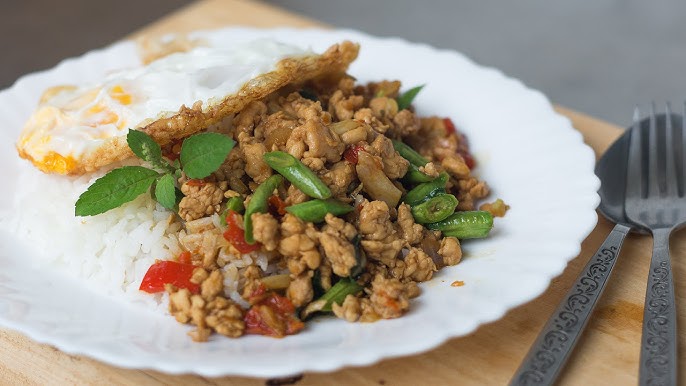
Pad Kra Pao Recipe: Pad Kra Pao, also known as Thai Basil Stir-Fry, is one of the most beloved dishes in Thai cuisine. Known for its bold and spicy flavors, it’s a quick stir-fry of minced meat—usually pork or chicken—seasoned with garlic, chilies, and a special blend of sauces, then tossed with aromatic holy basil. In Thailand, it’s a staple for both street food vendors and home kitchens, often enjoyed with a crispy fried egg on top and a mound of steamed jasmine rice. It’s spicy, savory, slightly sweet, and packed with umami—a flavor explosion in every bite.
Why You’ll Love This Thai Classic
This dish hits every note: it’s spicy, flavorful, and satisfying. You don’t need fancy ingredients, and the entire recipe can be done in under 30 minutes. Whether you’re craving takeout-style food or looking to explore Thai flavors at home, Pad Kra Pao is a crowd-pleaser. Plus, it’s easy to customize—you can switch up the protein, adjust the heat, and add vegetables if you like. It’s fast, fun, and fiery—just like Thai street food should be.
Ingredients You’ll Need
Essential Ingredients for Authentic Flavor
To make authentic Pad Kra Pao, you’ll need:
- Minced meat (chicken, pork, or beef)
- Garlic cloves (6–8, finely chopped)
- Bird’s eye chilies (4–10, depending on heat tolerance)
- Vegetable oil (for stir-frying)
- Dark soy sauce
- Light soy sauce
- Fish sauce
- Oyster sauce
- Sugar (usually palm sugar)
- Holy basil leaves (must-have for the signature flavor)
- Steamed jasmine rice (for serving)
The magic comes from the combination of these sauces. Oyster sauce adds depth, fish sauce brings saltiness and umami, and a touch of sugar balances the heat.
Optional Add-Ons and Substitutions
If you can’t find holy basil, Thai basil or even Italian basil can be used, but the flavor won’t be quite the same. You can also include vegetables like green beans or bell peppers for extra color and texture. Prefer a vegetarian version? Use tofu or mushrooms instead of meat. The sauce remains the same and just as delicious.
Tools and Equipment
Kitchen Tools You’ll Need
Making Pad Kra Pao is simple, but having the right tools makes a big difference. Here’s what you need:
- Wok or non-stick skillet – a wok gives the best heat distribution
- Spatula or wooden spoon – for stirring and tossing
- Knife and cutting board – for prepping ingredients
- Rice cooker or pot – for making jasmine rice
- Measuring spoons – to get the sauce proportions right
These basics are enough to get you going, and once you start, you’ll be surprised how easy it is to whip this dish up in your own kitchen.
Tips for Perfect Stir-Fry
- Always cook on high heat—this helps sear the meat and keep the vegetables crisp.
- Prep everything before you start cooking—stir-frying is quick and you won’t have time to chop midway.
- Don’t overcrowd the pan—cook in batches if necessary.
- Use a mortar and pestle to crush the garlic and chilies together for maximum flavor extraction.
Preparing the Ingredients
How to Chop and Prepare Each Component
Start by finely chopping the garlic and chilies. If you want extra heat, don’t remove the chili seeds. For a more mild version, de-seed them first. Crush them together using a mortar and pestle or the back of your knife.
Next, rinse and pat dry the holy basil leaves. They wilt quickly when cooked, so they should be added right at the end.
Cut the meat into small pieces or use ground meat. If you’re using chicken breast, mince it finely for that authentic Thai street-food texture.
Getting the Holy Basil Right
Holy basil is not the same as sweet basil—it has a spicy, peppery note that’s irreplaceable. Look for it at Asian grocery stores or grow your own if you cook Thai food often. The leaves are thinner and more pointed than sweet basil, and the flavor is bolder. Add it only after turning off the heat to preserve its aroma and prevent it from becoming bitter.
Step-by-Step Cooking Instructions
Step 1: Prepping Your Pan and Oil
Heat about two tablespoons of oil in a wok or skillet over medium-high heat. Once the oil is hot and shimmering, you’re ready to go. The goal is to get the pan smoking hot so it cooks everything quickly and seals in the flavor.
Step 2: Cooking the Aromatics
Add the crushed garlic and chilies to the hot oil. Stir constantly to prevent burning. After 15–20 seconds, the aroma will hit you—and it’ll be spicy! This step is crucial because it infuses the oil with intense flavor that carries through the whole dish.
Step 3: Adding the Protein
Add the minced meat and stir-fry quickly to break up any clumps. Cook until the meat is browned and slightly crispy on the edges. This takes about 3–5 minutes. Don’t be afraid to let the meat sit for a few seconds before stirring; a bit of char adds that signature wok flavor.
Step 4: Stir-Frying with Sauces
Now it’s time to pour in the sauce mixture: 1 tbsp each of oyster sauce, fish sauce, and light soy sauce; ½ tbsp of dark soy sauce; and 1 tsp of sugar. Mix well, ensuring the meat is fully coated and glossy. Let it simmer for 1–2 minutes so the sauce thickens slightly and clings to the meat.
Step 5: Tossing in the Basil
Turn off the heat and immediately throw in the holy basil leaves. Stir until just wilted—it only takes about 30 seconds. The residual heat will bring out the basil’s aroma without overcooking it.
Serving Suggestions
How to Serve Pad Kra Pao
Traditionally, Pad Kra Pao is served over a hot plate of steamed jasmine rice, often topped with a perfectly fried egg (known in Thai as “kai dao”). The runny yolk adds a creamy richness that balances out the spiciness of the dish. The egg isn’t just a garnish—it’s part of the experience. The combination of spicy, savory meat, fluffy rice, and a gooey egg is what makes this dish unforgettable.
When plating, scoop a generous portion of rice onto a plate, spoon the Pad Kra Pao mixture on the side or directly on top, and crown it with a freshly fried egg. Garnish with a few extra basil leaves or a lime wedge if desired.
This dish is best served hot and fresh out of the wok. It’s a fast meal that’s meant to be enjoyed immediately—no need to let it sit or rest.
Popular Side Dishes and Pairings
Want to round out your Thai meal? Try pairing Pad Kra Pao with:
- Som Tum (Green Papaya Salad) – Refreshing, crunchy, and tangy, it offers a cooling contrast.
- Tom Yum Soup – A spicy-sour broth that pairs well with the richness of Pad Kra Pao.
- Thai Iced Tea – A sweet and creamy drink that balances out the chili heat.
- Spring Rolls – Crispy and light, great as a starter or side dish.
You can also serve Pad Kra Pao family-style with other Thai favorites like Pad Thai, Massaman curry, or fried tofu for a complete, crowd-pleasing spread.
FAQs about Pad Kra Pao Recipe
Q1: Can I use regular basil instead of holy basil?
Yes, but holy basil gives the dish its authentic Thai flavor. Thai basil or even sweet basil can work in a pinch, though the flavor will be milder and slightly sweeter.
Q2: Is Pad Kra Pao always spicy?
Traditionally, yes. But you can adjust the heat by using fewer chilies or removing the seeds. The beauty of homemade is you control the spice level.
Q3: What type of meat is best for Pad Kra Pao?
Ground pork is the most traditional, but chicken, beef, or even tofu are excellent substitutes. Just make sure it’s finely chopped or minced for the best texture.
Q4: Can I make Pad Kra Pao vegetarian or vegan?
Absolutely. Swap the meat for mushrooms, tofu, or tempeh. Use soy sauce or a vegan fish sauce alternative to maintain that umami punch.
Q5: How long does Pad Kra Pao keep?
It’s best eaten fresh, but leftovers can be stored in the fridge for up to 2–3 days. Reheat in a pan or microwave until piping hot.
Conclusion
Pad Kra Pao isn’t just a dish—it’s an experience. It’s fiery, flavorful, and fast, making it the perfect go-to meal when you want something exciting without spending hours in the kitchen. With just a few simple ingredients and a little heat, you can recreate the magic of Thai street food right at home. Whether you’re making it with pork, chicken, or tofu, the result is always deeply satisfying. Try it once, and it’ll likely earn a permanent spot in your weekly dinner rotation.
Don’t be afraid to adjust the heat, tweak the sauce, or add your favorite veggies. The best part about Pad Kra Pao? It’s flexible and forgiving—just like all great home-cooked meals should be.