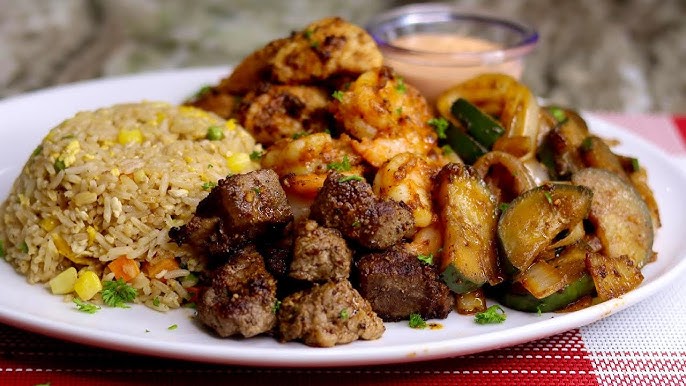
Hibachi Steak Recipe: When you think of Japanese cuisine with a sizzling spectacle, Hibachi steak probably tops the list. It’s not just a meal—it’s a performance. The term “hibachi” refers to a traditional Japanese heating device, but in the U.S., it often means a flat-top grill used in Japanese steakhouses. If you’ve ever sat around a hot grill while a chef tosses shrimp into his hat or lights onions into fiery volcanoes, you know exactly what we’re talking about.
But here’s the great news: you don’t need a teppanyaki grill or a samurai-chef to enjoy hibachi steak at home. With the right ingredients and some kitchen tricks, you can make your own tender, flavorful hibachi steak right in your kitchen. Imagine juicy steak seared to perfection, crisp-tender vegetables, and that savory garlic butter aroma filling your home. And let’s not forget the dipping sauces—yum!
Whether you’re looking to recreate a restaurant-style dinner or just trying something new, this step-by-step guide is for you. We’ll walk you through everything from ingredient selection to plating so you can wow your guests (or just treat yourself!) with a hibachi masterpiece.
Ingredients You’ll Need
Before you light the stove or fire up the grill, let’s talk ingredients. Hibachi steak is deceptively simple when it comes to what goes into it. Yet, the flavor? Out of this world. The magic lies in using high-quality ingredients and cooking them the right way.
Steak Selection
The star of the show is obviously the steak. Filet mignon is the classic choice if you want melt-in-your-mouth tenderness, but it comes with a hefty price tag. Ribeye is another solid choice—it’s juicy, flavorful, and a bit more forgiving if you overcook it slightly. Strip steak or sirloin can also work well.
Here’s a quick guide to steak choices:
- Filet Mignon – Tender, buttery, expensive
- Ribeye – Juicy, well-marbled, bold flavor
- New York Strip – Leaner, good texture
- Sirloin – Affordable, slightly firmer texture
Essential Vegetables
No hibachi steak plate is complete without a colorful array of stir-fried vegetables. These add crunch, color, and nutritional value.
Must-haves:
- Zucchini
- Onions (white or yellow)
- Carrots
- Mushrooms
- Broccoli (optional but tasty)
You can also add bean sprouts, bell peppers, or snap peas based on your preference.
Sauces and Marinades
The sauces bring it all together. You’ll want to mix up a marinade for the steak and a buttery sauce to drizzle during cooking.
Marinade ingredients:
- Soy sauce
- Garlic (minced)
- Ginger (fresh or ground)
- Sesame oil
- Brown sugar (just a pinch)
Garlic butter sauce:
- Butter
- Minced garlic
- Soy sauce
- Lemon juice (optional)
And don’t forget to prepare the famous yum yum sauce—a creamy, tangy dipping sauce that’s perfect for steak or veggies.
Tools and Equipment Required
You don’t need a professional teppanyaki setup, but the right tools can make the process easier and give you better results. Here’s what you’ll need:
The Right Grill or Skillet
A large cast iron skillet or flat griddle is your best bet. These retain heat well and give you that coveted sear. Avoid non-stick pans—they just don’t get hot enough for proper browning.
If you’re cooking outdoors, a gas grill with a flat-top attachment or a dedicated outdoor griddle (like a Blackstone) will make you feel like a hibachi pro.
Other Necessary Kitchen Tools
- Tongs – for flipping steak and veggies
- Spatula – essential for stir-frying
- Mixing bowls – for prepping sauces and marinades
- Sharp knife and cutting board – for slicing steak and veggies
- Meat thermometer (optional) – for checking doneness
Trust us, having these tools ready before you start cooking will save you time and help avoid chaos mid-cook.
Preparing Your Ingredients
Now that you’ve got your steak, veggies, and tools ready, it’s time to get prepped. This step makes all the difference. Think of it as your mise en place—the French term chefs use for “everything in its place.”
Marinating the Steak
Cut your steak into bite-sized cubes—this helps it cook faster and gives you those delicious caramelized edges. Then, place the pieces in a bowl or ziplock bag with the marinade.
Simple Hibachi Marinade:
- 1/4 cup soy sauce
- 1 tablespoon sesame oil
- 1 tablespoon minced garlic
- 1 teaspoon ginger
- 1 teaspoon brown sugar (optional)
- Splash of sake or mirin (optional for authenticity)
Let the steak marinate for at least 30 minutes. If you’ve got time, 2 hours in the fridge is even better. The soy sauce tenderizes the meat while the garlic and ginger infuse it with classic hibachi flavor.
Chopping the Vegetables
Cut the veggies into uniform pieces so they cook evenly. Zucchini and carrots should be sliced into thin rounds or half-moons. Onions work best in thick slices or wedges, and mushrooms should be halved or quartered depending on size.
Once everything is chopped, keep them grouped by type in small bowls or plates. This makes it easier to toss them onto the skillet when it’s go time.
Step-by-Step Cooking Instructions
Alright, it’s time to get cooking. Here’s how to pull off hibachi steak like a true grill master.
Step 1: Heat the Grill or Skillet
Crank up the heat! Whether you’re using a griddle, cast-iron pan, or outdoor grill, you want it hot—like really hot. Add a tablespoon of high smoke point oil like vegetable, canola, or avocado oil.
Let the pan heat until the oil shimmers. You should hear a satisfying sizzle when food hits the surface.
Step 2: Sear the Steak
Remove the steak from the marinade and pat it dry with paper towels—this helps it brown instead of steam. Drop it into the pan in a single layer.
Sear for about 2–3 minutes on each side until browned and cooked to your desired doneness. For medium-rare, aim for an internal temp of 130–135°F (54–57°C).
Add a spoonful of garlic butter sauce during the last minute for extra flavor. Then remove the steak and set it aside to rest.
Step 3: Cook the Vegetables
Add a bit more oil to the pan and toss in the veggies. Start with onions and carrots (they take longer), then add zucchini and mushrooms. Stir-fry for 4–5 minutes until tender but still crisp.
Add a splash of soy sauce and another dollop of garlic butter for that glossy, flavorful finish.
Step 4: Combine and Sizzle
Once your vegetables are nearly done, it’s time to bring everything together for that final hibachi sizzle. Return the cooked steak cubes to the skillet with the veggies. At this stage, the skillet should still be hot, and that sizzle will let you know everything is coming together beautifully.
Pour a bit more garlic butter sauce over the mixture, and use your spatula or tongs to mix everything evenly. Let it cook together for another 1-2 minutes. This final step allows the flavors to meld—the umami-rich soy, garlicky butter, caramelized onions, and juicy steak all playing their part in this harmonious dish.
If you’re feeling extra fancy, you can flambé with a splash of sake (just be careful and make sure your cooking area is safe). But honestly, even without the theatrics, this final sauté is what gives hibachi steak that unmistakable taste and aroma.
Step 5: Serve with Style
You’ve done all the prep, you’ve cooked like a pro—now it’s time to plate your masterpiece. The beauty of hibachi steak is in its presentation as much as its taste. Here’s how to serve it like they do at your favorite Japanese steakhouse.
Start by placing a generous portion of fried rice or steamed white rice on the plate. Next, pile on the sizzling steak and veggies. Make sure to drizzle any remaining sauce from the pan over the top—it’s too flavorful to waste.
Garnish with:
- Sliced green onions
- Sesame seeds
- A lemon wedge (optional)
And of course, don’t forget the dipping sauces! Serve with a small dish of yum yum sauce and another of ginger sauce on the side. These condiments are part of what makes the hibachi experience so addictive.
Pro tip: Serve everything on a heated plate to keep that restaurant-style warmth going strong.
Tips for Perfect Hibachi Steak
Even though hibachi steak is relatively straightforward, a few tips can elevate your dish from good to restaurant-level amazing.
Choosing the Right Oil
Avoid using olive oil here—it has a low smoke point and can burn easily. Instead, go with neutral, high-smoke point oils like:
- Canola oil
- Avocado oil
- Sunflower oil
- Grapeseed oil
These oils let your food sear beautifully without imparting any overpowering flavors.
Controlling the Heat
Temperature control is everything. The grill or pan should be very hot before you add anything. If it’s not sizzling, wait! If you add steak or veggies too soon, they’ll steam instead of sear.
Also, don’t overcrowd the pan. Cook in batches if necessary. This ensures every piece of steak or vegetable gets proper contact with the hot surface and develops that beautiful golden-brown crust.
Use Fresh Ingredients
It might seem obvious, but fresh garlic, ginger, and veggies make a huge difference in flavor. Avoid bottled garlic or pre-cut vegetables—they just don’t bring the same brightness to the dish.
Finish with Garlic Butter
Don’t underestimate the power of finishing your dish with garlic butter. It brings everything together with a rich, savory kick. If you want to make your garlic butter extra luxurious, try mixing in a little miso paste or a touch of lemon juice for depth and brightness.
Common Mistakes to Avoid
Let’s talk about what not to do. Avoiding these common pitfalls will save your meal from disappointment.
Overcooking the Steak
One of the most tragic things you can do to your hibachi steak is overcook it. Since the steak pieces are small, they cook quickly—just a couple of minutes per side is all it takes. Always aim for medium-rare or medium at most unless you specifically like it more done.
Use a meat thermometer if you’re unsure. It’s not cheating—it’s smart cooking.
Not Letting the Meat Rest
You’ve probably heard this before: let the meat rest before serving. It’s not just culinary fluff. Resting allows the juices to redistribute so your steak stays juicy and tender instead of running all over your plate.
After cooking, let your steak rest for 5 minutes while you finish up the veggies or plate the rice.
Using Too Much Sauce Early On
It’s tempting to drown everything in soy sauce early, but resist! Too much liquid in the pan will steam your ingredients instead of searing them. Add sauces toward the end, and in moderation. You can always serve extra on the side.
Cutting Veggies Unevenly
If your vegetables aren’t cut to similar sizes, they won’t cook evenly. You’ll end up with mushy zucchini and half-raw carrots—not ideal. Take the time to prep uniformly, and your final dish will be miles better.
Variations and Add-Ons
Now that you’ve got the basics down, it’s time to explore some variations. Hibachi is flexible, and part of the fun is making it your own.
Hibachi Chicken and Shrimp
If steak isn’t your thing, swap it out for chicken thighs or breast. Marinate and cook the same way, just adjust the cooking time (chicken needs to reach 165°F internally). Shrimp is another great option and cooks in just a couple of minutes.
You can even mix proteins—steak and shrimp is a classic combo that feels like a fancy surf-and-turf meal.
Adding Noodles or Fried Rice
Want to turn your hibachi steak into a full-on Japanese steakhouse experience? Add:
- Fried rice: Use day-old rice, sautéed with soy sauce, garlic, eggs, and peas.
- Yakisoba or udon noodles: Toss them in with some extra sauce for a chewy, savory side.
These carbs soak up all the saucy goodness and make your meal feel like it came straight off the restaurant menu.
Serving Suggestions
Presentation matters almost as much as flavor when it comes to hibachi steak. After all, this dish is all about the experience—vibrant colors, tantalizing smells, and exciting flavors. So let’s talk about how to serve it like a pro.
Best Side Dishes
Hibachi steak is rich and savory, so it pairs beautifully with dishes that balance out those bold flavors. Here are a few favorites:
- Fried Rice – Probably the most classic side. Add scrambled eggs, peas, carrots, and a splash of soy sauce for that perfect bite.
- Steamed White or Jasmine Rice – A simpler option that allows the steak to shine.
- Garlic Noodles – Stir-fried noodles tossed in garlic butter and soy sauce.
- Miso Soup – A light and savory starter that complements the richness of the steak.
- Japanese Cucumber Salad – A refreshing, tangy contrast to the umami-heavy main dish.
Pair your hibachi steak with a few of these, and you’ve got a complete meal that’s balanced, flavorful, and totally satisfying.
Garnishing Ideas
Garnishing isn’t just for looks—it can add bursts of flavor and texture. Here are a few simple ideas:
- Green Onions: A classic topping that adds freshness and color.
- Toasted Sesame Seeds: Sprinkle on top for a nutty crunch.
- Lemon Wedge: A quick squeeze brightens everything up.
- Pickled Ginger: Adds a zingy counterpoint to the savory steak.
- Chili Oil or Sriracha: For a bit of heat, if that’s your thing.
Whether you’re serving for a dinner party or a cozy night in, these small touches make a big difference.
Nutritional Information
Let’s break down what you’re actually consuming when you dig into that plate of sizzling hibachi steak. This dish can be indulgent, but it can also be tweaked to fit a variety of dietary needs.
Calories and Macros (Per Serving)
Here’s an estimate for a serving that includes hibachi steak and vegetables (without rice or sauces):
- Calories: 350–450
- Protein: 35g
- Fat: 20g
- Carbohydrates: 10–15g (mainly from vegetables and marinade)
- Fiber: 3–4g
Add rice and sauces, and you’re looking at another 200–400 calories depending on portion size.
Healthier Alternatives
Want to keep it light? Here’s how:
- Use lean cuts of steak like sirloin or tenderloin.
- Go easy on the butter—try swapping some of it for olive oil or just use less.
- Skip the sugary sauces like teriyaki, or make your own with reduced sugar.
- Serve with brown rice or cauliflower rice for fewer carbs and more fiber.
- Add more veggies to bulk up your plate without adding a ton of calories.
Hibachi steak doesn’t have to be a cheat meal. With a few smart tweaks, it fits beautifully into a balanced, protein-rich diet.
Storing and Reheating Leftovers
Made too much? No problem. Hibachi steak makes for some killer leftovers, especially if you store and reheat it the right way.
Storage Tips
- Cool completely before storing.
- Use airtight containers to keep everything fresh.
- Store the steak and veggies together, and rice or noodles separately (if you made those).
- Refrigerate for up to 3–4 days.
You can also freeze leftovers, but be aware that the veggies may lose some of their texture upon thawing. If you freeze, use freezer-safe containers or heavy-duty zip bags.
Best Reheating Methods
To keep that fresh-off-the-grill flavor, skip the microwave if you can. Here’s how to reheat like a chef:
- Skillet: Heat a little oil or butter and sauté your leftovers over medium heat until warmed through. This helps preserve the texture and flavor.
- Oven: Place in an oven-safe dish, cover with foil, and warm at 350°F (175°C) for 10–15 minutes.
- Microwave: If you must, use a microwave-safe plate, cover with a damp paper towel, and heat in 30-second bursts, stirring in between.
Whichever method you choose, add a splash of water or soy sauce to keep things moist and flavorful.
Making it a Meal Prep Favorite
If you’re into batch cooking or just like having delicious meals ready to go, hibachi steak is an ideal candidate. It stores well, reheats easily, and can be paired with all kinds of sides.
Batch Cooking Tips
- Double or triple the recipe and divide it into portions for the week.
- Keep sauces separate until ready to eat for better texture.
- Use varied veggies for variety—zucchini one day, bell peppers the next.
This keeps your meals interesting and prevents hibachi burnout.
Storage Containers
Invest in some quality glass meal prep containers. They keep flavors fresh, are microwave-safe, and help with portion control. Use containers with divided compartments to separate steak from rice or veggies if you prefer.
Whether you’re hitting the gym or just want to save time during the week, hibachi steak is a protein-packed option that keeps you fueled and satisfied.
Why Make Hibachi at Home
Let’s be honest—going out for hibachi is awesome, but it’s not always cheap or convenient. Making it at home gives you some huge benefits.
Cost Savings
A meal that would cost $20–$30 per person at a restaurant can be made at home for a fraction of the cost. Even high-quality steak becomes affordable when you’re cooking for multiple people.
Customization and Control
Don’t like onions? Skip them. Love spicy? Add chili oil. Want more protein? Double the steak. Cooking at home gives you total control over ingredients, flavor, and portion size.
Plus, you can make it healthier by adjusting oils, sauces, and sides to match your goals. Whether you’re keto, paleo, gluten-free, or just picky—hibachi at home works for you.
FAQs about Hibachi Steak Recipe
Q1: Can I use chicken instead of steak?
Absolutely! Chicken thighs or breasts work great. Just adjust the cooking time to ensure it’s fully cooked (internal temp of 165°F).
Q2: What’s the best sauce for hibachi steak?
Garlic butter is key. Yum yum sauce and ginger sauce are great for dipping. Soy-based sauces also work well.
Q3: How do I get that authentic hibachi flavor?
Use fresh garlic, ginger, soy sauce, and cook on high heat. Don’t skip the butter—it’s what gives that rich, teppanyaki flavor.
Q4: Can I cook hibachi steak in the oven?
Technically yes, but it won’t have the same sear or flavor. A hot skillet or griddle is much better.
Q5: Is hibachi steak healthy?
It can be! Use lean cuts, reduce butter, and load up on veggies for a balanced, protein-packed meal.
Conclusion
Hibachi steak is more than just a meal—it’s a flavorful, fun, and fulfilling experience that you can recreate right in your kitchen. From juicy, marinated steak to crisp-tender veggies and those irresistible dipping sauces, every bite is a taste of Japanese steakhouse magic.
With this step-by-step guide, you now have everything you need to make perfect hibachi steak at home. Whether you’re cooking for guests, prepping meals for the week, or just treating yourself, this dish never disappoints. So grab that skillet, fire it up, and bring the hibachi sizzle to your table!